
Do we really control our lives, no matter how much we are constrained by circumstances, we must make decisions about how to live as life is simply not something that happens to us, we must lead it. One crucial decision regard to finding a partner, perhaps marry and have children, make friends and invest time and emotional energy in maintaining connections. Most of us form such connections without thinking much about it, as love is blind, and attaching ourselves to others come at a cost. This only diminishes our autonomy, but even make us vulnerable. English Poet Laureate Alfred Lord Tennyson, during much of Queen Victoria’s reign, in 1829, delving into the complexities of romantic relationships and the emotions they evoke said “ I hold it true, whate’er befall; I feel it, when I sorrow most; ‘Tis better to have loved and lost; Than never to have loved at all”. What do we want from life, If we value our autonomy and want to suffer as little pain as possible, we should perhaps follow the advice of the philosophes – of whom there are plenty – who have claimed that the best way to secure our own personal happiness is to stay emotionally detached from things, including other people. If we care for nobody and nothing, or care very little, we cannot get hurt by what they do or what happens to them. We could still interact with people on various levels, and enter the usual relationships and benefit from them as much as we can, but we must ensure that we avoid becoming emotionally dependent on them. If relationship ends- as most relationships will, sooner or later- we would then not bemoan its passing, instead move on to the next one, sparing ourselves hurt and grief. But according to Samuel Scheffler, “some of the most important constituents of a good life are our relationships with and attachments to other people, which enrich our lives beyond measure”.
One Life to Lead focuses special attention on two interrelated dimensions of our experience: the temporal and the interpersonal. Many of the puzzles and challenges we must negotiate in leading our lives concern the passage of time, which comprehensively shapes and frequently unsettles our emotions, our attitudes, and our understanding of ourselves. Other questions concern our determination to form and sustain valuable personal and social attachments, even though doing so requires us to share authority with others and renders us vulnerable to grief, loss, and pain. Scheffler’s investigations of our temporal and interpersonal experience remind us that our lives unfold at a particular point in time and in a particular set of social circumstances. Although our capacity to view our lives in broader perspective is extremely important, we can neither eliminate nor undo our social and temporal specificity – but nor should we want to. We lead our lives, and can hope to lead good lives, not by systematically transcending ourselves or our attachments, as some traditions and thinkers urge, but by engaging with the world as we find it in our contingent historical circumstances. One Life to Lead is an original and rigorous work of philosophy that offers profound insights into some of the most fundamental questions of human life.
Is it a truism that each of us has one life to lead? Leading one’s life is actually a complex, multifaceted undertaking, which require us to negotiate deeply puzzling aspects of our experience and over profound challenges to our sense of ourselves and our place in the world. Samuel Scheffler develops an “attachment-sensitive” conception of what it means to lead a recognizably human life. He reveals hidden complexities that are latent in our understanding of ourselves and our lives.
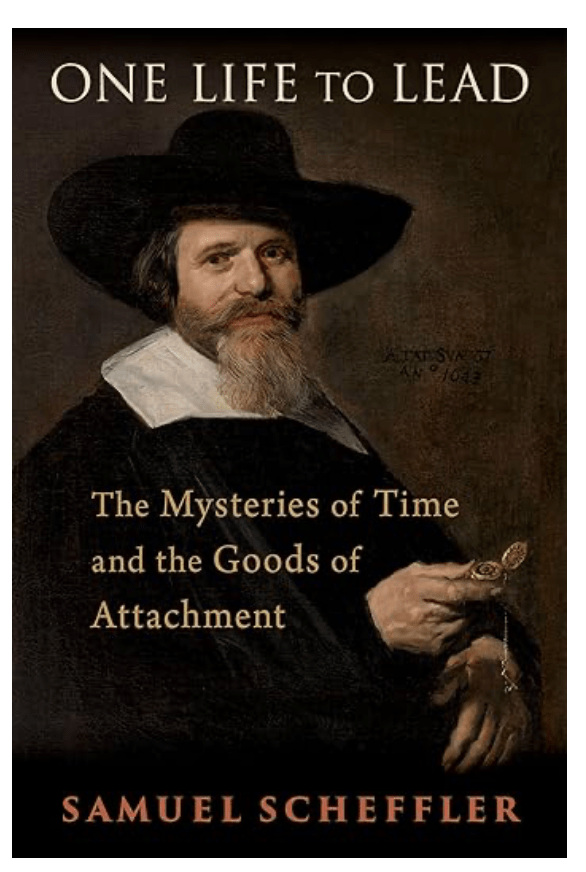
One Life to Lead: The mysteries of time and the goods of attachment by Samuel Scheffler, Oxford University Press £19.99/ (US$ 29.95).

 The neptune Herald
Leave a reply to pennynairprice Cancel reply