
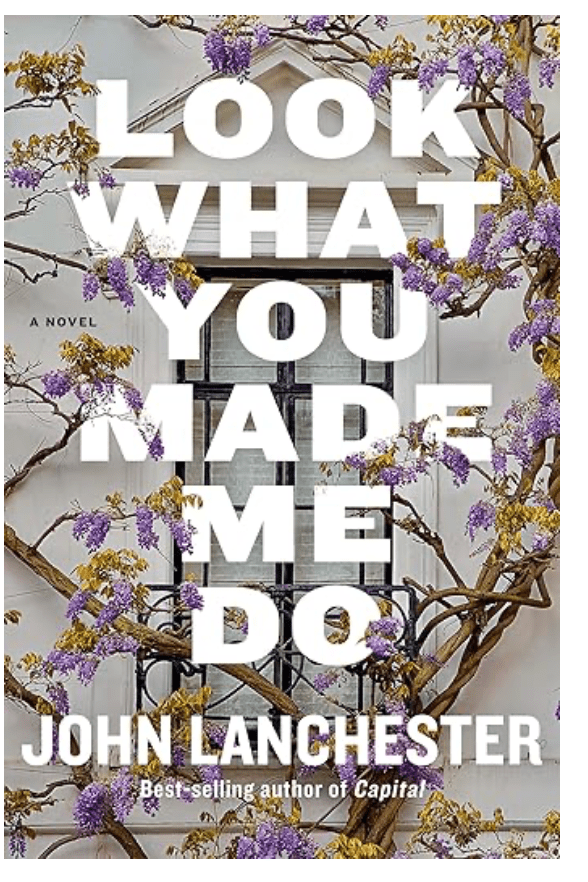
“Every Successful marriage has its own private language.” So it is for baby boomer Kate and her beloved architect husband Jack, thirty years into their seemingly idyllic metropolitan North London life. It is for spiky millennial screenwriter Phoebe and her charming loafer of a partner, Tony.
John Lanchester, a former restaurant reviewer, brochettes the pretensions affluent, middle-aged metropolitans when architect Jack says at a Notting Hill dinner party that Yotam Ottolenghi had destroyed British cooking and “done more damage to this country than the Luftwaffe”.
Jack’s wife Kate, who is one of the novel’s two narrators, finds him dead from a heart attack, and what looked like it was going to be a social comedy becomes a dark allegory about intergenerational conflict.
Kate, who is her late fifties and used to an historian considers herself a “doer of good deeds”, because she “signed an open letter as part of a group resigning from the Labour Party over Iraq, and went on the “not in my name” march. The novel’s other narrator, Phoebe, is a thirtysomething screenwriter who believes “niceness is overrated”. Her hit Netflix series Cheating features a millennial woman who relishes humiliating the wife of the older man with whom she is having an affair. When Kate hears about the show from women in her book club, she learns that the cheating husband says lines, such as a nauseating riff on a New Yorker cartoon, that were part of Kate and Jack’s “private language”. She is shocked to see scenes that appear to be based on intimate details of their marriage and becomes convinced that her late husband was having an affair with the writer of Cheating.
Phoebe’s shape and persuasive views make her an interesting narrator. Her indictment of her mother’s generation is searingly well observed. “Was there ever a generation so well self-centred and so focused on the validity of their own perspective? So oblivious and narcissistic? Not narcissistic in a “gazing in the mirror” way, but in the sense of narcissistic personality disorder. Constant one -way emotional support, from the child to the parent, is the norm for my generation.”
Kate is the same age as Phoebe’s mother, is not oblivious to her good fortune, commenting of a friend’s home: “Daphne’s house is lovely, as all the houses of everyone our age are, because we bought them when they were cheap and looked after them; none of us would be able to afford them if we were younger versions of ourselves, who do the same jobs we did.” Kate is, though capable of ruthlessness, admitting: “When I see something I want … I will take it.”
Subjects such as the 2009 financial crisis and Brexit, that shaped the UK today are perceptively chronicled by Lanchester. His new novel moves between London’s living rooms, talent agencies, high-end restaurants, barristers’ chambers and prisons. Kate is annoyed by a teenager at the cinema: “Was I, where we, like that when we were young? It didn’t seem likely and if I was, that’s certainly not how I remember it. But the, one thing we never know is how we appear to other people”. Phoebe and Kate are both out for revenge, but the way they pursue it is implausible. Phoebe’s plan is difficult to buy from the start, while Kate becomes a caricature of cunning and vindictiveness.
Look What You Made Me Do is an entertaining book, with an unflinching ending revealing how boomers have screwed millennials and continued to do so.
Look What You Made Me Do by John Lanchester, Faber £20, 304 pages, WW. Norton in the US.

 The neptune Herald
Leave a reply to pennynairprice Cancel reply