

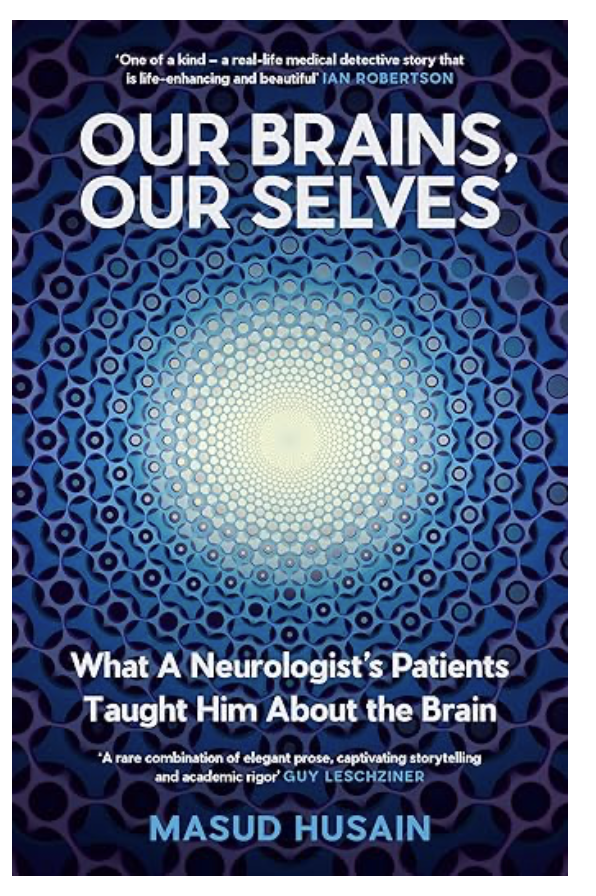
Masud Husian, a neuroscience professor at Oxford university, whose emotionally powerful book delves deeply into the nature of individual human identity and how this relates to our belonging to a supportive social group. Husain examines, the way injury and disease transformed the lives of seven patients with very different experiences. The thread uniting them is that all were “confronted by the very real possibility of social exclusion, because their behaviour had changed so significantly. As a consequence of the cognitive effects of their brain disorder, they were no longer considered acceptable within their social networks” he writes.
The resulting isolation exacerbated the distress caused directly by their neurological symptoms. All the patients gained some respite when they and their community learnt the medical explanation for their problems, whether or not the underlying cause could be treated. People who develop a brain disorder can find that their identity, their sense of self, can undergo dramatic changes. Among the people we encounter is a man who ran out of words, a woman who stopped, caring what others thought of her and another Trish who, developed Alzheimer’s disease she became delusional, imagining her husband was a secret lover. Frontotemporal dementia provoked remarkable disinhibition in the previously sedate Sue, blurring out insults to strangers and wearing a pink cowgirl suite and crocodile boots to her hospital appointment. David changed from being outgoing and gregarious to pathologically apathetic, unable to keep his job or friends. Michael lost his semantic memory for words and names. Wahid originally from Pakistan, had visual hallucinations- potentially disastrous in his job driving buses. He feared he was going mad; people in his social circle suspected that his hallucinations resulted from demonic possession by a jinn. Wahid ultimately responded to a drug that boosted levels of neurotransmitter that was depleted in his brain, allowing him to reconnect with his community. Winston whose family had emigrated from Jamaica to London in the 1950s, had a stroke that prevented him seeing anything on his left side, so he blundered into people and objects as he walked. His friends began to avoid him on the suspicion that he might be suffering the effects of syphilis, because his symptoms did not fit their expectations of someone who had suffered a stroke. After clear medical evidence, reassured the Caribbean community accepted him back.
Anna, born in Poland, developed a brain cyst as a result of an unprovoked racist attack several years earlier. She lost awareness of her right arm, which wondered of its own accord, leading to touch people inappropriately. An operation to remove the cyst cured her and enabled her to resume an active social life.
Like Husian having arrived in 1968 with his family from East Pakistan ( now Bangladesh), they “ were confronted by what many generations of Bloody Foreigners had to contend with when they first came to Britain” he writes.
The compelling human dramas reveal how our identities are created by different functions within the brain and show modern neuroscience can help to explain the changes in behaviour that occur when our perception, attention, memory, motivation or empathy are altered. By understanding how our brains normally function, neurologists are bringing hope to patients with brain disorders and illuminating the human experience.
Our Brain, Our Selves: What a Neurologist’s Patients Taught Him About the Brain by Masud Husain, Canongate £20, 288 pages.
 The neptune Herald
This book which clearly contains funny stories would be more funny if it wasn’t also so sad. Obviously the stories are true of the odd idosyncratic maladies that the characters therein suffer and if one does more backbround reading in other books you would discover another strange phenomenom which is people who receive concussion or a severe bang on the head for example falling off horses, can develop strange symptoms such as food tasting completely different – mashed potatoes seeming to mimic washing up liquid etc. Also someone with a head bang can occasionally start speaking in foreign languages which they have never learned or been taught. I feel sure with the correct publicity this book would become a bestseller and spawn a televison documentary also. So many books so little time! Ah Me!! Thanks to the author. Enjoy!! Penny Nair Price.
LikeLiked by 1 person