

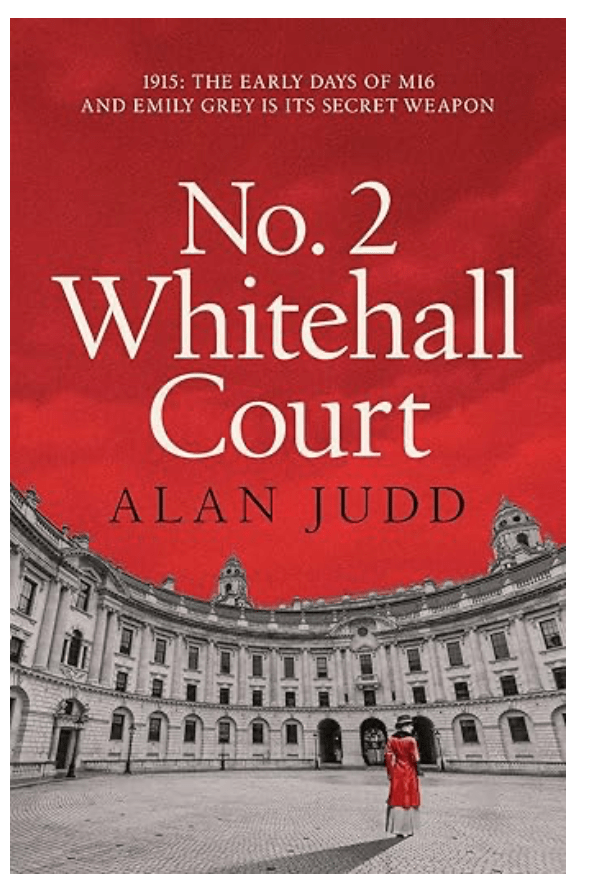
In the glorious summer of 1914, Emily Grey, a young Cambridge undergraduate is studying German in Heidelberg, where she meets Hans, a philosopher with grey eyes and long lashes, who wins her heart and asks her to marry him. Grey, like all women at the time, has not been allowed to graduate -which may be why she has sympathies for the growing demand for women to have a vote. When the First World War intervenes, she is forced to return to England, leaving Hans behind to join the Imperial Navy. A year later, Emily is recruited to serve in fledgling Secret Service by Mansfield Cumming, its first chief. Judd, a veteran spy novelist and former diplomat, knows his way around Britain’s world of shadows. Judd takes the reader back to the start of first World War and the long, smoke-filled corridors of Whitehall ministries. Commander Cumming, head of His Majesty’s newly formed Secret Service, sometimes also known as MI6, driving around London while wearing his false leg, may seem eccentric but he and his colleagues are utterly ruthless, determined to win the war by any means possible. Operating both abroad, and in Britain, Grey puts her moral qualms aside and soon proves herself a very able secret agent. Cumming is keen to make of use of Emily’s language skills. Assigned to interview an informer known as “The Dane”, she learns of a plot so audacious it has the potential to change the entire course of the war.
At Rosyth in Scotland, the home of the British Grand Fleet, Emily must work undercover to locate the mole the heart of British naval establishment. Who is the traitor known only by the codename “Heiffer”?. And can she find him in time to prevent a military catastrophe that would spell disaster for the country she serves?
Alan Judd, with historical accuracy and literary flair, created a gripping thriller about the early days of MI6 that cements his reputation as a master of the historical spy novel.
No2 Whitehall Court by Alan Judd, Simon & Schuster £18.99.


Spy stories rarely fail to satisfy. This one seems like an intriguing read with plenty of plot and twists and turns. In this case it harks back to the beginning of World War One in 1914 when things were very different for women. spying was a dangerous game and we would read this book remembering this notion. No spy is safe and they have to live with their betrayals but in a war there is usually justification for this. Peace. Aymen.
LikeLike