

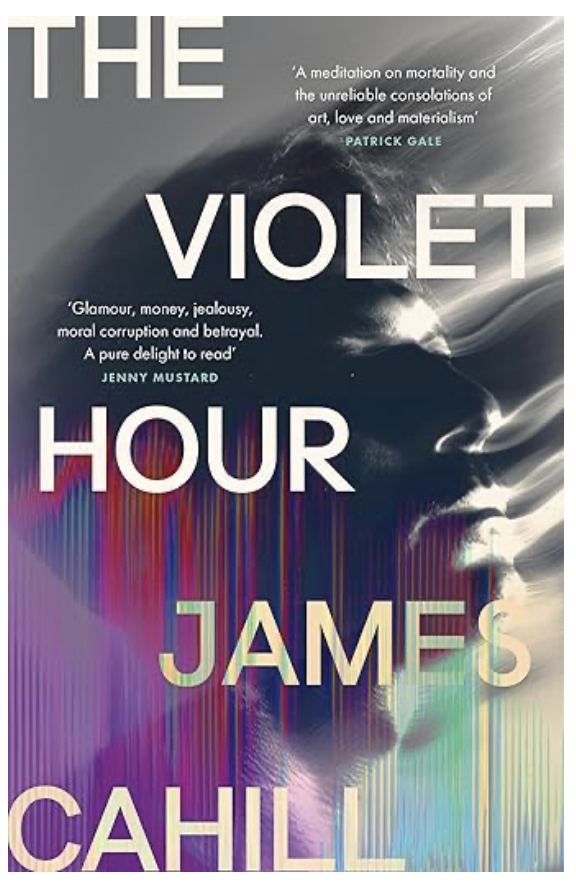
“Artists are slaves to their vanity. But in the end, in time, they see things as they are”.
Today’s commercial art world is a marketplace of extremes, mysterious dealing with unbelievable money, glamour with excess grubbiness, visions of great beauty, generosity, and greed. James Cahill give us the ruthless dealer Claude Berlins, who is only interested in dollar signs. The super curator Fritz Schein, is definitely involved. A fawning auctioneer, Florian Roth, set on getting his hands on the collection of mega-rich octogenarian collector, Leo Goffman for the sale of the century. Lorna Bedford, whose gallery was the first home of Thomas Haller, the rising superstar artist.
Thomas Haller has achieved the kind of fame that most artists only dream of: shows in London and New York, paintings sold for a fortune. The vision he presents to the world is one of an untouchable genius at the top of his game. It is also a lie.
His love in question is mostly homoerotic: Lorna pines for her younger partner Justine; Thomas has a sexual history with Claude, but these days enjoys sadomasochistic trysts in a shabby bar close to his glamourous mountain hideaway home in Montreux. It is of course a spectacular house, a starchitect’s fantasy cut into the rock overlooking Lake Geneva, whose only visitor has been the photographer from Architectural Digest.
Artist Thomas and his first champion, Lorna, both are gay but they once, many years ago, managed to create a baby son whom Lorna put up for adoption, and whose memory resonates through these pages. But when begulling young man Luca turns up as an assistant at Claude’s Gallery, and Thomas begins an intense relationship that end in tragedy, and Lorna can’t prevent herself from wondering, no, no, that would be too neat.
Thomas void of inspiration, until the intrusion of an angry young videographer, set on filming the fashionable artist, and at the same time an appointment to represent Switzerland at the Venice Biennale. A scene in which Thomas sets fire to everything he’s made for the great event in his swimming pool with cans of petrol is definitely an highlight.
Cahill indulges his luscious explanations. Leo says of Fixer Fritz: “ That man is the art world”; art critic Joel Blair says to the moody and reluctant Thomas: “You think you can escape from the art world … but you’re it.”
Cahill describes ageing Leo, in his New York apartment, his skinny hind parts being lowered on a hoist into his swimming pool by his loyal carer Bonita.
On the eve of his latest show, the luminaries of the art world gather. But the sudden death of a young man put everyone on edge, and a chain of events begins that will lead the friends back into the past, to confront who they have become. However, the dialogue at time reads like an accomplished screenplay, seems to be pitching to be simplified for adaptation.
The Violet Hour is a story of deception, power play and longing.
The Violet Hour by James Cahill, Sceptre £18.99, 368 pages.


Some readers enjoy books based on fact or biographies or autobiographies but there is always room for a well written novel. If readers find the art world interesting and multilayered relationships between creatives something they wish to know even more about, then this book – probably “faction” – my invented word for a story drawn partly from true events with the names and locations changed for example, then perhaps it will prove a rewarding read. The truth is within the pages!
LikeLike