

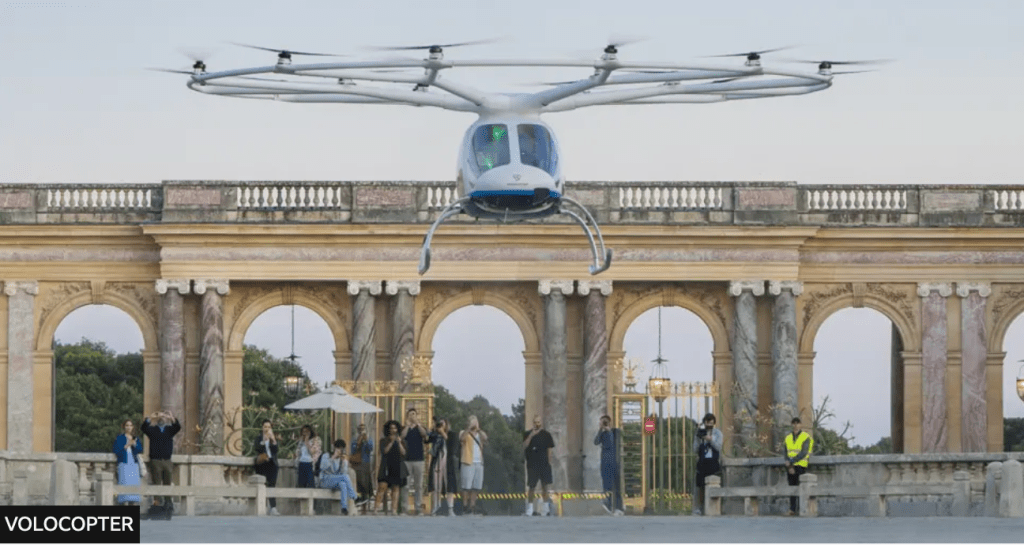
Germany’s Volocopter promised its electric-powered, two-seater aircraft, the VoloCity, would be ferrying passengers around the city. The company ran several demonstration flight although it never happened commercially. While missing that deadline, Volocopter was seeking fresh investment to keep the firm going, as talks to borrow ¢100m (£83m) from the government evaporated in April. Now hopes are pinned on China’s Geely, which is in talks to take over 85 per cent stake in Volocopter in return for $95m of funding, which could mean future manufacture would be moved to China. Volocopter and dozens of there companies around the world developing an electric vertical take-off and landing (EVTOL) aircraft, which promises the flexibility of a helicopter but without the cost, and noise emissions.
One of the most high-profile casualties is Lilium, a German company which developed EVTOL theme. Llium’s aircraft uses 30 electric jets that can be tilted in unison to swing between vertical lift and forward flight. The company boasted about having orders and memoranda of understanding for 780 jets from around the world.
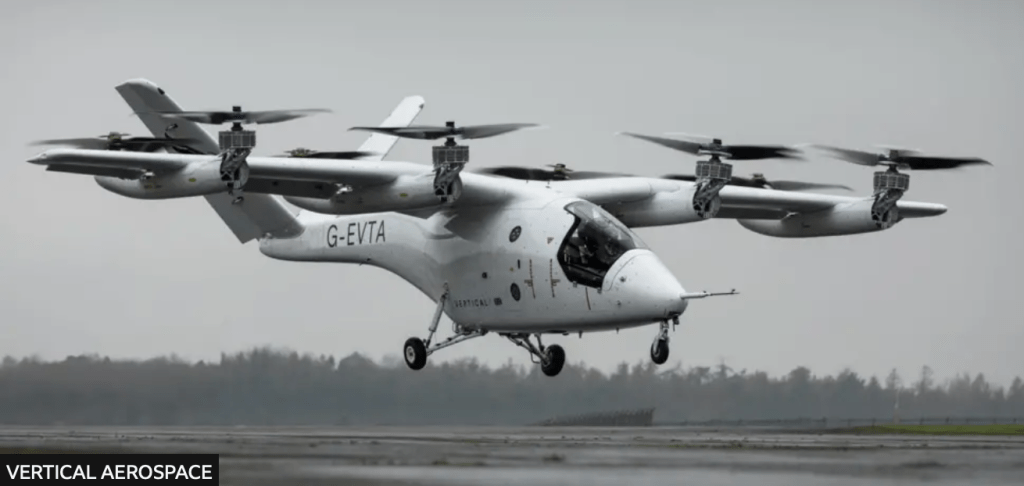
The British player in the EVTOL market is Bristol-based Vertical Aerospace, by Stephen Fitzpatrick which also set up OVO energy. Its striking VX4 uses eight large propellers mounted on slim aircraft wings to generate lift. In August last year the company’s remotely-piloted prototype crashed during testing at Cotswold Airport, after a propeller blade fell off. In May this year one of its key partners, the engineering giant Rolls-Royce pulled out of a deal to supply electric motors for the aircraft. Hopes for the future appear to be pinned on doing a deal with the American financier Jason Mudrick, who is already a major creditor through his firm Mudrick Capital Management. He has offered to invest $75m into the business and has warned the board of Vertical that rejecting his plans would inevitably lead to insolvency proceedings.


A volocopter is a fascinating concept. However the use of it would be complicated if employed as a taxi service and you mention that some of them only contain seating for two people. Therefore there would not be much space to transport people. In addition to this, there would have to be landing space provided and space which would mean they could deliver the passenger close to his or her destination. So manufacturers and owners of the business would need to liaise with county councils to arrange for special landing pads for the volocopters etc. I can see eventually the project might take off but the business definitely needs more time for planning.
LikeLike