

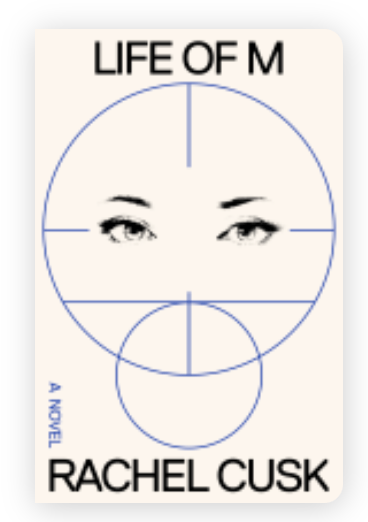
Acclaimed author of Outline trilogy (an irresistible novel of fame, power, beauty, and truth- Rachel Cusk’s new novel, is about an unnamed but apparently female author undertakes to write a biographical portrait of her friend, a world famous actress referred to as M. The film star M is one of the most recognizable faces of our time, and her image is everywhere, which has been like that since she was a child.
With such fame, her life has the appearance of freedom: people are instantly obliging, spaces are altered to accommodate her, time can be rearranged. M may live in the same places as real people. She may meet her friends or collect her children from school or walk her dog as they do. But is seems the rules of reality have melted away.
M, the author tells us, feels unmoored from reality, because “to always be playing a part is to have no home … not any history, nor any coordination in time.” When not performing, “her presence is an infinite density, lightless, voracious, like a black hole”. The truth about the very experience of living – might this proximity allow the write to briefly capture? Is M to play a character in the book, or is it the writer who is acting the role of M?
Rachel Cusk hunts for the nature of truth without ever swerving away into self-deceptions. She investigates who we are, and pretend to be, at this late stage of modern life when we are hypnotized, more and more effectively, by the images we see everywhere. She shows us that the real value of life might lie not in beauty but in ugliness; in having a self that has survived the violence of the world. Life of M is a beautiful piece of music, audible in a world of noise and spectacle.
Privacy is a quaint concept for the title character of Life of M, whose sense of self has been eroded by decades in the public limelight. As she moves through an unnamed European city, M is constantly gauging the realness of things: mannequins in a shop window evoke “the glamour of possibility untethered by reality”; the luxurious interior of a limousine, “ with its stills, scentless air is a separate reality”; the graffitied walls of an underpass contain “centuries of reality… in their fissured dusty surfaces”.
The emotional atmosphere is maudlin: “The time when things happened seems to have passed. There was a time, a long time, in which reality served to delight or astonish us.”
When M encounters a cheerful bookshop assistant, she is mesmerised by the young woman’s natural exuberance, which puts her own spiritual torpor into sharp relief. Detailed attention is paid to M’s gloomy perambulations, including her hotel rooms, brasserie, private spa, and an independent cinema. Interiors are inventoried with dry precision: the Taupe and stone hues of a converted farm house; a yacht with “deep benches upholstered in white leather around a glossy teak table in the stern”.
M regards a platter of pastries “heaped… in an otherwise clinical corporate meeting room, Later, she admires a “small round cake perfectly encased in a deep-rose glaze with a cluster of jewel-like raspberries in its centre… They are so beautiful and precise and yet so unnecessary.”
Meaningful life tantalisingly out of reach, peeps through in snatches of background detail: a little girl digging in the sand at the beach; a man listening to his children singing “Happy Birthday” to him down the phone. In the midst of a passage on M’s ambivalence around intimate relationships, the fictional narrator confidently asserts that M “is, but doesn’t experience herself as, cynical”. A digression about a woman who reconnects with her estranged son at the launch of his bestselling memoir about his difficult childhood. She claims credit for his literary success: “No suffering, no cruelty. No Curelty, no book… and no nice home secured with the royalty payments.”
There lies the rub. Suffering is indeed a currency in our trauma-obsessed cultural landscape. Friends, lovers, parents, children: all can be traded in for cash, kudos or just attention, provided you can live with the emotional consequences. The trouble is that at some point you run out of other people’s pain, and have to start inflicting it yourself.
Life of M by Rachel Cusk, Faber £18.99/Farrar, Straus and Giroux $27, 192 pages.

