

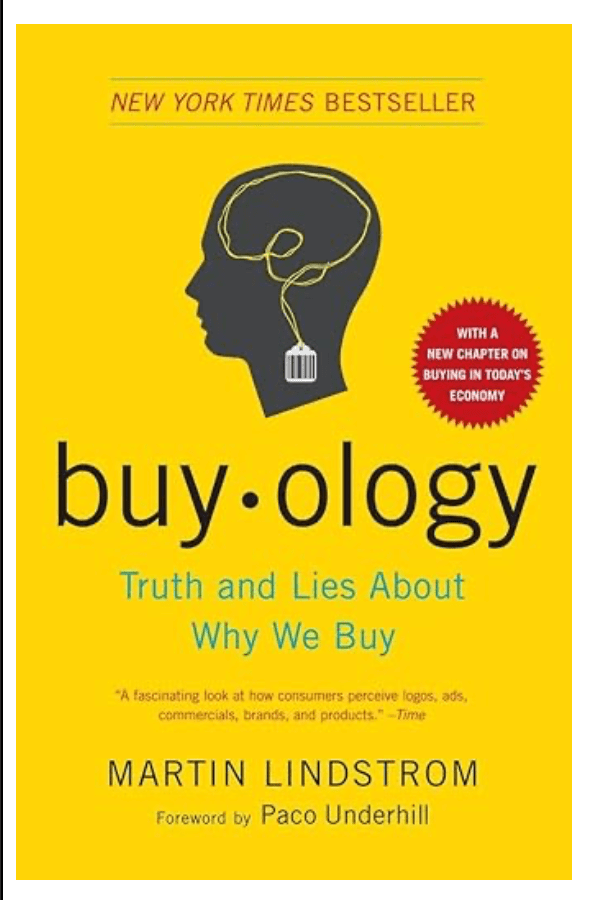
Martin Lindstrom’s three-year, seven-million-dollar neuromarketing study in Buyology, with cutting edge experiment that peered inside the brains of over 2,000 volunteers from all around the world as they encountered various adverts, logos, commercials, brands and products. Lindstrom’s mission to find out why consumers were drawn to a particular brand of clothing, a certain make of car, or a particular type of shaving cream, shampoo or chocolate bar. He believed that if he could uncover the answer, it would not only help sculpt the future of advertising, but also revolutionise the way all of us think and behave as consumers.
It seems marketers have uncovered what is going on in our brains that makes us choose one brand over another- what information passes through our brain’s filter and what information doesn’t- well that would be key to truly building brands of the future.
Executives at Pepsi-Cola Company decided to rollout a heavily publicised experiment known as the Pepsi Challenge. Hundreds of Pepsi reps set up tables in malls and supermarkets all over the world, handing out two unmarked cups to every man, woman and child who’d stopped to see what all the commotion was about. One cup contained Pepsi, the other Coke. The subjects were asked which one they preferred. If the results worked out as they hoped, Pepsi might finally make a dent in Coke’s longtime domination of the estimated $68 billion US soft drink industry. The results was shocking as more than half of the volunteers claimed to prefer the taste of Pepsi over Coke. So by this Pepsi should be trouncing Coke all across the world. But it wasn’t. Even Coca-Cola has had some embarrassing product flops, like 1985’s New Coke? Although it fared well in consumer research, once it hit the stores with great fanfare it tanked big-time, and the company was forced to withdraw it.
Korean car manufacturer Hyundai began offering a promise targeted at those customers who were afraid they wouldn’t have that money in the future, and my find themselves in an unemployment line. ‘Hyundai Assurance” according to carmaker, “Buy any new Hyundai, and if in the next year you lose your income, we’ll let you return it.” In just a month Hyundai found its sales rocketed by more than 33 per cent in the United States alone. As of late 2009, fewer than ten cars had been returned.
What the recession has done is take the bubbles and the bloat out of our collective consumer hose.
How you make decisions about what you buy- everything from food, to cell phones, to cigarettes, even to political candidates- and why.
“The advertising assault that plays on our hidden preferences, unconscious desire, and irrational dreams, and that exerts such an outsized influence on our behaviour, each and every day. Thanks to neuroimaging, we can now understand better what really drives our behaviour, our opinions, our preferences for Corona over Budweiser, iPods over Zune, or McDonald’s over Wendy’s. Marketing is a twentieth-century invention, has been asking the same sorts of questions for over hundreds of years. Science is hard fact, the final word. Marketers and advertisers, on the other hand, have spent over a century throwing spaghetti at the wall and hoping it will stick.
“How much do we know about why we buy? Each and every day, all of us are bombarded with dozens, if not hundreds of messages from marketers and advertisers. Television commercials, Highway billboards, internet banner ads. Strip mall storefronts. Brands and information about brands are coming at us constantly in full speed and from all directions. With all the endless advertising we’re exposed to every day, how can we be expected to remember any of it? What determines which information makes it into our consciousness, and what ends up in our brains. My brain is simultaneously processing all other kinds of information – what city and time zone I’m in, how long until my next appointment, when I last ate something- and with the limited capacity of our short-term memories, the location of my room key just doesn’t make the cut. ” Lindstrom writes.
Brains are constantly collecting bits of information some will make it into long-term storage- in other words, memory- but most will become unconscious clutter, dispensed into oblivion.
According to Lindstrom most brands out there today are the product equivalent of room keys. He quotes Hamlet, “Something was rotten in the state of advertising.”
Buy.ology: Truth and Lies About Why We Buy by Martin Lindstrom, Crown Currency Publishing Group, Random House, $19.00, 272 pages

