

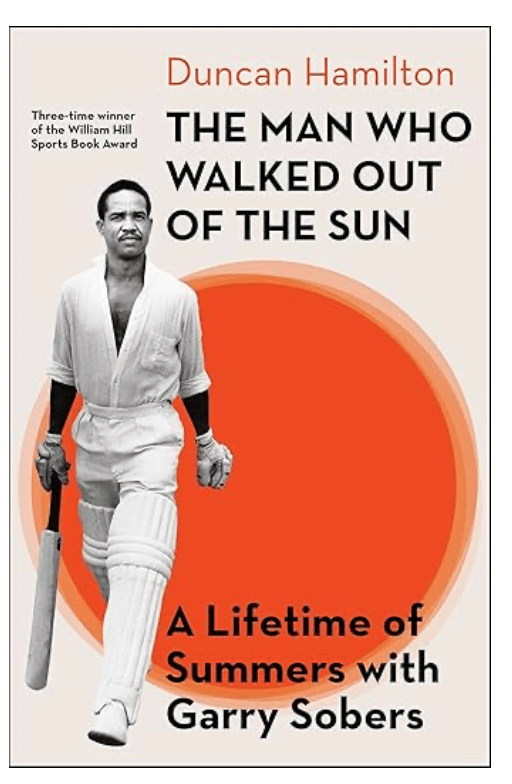
West Indian all-rounder Garry Sobers, got 90 votes in the 2000 Wisden, the bible of cricket, which named the five best players of the 20th century, a choice made by 100 voters from around the world.
Duncan Hamilton in The Man Who Walked Out of the Sun, fell in love with Sobers when he was a schoolboy in Nottingham, and over the years followed him around the country as he spoke at lunches and dinners. But he only once approached Sobers and that to request an autograph. He never asked for an interview when writing this book. Instead of contacting Sobers, Hamilton has relied on the vast amount of material on him- including seven books by Sobers himself.
At the end of the 1960s, Garry Sobers became the highest beneficiary of English cricket’s decision to rid itself of the qualification rule about hiring overseas glamour. He picked Nottinghamshire, a side mediocre for so long that it was stranded on the margins of the Championship. In that first memorable summer Sobers so successfully sparked the revival of a moribund club that it acquired the sobriquet “Sobers-shire”.
Duncan Hamilton fell in love with cricket because he first fell in love with Sobers. He counts himself as “blessed” to have lived only a shilling bus ride from Trent Bridge during the years Sobers played there.
The Man Who Walked Out of the Sun is Hamilton’s remembrance of those times and a study of Sobers’ career, tracking the rise and dominance of the world’s first “jet age” cricketer. Sobers’ statistics prove that every superlative ever used about his brilliance is justified, and the sense of wonder he inspired, the emotion he stirred, the elan with which he played, the abundant beauty in almost everything he did.
Hamilton does not shy away from mentioning Sobers’ drinking and gambling. In Bombay in 1966, he made sure of his teams victory in time to get to the Mahalaxmi racecourse to catch a crucial race. He is also critical of Sobers playing cricket in racist Rhodesia and having dinner with white supremacist prime minister Ian Smith, who he said was a “great man to talk to”.
In the winter of 1970-71, with Sobers bewitching Australia with the bat, Pru his Australian wife, left him, taking their eight-and-a-half month-old son. A distraught Sobers confessed that Pru had “received a letter from “a girl I knew”. Sobers, writes Hamilton “did not elaborate the contents”. Neither does Hamilton. Maybe being “obsessed” with Sobers, Hamilton could not bear to talk about the other loves of his hero.
The Man Who Walked Out of the Sun: A Lifetime of Summers with Garry Sobers by Duncan Hamilton, Abacus £25, 352 pages.

