

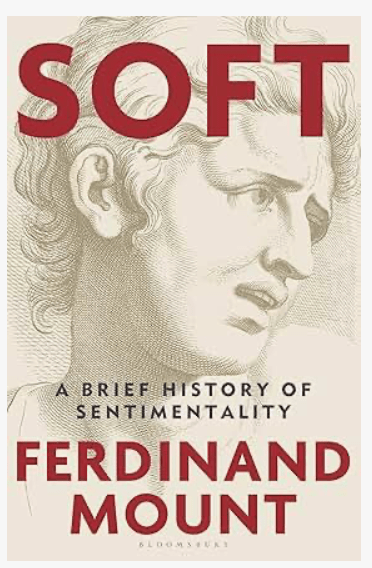
Ferdinand Mount in Soft, delves from Middle Ages to now, the ebb and flow of sentimentality in literature, art, politics, law and society through three “revolutions”.
The first sentimental revolution was all about troubadours and courtly love, medieval piety and its love of saints and ritual. The monasteries provided hospitals for the poor and hospitality for the pilgrim stranger. This was all demolished by harsh Protestantism. Mount likens Calvin’s chilling austerity to “the diatribes of right-wing Tory MPs against slackers and freeloaders’.
The 19th century brought a swing against sentimentality towards manliness, emphasising not only reason, but also courage in battle, embodied in what Mount calls the dry-eyed imperialist.
For Mount, the Beatles “All You Need is Love” epitomised the 1960s and the third sentimental revolution, the permissive age, or “the civilised society”, leading to easing of restrictions on homosexuality, divorce, abortion and what could be shown in the theatre and published. These attempts to build a more equitable society (“nanny state” to critics) were welcomed by those previously excluded.
Sentimental journey, Charles Dickens’s novels showing the plight of the poor, emotional response to the death of Diana, Princes of Wales, those who spluttered it made them embarrassed to be British and the during the blitz reproduced exactly the sentimentality of which they accused those who left flowers at Kensington Palace.
Mount concludes that sentimentality is “not just an occasionally useful spur to action; it is indispensable to human flourishing”.
Soft: A Brief History of Sentimentality by Ferdinand Mount, Bloomsbury Continuum £20, 320 pages., Bloomsbury Continuum £20, 320 pages.


I agree that sentimentiality is indispensible to human flourishing. It is a sentiment that keeps us feeling soft and protective and being able to nurture thoughts and emotions which are romantic, idealistic or sympathetic as well as loving and cherishing. It keeps a space in our life where the more gentle emotions which are part of nearly all the make up of people on the planet to let us reminisce, to let our heart beat a little faster, to let us feel comfortable in being uncontrolled about soft feelings yet still get by like the best of us while nurturing them. In the modern world medicines have had an effect on free love as well as post 2nd WW euphoria and as the writer observes attitudes to love and relationships have become more accepting of the odd relationship where two women or two men marry and have a family. Sentimentality is very British – we as a nation feel strongly about objects, photographs, clothes, ornaments and art as well as for friends and lovers, husbands and wives. I look forward to reading the book sometime soon. Penny Nair Price
LikeLike