

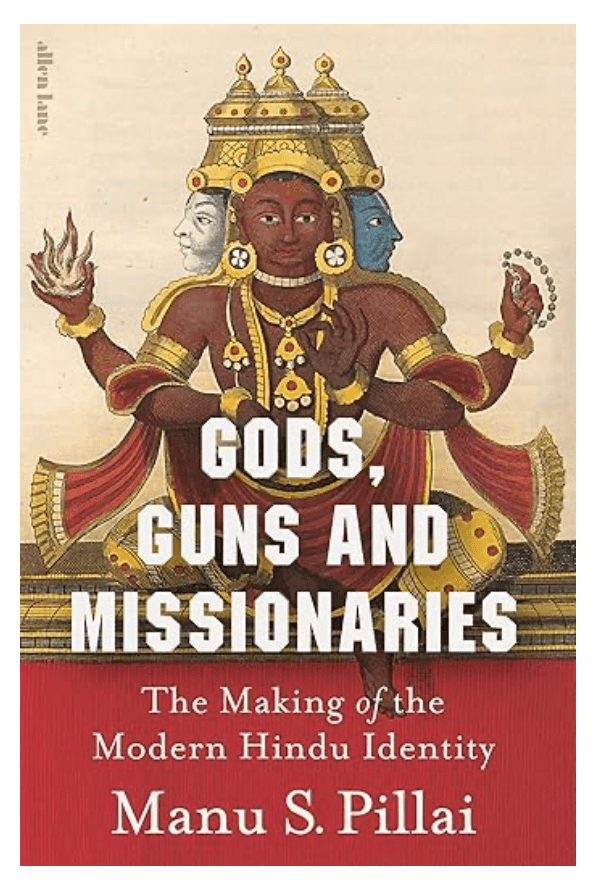
Indian historian, 1990 Kerala-born, Manu Pillai’s Gods, Guns and Missionaries is a survey of four centuries of Hinduism’s interaction with other faiths to explore the myths of true Hinduism. When European missionaries arrived in India in the sixteenth century, they entered a world both fascinating and bewildering. Hinduism, as they saw it, was a pagan mess: a worship of devils and monsters by a people who burned woman alive, performed outlandish rites and fed children to crocodiles. But it quickly became clear that Hindu “idolatry” was far more layered and complex than European stereotypes allowed, surprisingly even sharing certain impulses with Christianity.
However, missionaries became a threatening force as European power grew in India. Western ways of thinking gained further ascendancy during the British Raj: while interest in Hindu thought influenced Enlightenment thinkers like Voltaire in Europe, Orientalism and colonial rule pressed Hindus to reimagine their religion. In fact, in resisting foreign authority, they often adopted the missionaries’ own tools and strategies. It is this encounter, that has given Hinduism its present shape, also contributing to the birth of an aggressive Hindu nationalism.
Gods, Guns and Missionaries survey these cast of characters- maharajahs, poets, gun-wielding revolutionaries, politicians, polemicists, philosophers and clergymen. Lucid, ambitious, and provocative, it is at once a political history, an examination of the mutual impact of Hindu culture and Christianity upon each other, and a study of the forces that have prepared the ground for politics in India today. Turning away from simplistic ideas on religious evolution and European imperialism, the past as it appears here is more complicated – and infinitely richer= than previous narratives allow.
Pillai educated at Fergusson College, Pune and at King’s College, London.
Gods, Guns and Missionaries: The Making of the Modern Hindu Identity by Manu S Pillai, 624 pages, £35, Allen Lane


Looks like an interesting overview of religion and politics and differences between these two subjects and also some similarities. At one point under Chrsitian and European doctrine women could be quite badly treated and accused of witchcraft for example and put to death. Now we have female ministers in protestant and Church of England churches but not in Catholic churches. As for the Hindu worship of thier icons – most of them are deified animals or people who worked on the land and provided huge sustenance to those living in Hindu communities. I feel sure this will be a course book for studies relating to the topic of religion and politics and it will become a well read and possibly well loved addition to any bookshelf.
LikeLiked by 1 person