
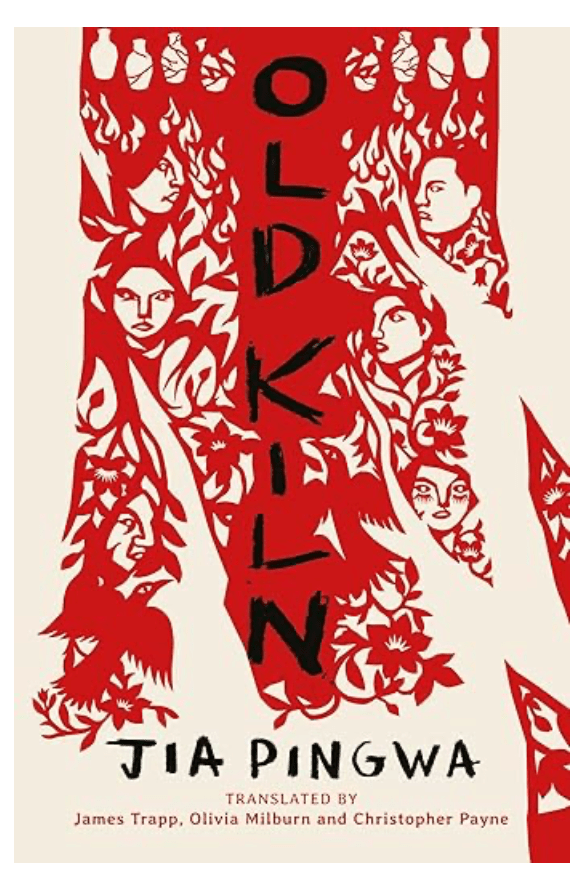
In 1966, China is on the cusp of a decade of upheaval, and the furnaces of Old Kiln have never been this cold. The village’s once-famed ceramics production has almost ground to a halt. Only ancient grudges smoulder beneath its poverty-stricken streets, never forgotten by the two families that preside over the village making them “backward, simple, petty, absurd and cruel” Jia writes. Between them stands the adopted Inkcap, whose mysterious origins leave him unloved and barely tolerated. Historically they have always been told what to do, and they have had the inertia of people trained in passivity. “Everyone is sickly, resentful, frightened and quarrelsome”.
Jia Pingwa’s thoughts turned more and more to the cultural revolution, a disaster he had lived through as a teenager. Old Kiln, is a novel set in Shaanxi Province, north-west China in which Jia sets a narrative that aims to fill the silence.
Memories flood back on his own visits to his native village, and he describe the village life in intimate detail, with its universal nicknames, obsessions with food, quarrels with neighbours, petty jealousies and the constant struggle to find daily necessities.
The readers enters a world in which villagers struggle to keep warm in freezing winters, where the smell of rice cooking in another houses arouses pangs of envy and suspicion, and days are consumed with the repetitive chores of finding firewood, scraping together enough for a meal and mending clothes and shoes to serve a little longer. Minor illness are treated with folk remedies. Major illness and death are accepted as fate. Rigid social hierarchies are rooted in political classification. A family labelled as poor peasants remain politically untouchable, a family judged to own a little more at the time of the revolution can never escape recurring political punishment.
When the faraway capital demands a purer party line, the directive trickles down to this hinterland and revolutionary factions form. Clashing visions for a new future unravel the tight-knit community along clan lines.
The main protagonist is a child whom the villagers name Inkcap, after a poisonous mushroom. His role is that of both insider and outsider: he can smell trouble coming and occasionally converses with animals, but his grandfather’s known association with the Kuomintang army means that he and his grandmother live precariously. He survives by making himself useful. His grandmother is devoted to making papercuts that acquire spiritual qualities. So village life might have continued, but one day the shockwaves of Mao’s cultural revolution reach Old Kiln. Jia himself, as he explains in an afterword to the novel, lived through those tumultuous events largely as a bystander.
For millions of others, the battle that Mao unleashed on his communist party rivals, using armies of devoted young people who were willing to assault existing authority, brought ruin, humiliation and death. Eventually a measure of order was restored by the army.
Old Kiln demonstrates how the bottom of the Chinese society endured political violence and maps on to older quarrels, clan feuds and existing struggles of power, bringing violence and death.
The established party order comes under attack, a makeshift prison and torture centre is set up in the village and rival factions fight for positions in the emerging political order. The violence is both shocking and mundane, a villager digs up the grave of one man who was tied to a tree and died after being half eaten by wolves in order to retrieve the victim’s gold tooth.
Old Kiln by Jia Pingwa, translated by James Trapp, Olivia Milburn and Christopher Payne, Sinoist Press £19.99, 960 pages.
 The neptune Herald
Leave a comment