
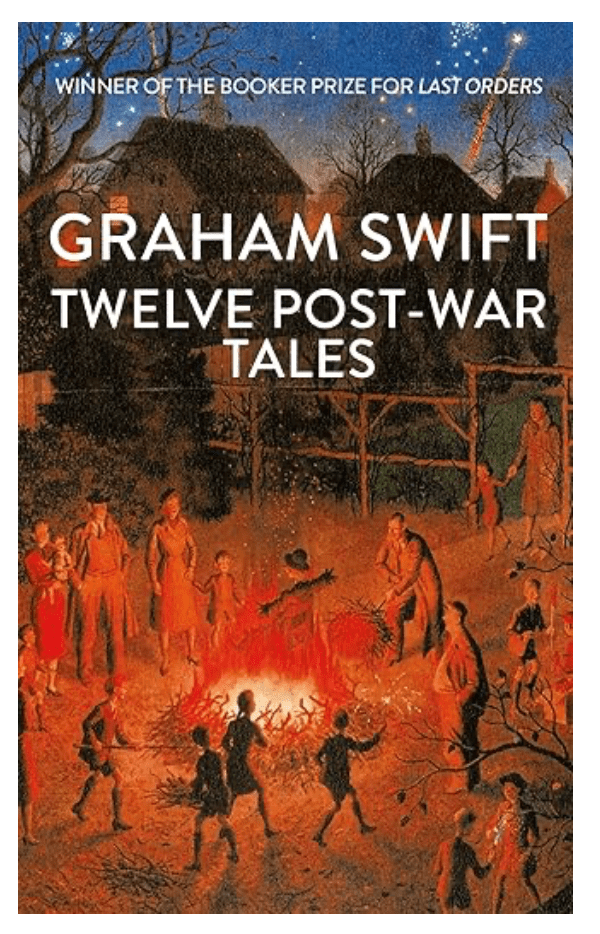
In the aftermath of the Second World War Private Joseph Caan, a young Jewish soldier stationed in Germany, seeks the truth about lost family members: in 1960s a father focuses on his daughter’s wedding even as the Cuban Missile Crisis brings the world to the brink of disaster; in 2001, while planes fly into the Twin Towers, a maid working for US Embassy staff in London wonders If her birth on the day of the Kennedy assassination shaped her life; and at the height of a pandemic lockdown, Dr. Cole, a retired specialist in respiratory disease, returns to work and recalls a formative childhood encounter with illness and much more.
Tender, humane, funny and moving, Swift’s latest work of fiction, intrigued by human interest and mystery, display his quietly commanding ability to set the personal and the ordinary against the harsh sweep of history.
Born in Postwar Lewisham – a part of south London that had suffered some of the city’s worst damage during the Blitz – with Jewish-Russian ancestry, he remains deep down a London novelist. His previous novel Last Orders won the 1996 Booker Prize, follows a cast of London war veterans on a long walk from Bermondsey to Margate, to scatter their friend’s ashes.
Twelve Post-War Tales, Swift’s third short-story collection, where his characters reflect variously on the past lives in the boondocks of Crystal Palace, Walthamstow, London Docklands, and elsewhere. Swift finds his way into the minds and hearts of an impressive range of personalities. In “Palace”, an insecurfe, royalty-hating leftist father swears that the Victorian-era Crystal Palace burned down in 1936 at the hands of Oswald Mosley and his black shirts. “I had come to see that my father lived in a world of all-pervasive conspiracy”, his son concludes ruefully.
In Blushes, a 72-year-old respiratory disease specialist reflects on the day he caught scarlet fever as a child. The memory comes back to him “rushingly fresh” while he drives to hospital one day during the Covid-19 pandemic.
The Cuban missile crisis of 1962 provides the backdrop to “Fireworks”, while the Blitz flickers behind “Passport”, in which an octogenarian woman reflects on her Spanish-born mother’s death in one of Hitler’s London bomb attacks.
Chocolate, a word-perfect story, where the joshing repartee of a bunch of pub regulars as they reminisce about a “very sweet” woman who once worked in confectionery.
Hilter’s war against European Jewry is the subject of “The Next Best Thing”, one of the finest stories where a young Jewish serviceman from north London arrives in Germany in 1959 to determine the fate of one of his relatives. He confronts a creepily over-polite functionary who pointedly avoids the use of the word “Jew”.
Funny, moving, tender and humane, is Swift’s latest work of fiction displaying his quietly commanding ability to set the personal and the ordinary against the harsh sweep of history,
Twelve Post-War Tales by Graham Swift, Scribner £18.99, Knopf $30, 304 pages.

 The neptune Herald
Leave a reply to pennynairprice Cancel reply