

In Western world, free speech is held up as core value, but there is widespread discord and disagreement about what freedom of expression means. In China, India and across the Islamic world, unorthodox views about politics, sex, and religion are repressed and people are often punished for expressing them. Amidst perennial imbalances of power, continually evolving cultural taboos, dramatic new technologies and a fast-changing global media landscape, where free speech comes from- and how we might think about it- are critical questions. Through lens of history, freedom of speech is not an absolute from which societies and regimes have drifted or dissented at different times, but something more complicated and interesting. Eloquent defenders assured us free speech spread the truth, made us into responsible grown-ups and held power to account. Without free speech democracy died. Now, freedom of speech is cudgel for belabouring opponents in arguments about other things like Hamas? Abortion? Vaccines? Social Media controls? Accuse your adversary of silencing speech, the tactics has left the campus for high politics.
British social historian who teaches at Princeton, Dabhoiwala shows free speech were invented in Britain around 1700. The real history of freedom of expression is a story of countless fascinating men and women whose lives have shaped its principles and practices over the past 300 years – slaves and imperialists, poets and philosophers, plutocrats and revolutionaries. Ranging across Europe, North America and South Asia, and not neglecting other parts of the world, Dabhowala rejects celebatory platitudes about the past and present of free expression. What is Free Speech explains how to think more deeply about free speech as a global as well as a local question – by tracing how we got into our current predicaments, showing that history complicates our contemporary presumptions and suggesting fresh possibilities for the future.
According to free-speech monitor Article 19, people’s right to think, teach and speak are routinely, often murderously, violated. Freedom of speech is not speech without rules but speech without wrongful interference. Dabhoiwala writes “ who can speak, who gets heard and who makes rules about what one can say, has always been more about power than about truth, fairness or rational debate.”
Free speech is not absolute liberty, as it must be balanced against other concerns: public order, national security, common piety, conventions of decency, children’s needs, private reputations, the social dignity of vulnerable minorities. Freedom of expression, the English jurist William Blackstone wrote in 1769, lay in the absence of prior restraint, not in “freedom from censure for criminal matter” printed or said.
Harassment, discrimination, plagiarism, copyright violations, selling state secrets, bribery, price fixing, breach of contract, insider trading, defamation, hate speech to name a few. He gives sparkling quotes from Benjamin Franklin and Thomas Jefferson, who scorned the thought that free speech meant falsehoods and calumnies might go unpunished. Nor in the US was free speech just a radical or progressive cause. The American right has used it against for example, union picketing, regulatory over-reach and campaign-spending limits. Dabhoiwala writes tellingly of British rule in colonial India. Once censorship died in Britain, it rose again in British India. Here he criticises the 19th century philosopher John Stuart Mill for patronisation and inconsistency – defending empire as tutoring the unready in self-government and drafting his defence of free expression, on Liberty, while holding high office in the oppressive and exploitative East India Company. When someone pleads free speech, Dabhoiwala writes, ask yourself, what else are they after, and are you after the same thing? He reminds us that who defines free speech, who enjoys it and who regulates it, is politics all the way down.
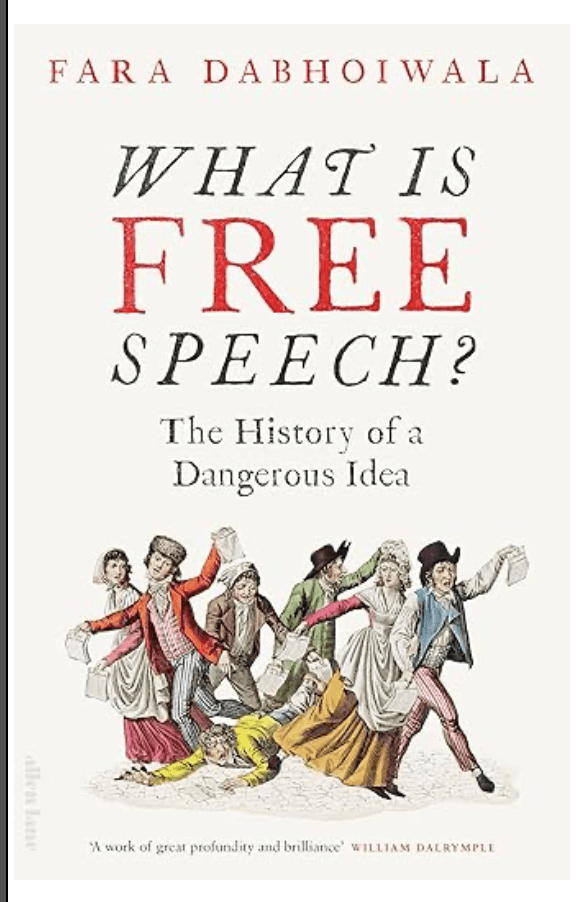
What Is Free Speech? The History of a Dangerous Idea by Fara Dabhoiwala, Allen Lane £30/ Harvard University Press $29.95 480 pages.


I studied Essential Law for Journalists as part of my three year course in Birmingham. This covers slander, libel, malicious falsehoods and defamation of character. Newspapers are constantly in court over their behaviour and rarely if ever is it safe to voice controversial opinions wherever one may live. In some countries people can be put in prison for writing and publishing or vocally airing theories and ideas. Its neverending.
LikeLike