

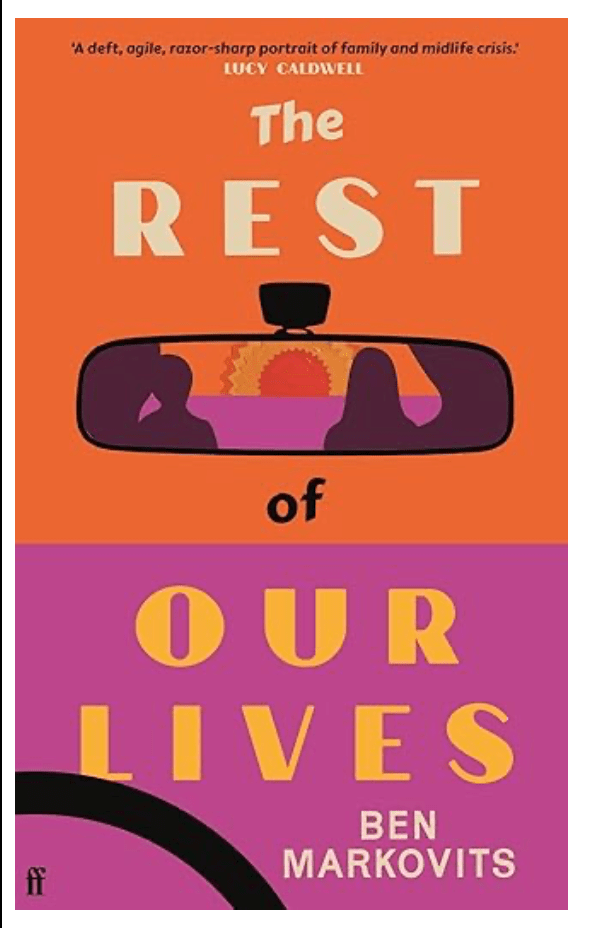
When New York law professor, Tom Layward’s wife, Amy’s infidelity was revealed, he resolved to leave her as soon as his youngest daughter turned eighteen. Twelve years later, while driving her to Pittsburgh to start university, he remembers his pact. It is a commitment born of spite and pride, unlikely to stand the test of time. As soon as his daughter is settled in her dorm, though, he gets in his car and starts driving. His destination – friends, relatives, exes, the basketball courts beloved of his youth – is anywhere but home. It doesn’t help that Tom’s job in New York is under scrutiny, owing to a combination of complaints about a class on hate speech he teaches and his consulting on the defence of an NBA team owner accused of inappropriate conduct. Tom is a man out of time, clinging to the law while public opinion shifts around him. His son puts it more bluntly: “You’re on the wrong side of history” he says. “I guess that’s true” Tom replies.
He is also on the run from his own health issues, and the fact he hasn’t told his wife.
So after dropping Miriam off, he keeps driving, with the vague plan of visiting various people from his past- an old college friend, his ex-girlfriend, his brother, his son- on route, maybe to his father’s grave in California. Baffled by the future, Tom attempts to explain past and present instead; why he stayed with his wide, why his children turned out the way they did, Why his friends are all slightly more rightwing than they’d like to think they are. There are Holden Caulfield levels of justification, as much for Tom as for his imagined audience. Markovit’s depiction of America, across which Tom drives on his road to nowhere. It’s a land of strip malls, windowless bars, six-lane highways and Burger King parking lots, interspersed by bouts of suburbia – facades of white picket fences and American flags behind with Markovits seem to suspect everyone is just as miserable as Tom.
Tom is on leave, Amy gave up work for children now departed, his friends have made enough money to retire. They actually notice the ugliness and contradictions and solitude. “Nobody tells you what an intense experience loneliness is, how it has a lot of variations” Tom reflects.
It’s too late for Tom, to escape decisions made years ago, and that even in somewhere as vast as America you can’t outrun the past.
The Rest of Our Lives by Ben Markovits, Faber £16.99, 256 pages.
 The neptune Herald
This story could be a warning to anyone who cheats on their partner! It seems like a road trip of memories for the protagonist. Internalising that resentment on his wife’s cheating for so many years is “impressive”. Seems like a potentially good read with a few descriptions of how the views and experiences are for someone on a journey in the USA.
LikeLike