
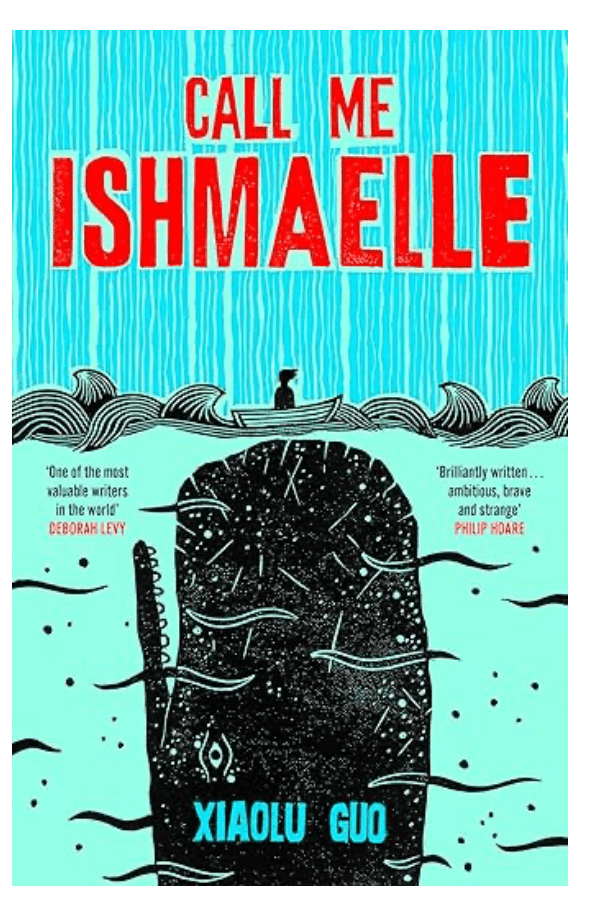
A English girl named Ishmaelle “born in a windswept cottage in the coast of Kent in the year 1843,” where she grows up swimming with dolphins. After the death of her parents and infant sister, her brother, Joseph, leaves to find work as a sailor. Call Me Ishamelle reimages the epic battle between man and nature in Herman Melville’s Moby Dick from a female perspective. Guo was inspired by a real-life story of 18-year-old Rebeca Ann Johnson who sailed out of Nantucket to Massachusetts, as the American Civil War breaks out in 1861, as part of the crew of the Nimrod, a whaling ship, dressed as a man, by the name George Johnson. It took eight months before he ruse was uncovered. In due course Ishmaelle crops her hair and don’s men’s clothes and wrangles a passage to America, isolated she had already learned self-sufficiency. She has a gift with medicinal herbs, handed down by her great-aunt. “On my seventeenth birthday I sat on a piece of driftwood, facing the ocean, eating a cold eel pie.” Abandoned and desperate for a life at sea, Ishmaelle disguises herself as a cabin boy and travels to New York. Once in America she joins the Nimrod, a whaling ship heading out of New Bedford, Massachusetts, as a greenhand commanded by the curmudgeonly, captain Seneca, (a Black free man of heroic stature). So the long voyage across the globe begins, ostensibly to harpoon whales and decant their lucrative oil in reality to hunt down Moby Dick, the notorious Albino Whale that look Sencea’s leg.
Call Me Ishamelle is set out in 1861, a decade after Moby Dick’s publication, to include the beginning of the American civil war and presidential election of Abraham Lincoln.
On the Nimrod, hierarchy relates to rank, not race, among its mixed crew of Quakers, free Black men, indigenous Americans and tattooed Polynesian harpooner Kauri ( Queequeg in the original). Sencea, an orphan removed from slavery through his adoption by white Quakers. His closest confidant is Muzi, a Chinese Taoist Sailmaker whose regular divinations of the 1Ching during the ship’s passage are first adhered to by Seneca and then fatally ignored.
Ishmaelle binds her breasts and hides her periods. She wonders if she can be “both”. She is adolescently confused about emotions, her place in the universe, the lonely expanse of the ocean and what has become of her brother. She fancies her life is “cursed”.
The sailors are spooked by their captain’s monomania, discuss the horror that befell the whaleship Essex (the inspiration for Moby Dick) and the abandoned ghost ship the Flying Dutchman. Kauri prays his wooden idol Yogi, while Ishmaelle clutches her great-aunt’s heirloom, a clumsily crafted miniature seawoman. The ships moves on: the whale is sighted and futilely hunted. Routine deaths and cruelty occur: lashings, the mutilation of a cat, the covert rape of Ishamelle through which her real identity is revealed. “A red tide now poured from the grey whale. Her tormented body rolled in her own blood… The slanting sun playing upon this crimson pond in the sea sent back reflections into every face”.
Guo offers a powerful exploration of nature, gender and human purpose.
Call Me Ishmaelle by Xiaolu Guo, Chatto £18.99, 448 pages.

 The neptune Herald
Leave a reply to pennynairprice Cancel reply