
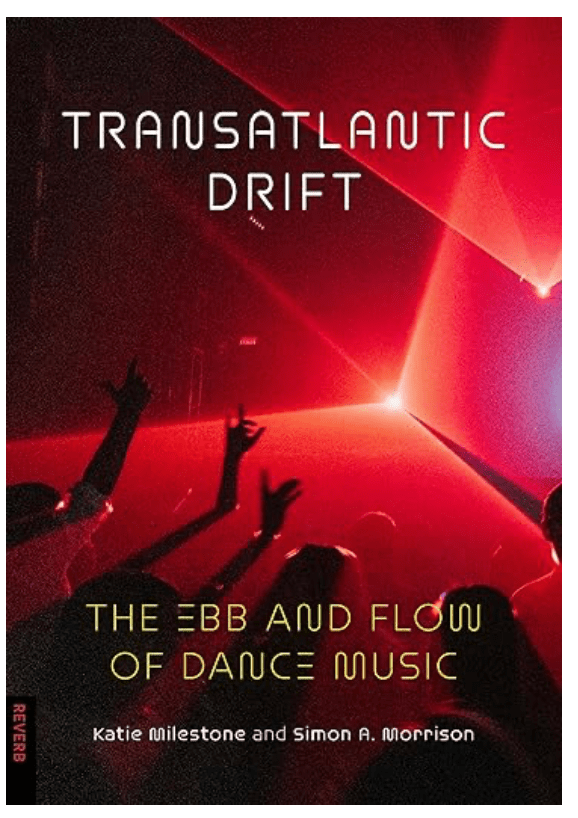
After the world war, the UK and America were the dominant forces responsible for emergence and evolution of nightclubs and electronic dance music from the 1950s onwards. Transatlantic Drift traces the rhythmic journey of dance music, following the pulse as it bounced between Europe, North America and Caribbean. Music, dance styles and nightclub spaces are not created in isolation; they are shaped by collective influences and shared experiences. Two British academics, Milestone, a sociologist, and Morrison, music journalism lecturer, reveals the interconnected story of dance music, taking in hotspots such as New York, Detroit, London, Manchester, Chicago, Düsseldorf and Ibiza. Britain’s love affair with what is predominantly Black music has been a two-way exchange, from the resurrection of R&B by the Rolling Stones in the 1960s to the embrace of English synth pop by the African-American artists who invented techno and hip hop.
The golden era revealing the rise of the mod, the birth of Northern Soul, the disco boom, the rave culture and the spectre of contemporary decline. In 2013, the UK had 1, 700 nightclubs, by June 2024 they strung to 787.
Establishments of early 1960s London, people were dancing solo, making up their own moves to the sound of vinyl records. Leisure groups like Rank and Mecca tried to transplant these excitements from central London by opening new clubs in provincial towns, but the advent of flower power in the latter part of the 1960s transplanted the culture. The mod audience from the working class, with their subterranean locales in which to take amphetamines and listen to singles made by Black Americans. The middle-class hippy ushers in a habit for LSD and flares. Hippies favour albums made by white Americans and festivals in fields, they can elevate their spirits.
Milestone calls Britain’s “passion for esoteric Black music”. In the industrial North, dance nights flourish and the booming car ownership of the early 1970s links towns such as Wigan, Wolverhampton and Blackpool in a network of all-nighters that becomes the Northern Soul scene.
Freddie Laker launches “no-frills” transatlantic flights in the mid-1970s, for £199, allowing DJs to go to America, the mythical world that makes the music they love, and buy more 45s. “ Each record is a sonic postcard, spreading the good word across the world” according to Morrison. By early 1980s, cassette mixtapes brought back to the UK from the US are showcasing the 12-inch single.
Visiting the location of once-influential New York club the Paradise Garage, Morrison finds it returned to its original use as a place to park cars. By mid-1990s, gay, Black sound, made in bedrooms thousands of miles away, has transformed much of Britain into what Milestone explains as “ a community united by a love of dance music outside the mainstream with the sense of euphoria evident in the dance floor.
Transatlantic Drift offers an engaging exploration of how people have come together to share melodies and rhythms, forming a global conversation through electronic music.
Transatlantic Drift: The Ebb and Flow of Dance Music by Katie Milestone and Simon A Morrison, Reaktion £12.99, 272 pages.

 The neptune Herald
Leave a reply to pennynairprice Cancel reply