

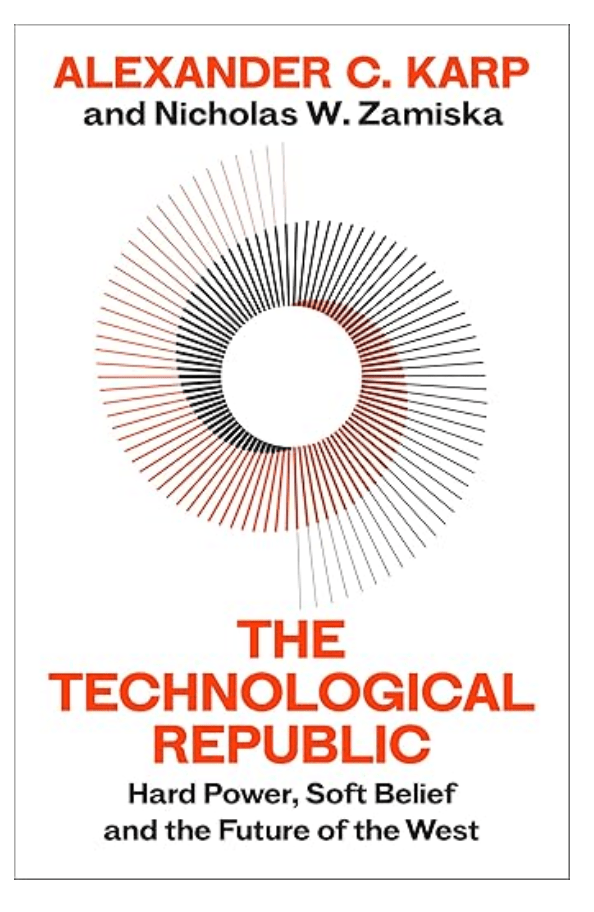
Palantir Technologies, a company that is intertwined with the national security state, Silicon Valley’s utopian tech thinking was always untethered from reality and it’s a good thing that it is now ending. Palantir’s co-founder and CEO Alexander C. Karp and Nicholas W. Zamiska claims that in order for the West to retain its global edge – and preserve the freedoms we take for granted – the software industry must renew its commitment to addressing our urgent challenges, including the new arms race for artificial intelligence. Government, in turn, must embrace the most effective features of the engineering mindset that have propelled Silicon Valley’s success. The strategic needs of the public provided by photo-sharing platforms and chat apps, the founders of many technology companies have tried and failed to escape from the country that enabled their emergence. Our most brilliant engineering minds once collaborated with government to advance world-changing technologies, as their efforts secured the West’s dominant place in the geopolitical order. Now that relationship has eroded, with perilous repercussions.
Meanwhile authoritarian governments, most notably in China, Russia and Iran, have hijacked cyber space for their grown geopolitical ends. Cyber space has increasingly become an instrument of geopolitical control.
“Silicon Valley has lost its way. The problem is that tolerance of everything often constitutes belief in nothing” in the opening sentence of The Technological Republic.
According to the authors, Silicon Valley directed its energies, talent and capital to the “trivial and ephemeral” and must rebuild its relationship with government and redirect its efforts to tackling the biggest challenges we face, such as healthcare, education and science. It must lean into the defence of the nation, as Palantir has done by providing intelligence analysis platforms for the military, and help preserve the west’s “enduring yet fragile” geopolitical dominance. Ultimately Silicon Valley must help the US win the technological arms race with China.
As of 2024, US tech companies were worth $21.4 trillion – equivalent to 87 per cent of the total value of the world’s 50 biggest tech companies. These companies’ expertise in software and AI will now ensure they play an increasingly critical role in defence. “ How will the state ensure that this engineering elite remains subservient and accountable to the public?” the authors ask.
In 1900s the world became subject to measurement and control, rather than attempting to discover new territories, the geopolitical struggle revolved around establishing and enforcing different blueprints for the mapped world. The second arrived with the invention of nuclear weapons, which made humanity both “omnipotent an d totally impotent”, permanently teetering on the edge of global destruction. The third was the re-emergence of China on the world stage this century and its attempts to build a different culture and development model. The fourth moment that is only just beginning is the era of software automation. We are moving form a world of atoms to one of bits leading to virtual rivalries. Competition between the US and China has become invisible and indirect, involving internet standards and protocols as much as rockets and battleships.
Chinese observers were quick to notice that the west has won the cold war “without gunpowder”, highlighting the importance of ideological power, as President Xi Jinping launched his own “China dream” which unleashed a rivalry between two imaginary worlds or “a competition between designers or programmers to determine which of them can build the most powerful dream machine”.
The Technological Republic: Hard Power, Soft Belief and the Future of the West by Alexander C Karp and Nicholas W Zamiska, Bodley Head £25/ Crown Currency $30, 320 pages.


The USA and China are the world’s leaders in technology but not only that – they have the means to create products that are wanted and needed throughout the civilised world. They are, it seems, endlessly in competition with each other and therefore not really allies in any way, far from it in fact. Other countries involved in high tech materials, software and creations are barely “on the radar”. This book is one of many speculations and suggestions that this technology story will run and run especially with the new addition of AI as a threat and menace to many and this can re-create voices and pictures or simply create them from old material. It would prove a very interesting read I feel sure.
LikeLike