
The smells evoke such strong memories? How much body odours control who you fall in love with. How sensitive is the human sense of smell?
Ability to arouse hunger, thirst, attraction and disgust
The modern man collectively underestimate the power and importance of our sense of smell -and its role in enriching our lives in ways we rarely think about.
Stockholm University, psychology professor, John Olofsson, has been engaged in olfactory research for 20 years, and his work has inspired a mission to lead a “smell revolution” and elevate the status of his favourite sense in an age overwhelmingly dominated by sight and hearing. Olofsson “ The sense of smell may have been sidelined, but smells have never lost their importance to us. They have continued to give us pleasure, interact with our personalities and guide our behaviour through their ability to arouse hunger and thirst, attraction and disgust”.
The book dispels the myth that humans have a poor sense of smell. Recent research demonstrates that we are among the best in the animal kingdom at detecting odours at very low concentrations and distinguishing between molecules. Dogs however outperform people, we do better than rats, mice, monkeys, pigs, otters and the vast majority of others.
A normal human nose can detect butyl mercaptan, a volatile industrial solvent, dilute to 0.3 parts per billion- equivalent to three drops in the volume of an Olympic Swimming pool.
Another experiment with wine tasting showed that they could distinguish female from male fruit flies in immersed in glasses of German white, on the basis of the different pheromone (signalling chemicals) the insects emit. One billionth of a gramme of pheromone was enough to give the wine a detectable female odour.
According to Olofsson, “Aristotle wrote that our sense of smell is inferior to that of all other animals and also inferior to all our other senses. For Aristotle it seemed natural to claim that women had a better sense of smell because they were closer to animals and nature”.
The human olfactory bulb represents just 0.01 per cent of our whole brain – and the mouse’s take up 2 per cent of the murine brain – both have about 10mn neurons. The rich neutral connectivity of the human brain enables people to process odours in a way that gives us a superior sense of smell to rodents.
The olfactory processes start not in the nose but in the brain, even before the odour molecules reach their destination. Olfactory processes are shaped by expectations and experiences”.
The “cognitive perspective” lies at the heart of The Forgotten Sense. How we experience a smell or taste depends both on our emotional circumstances and the evidence from other senses. In experienced people can be fooled easily into thinking that white wine dyed red is actually real red.
From the throat as we chew and swallow “retro-nasal Olfaction” is more strongly developed in human than other animals.
This book is guide how people can improve their sense of smell and taste by training with a programmed series of odour and flavour experiences.
Sense of smell may not be king of the senses but it is a valuable companion. Smells and scents are the colour that enrich our experience of life. When people talk about their sense of smell, they also tell us something about themselves, their feelings, thoughts and relationships. Sense of smell not only reflects the chemical world outside us, but also bears witness to our inner world, our feelings and thoughts.
Dr Jonas Olofsson has discovered that it is actually possible to improve and refine one’s sense of smell, to develop it into a more useful tool to bring a powerful immediacy to your life.
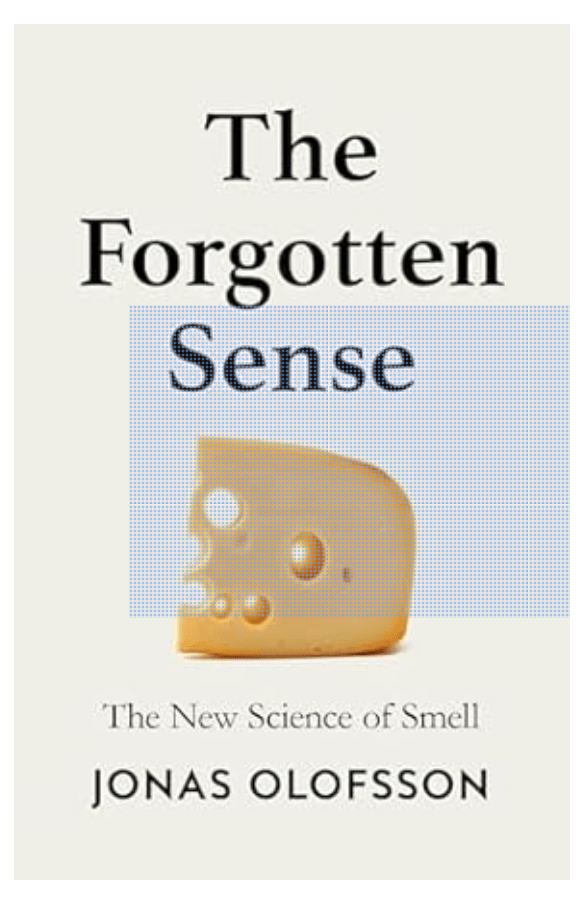
The Forgotten Sense: The New Science of Smell by Jones Olofsson, William Collins £18.99, 224 pages.
 The neptune Herald
Leave a comment