
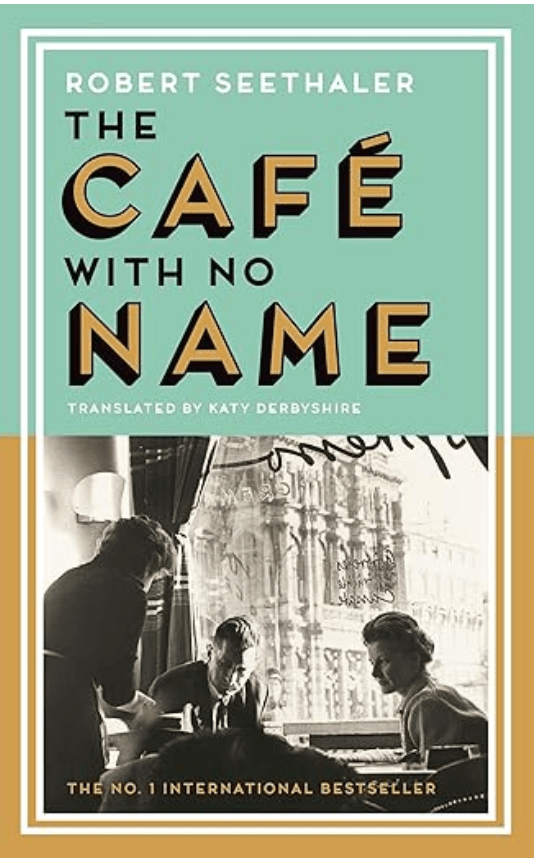
Robert Seethaler’s characters are unassuming, resilient and witness to a world that seems to rage especially around them.
It is 1966, Robert Simon has just fulfilled his dream by taking over a Robert Simon, an ordinary man whose blue eyes “were the only handsome thing about him”, and who takes over a rundown café in “ one of the poorest and dirtiest” districts in bustling Vienna. He recruits a barmaid Mila, and soon the customers flock in. Factory workers, market traders, elderly ladies, a wrestler, a painter, an unemployed seamstress in search of a job, each bringing their own stories and their plans for the future. As Robert listens and Mila refills their glasses, romances bloom, friendships are made and fortune change. And change is definitely coming to the city around them, to the little café, and to Robert’s dream. Seethaler paints a picture of a city recovering form war. Not only several of its windows are covered in dust, but there are more ominous hints towards the city’s absent souls. He describes a pair of young lovers vanishing as if they had “sunk into the earth between the abandoned tracks” while another character dissolves into thin air. Simon looks over his newly leased café, he sees single woman’s shores on the floor behind the counter. Vienna’s wartime horrors are barely mentioned in the text, but their ripples are everywhere, today. The Holocaust memorial “ Shoes on the Danube Bank in Budapest lies only a few hundred kilometres downstream. Seethaler’s characters come and go, relationships spark and extinguish, seasonal menus are launched and discontinued. While the newspapers might repot that the city is advancing towards “a radiant future” rising “from the morass fo the past” as everyone is optimistic. After the Reichsbrucke collapse in August 1976, a real life event that saw the bridge suddenly plunge into Danube – a man laments that the old Austria was “over and done with, for ever more”. The café too is not impervious to Vienna’s postwar tussle with modernisation.
It is an unforgettable novel about how we carry each other through good and bad times, and how even the most ordinary life is, in its own way, quite extraordinary.
This is story of hopes, kindness, and everyday heroism of one community. The Café with No Name translated by Katy Derbyshire has charmed millions of European readers. Seethaler’s previous novels – A Whole Life, which was shortlisted for the International Booker Prize in 2016, and Tobacconist.
The Café with No Name by Robert Seethaler translated Katy Derbyshire, Canongate £16.99/Europa Editions $25, 224 pages.

 The neptune Herald
Leave a comment