
When the bloody Chinese Civil War concluded in 1949, two Chinas were born. Mao’s Communists won and took China’s mainland, Chiang Kai-shek’s Nationalists fled to Taiwan island. Since then, China and Taiwan have drifted into being separate political and cultural entities.
Kerry Brown on the small island caught between Chinese power and the vagaries of US politics, to find a solution to a problem, when they attempt it would most certainly lead to world war, the stalemate prevailed for the past 76 years.
Taiwan is now a free, vibrant society, flourishing democracy and an economic success story, as one of its companies produces over 90 per cent of the semiconductors that power the world’s economy. For the United States and the West, the island is a bastion of freedom against China’s assertive presence in the region. China, increasingly bellicose under Xi Jinping, insists Taiwan is part of its territory and must be returned to it. Should China blockade the island and mount an invasion, it would set off a chain reaction that would pitch it against the US escalating a regional war into a global one.
Professor of Chinese studies at King’s College, London, Kerry Brown who began his career as a British diplomat in Beijing, explores how Taiwanese thinking about their predicament has evolved as generations have changed. He had unparalleled access to Taiwan’s political leaders and a deep understanding of Taiwan, its twenty-three and half million people, and how they navigate being caught in this frightening geopolitical standoff, by saying they are Taiwanese, not Chinese, and that they have no desire for unification. The evolution of public opinion since the occupation of Taiwan by Chiang Kai-shek’s defeated Kuomintang nationalists in 1949 and their imposition of an often harsh dictatorship until Chiang’s son laid the path for democracy four decades later. Taiwan became controlled by imperial China for the first time in 1683, and so was formally Chinese merely for 200 years until it was ceded to Japan in the Treaty of Shimonoseki in 1895. Previously the island had seen itself as autonomous and been regarded from the mainland too as a somewhat wild place.
Recognising strongly held feelings on either side of the Strait, Brown concludes that there is simply no room for compromise as things stand. His biggest worry is not that either China or Taiwan will seek to force the issue, but that the vagaries of domestic US politics might do so, with some new future president Trump deciding to teach China a lesson by suddenly recognising Taiwan as a sovereign state, thereby forcing Xi, to fight or face humiliation.
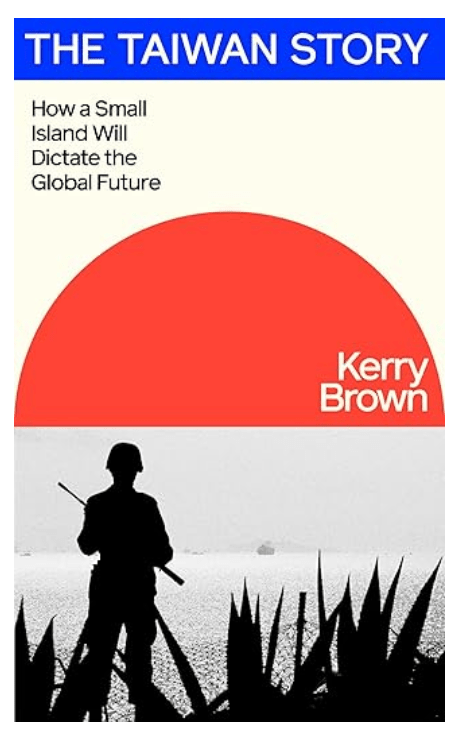
The Taiwan Story: How a Small Island Will Dictate the Global Future by Kerry Brown, Viking £18.99, Martin’s Press $30, 272 pages.

 The neptune Herald
Leave a comment