
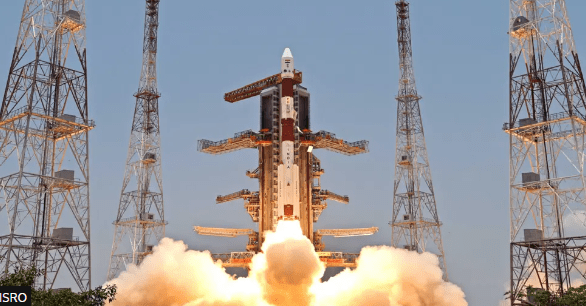
How does India keep the cost down to reach the Moon and Mars?
Last year India became the first country in the world to land near the previously-unexplored lunar south pole. India’s space projects have only an approval of £2.1bn (Rs 227bn). Their next historic mission to the Moon and sending an orbiter to Venus, and build the first phase of India’s maiden space station and development of a new reusable heavy-lifting rocket to launch satellites.
Indian Space Research Organisation’s (ISRO) Moon, Mars and Solar mission costs only $74m on the Mars orbiter Mangalyaan and $75m on Chandrayaan-3.
Nasa’s Maven orbiter had cost $58m and Russia’s Luna-25 which crashed on the Moon’s surface two days before Chandrayaan-3’s landing, had costs 12.6bn roubles ($133m).
Chandrayaan-1 was the first to confirm the presence of water in lunar soil and Mangalyaan carried a payload, to study methane in the atmosphere of Mars.
ISRO’s founder and scientist Vikram Sarabhai had to convince government that a space programme was not just sophisticated luxury that had no place in a poor country like India which only had independence from Britain in 1947, and satellites could help India serve its citizens better.
India’s tight budget in a country with conflicting needs and demands as photographs from the 1960s and 70s showing scientists transporting rockets and satellites on cycles or even on a bullock cart.
In 1974, India conducted its first nuclear test prompting West to impose a embargo on transfer of technology to India, which made for think for themselves and not get corrupted from Technology from the West.
Indian scientists used it as an incentive to develop their own technology and indigenously manufactured equipment kept the costs down. India does not do engineering models which costs an arm and a leg used for testing a project before the actual launch. India concentrate on single model which is meant to fly.
Mylswamy Annadurai, chief of India’s first and second Moon missions and Mar mission said “ ISRO employs far fewer people and pays far lower salaries, to make Indian projects highly competitive. India’s dedicated team of less than 10 people often worked extended hours without any overtime payments as they are passionate about what they did. The tight budget often sent them back to the drawing board allowing them to think outside the box and led to new innovations.

 The neptune Herald
Leave a reply to pennynairprice Cancel reply