
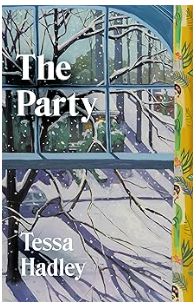
A novella composed as a triptych, about two sisters and a night that changes everything, from the master chronicler of our heart’s hidden desires. Evelyn had the surprising thought that bodies were sometimes wiser than people inside them. She’d have like to impress somebody with this idea, but couldn’t explain it. On a Winter Saturday night in post-war Bristol, bringing to life with its docks, bombed out streets and crumbling grand houses, with ever moving sea and endless rain act as brooding backdrops and metaphors for the characters’ emotional turbulence. Sisters Moira and Evelyn, newly middle class, their mother a coal minder’s daughter obsessing over “keeping up appearances”, their father, stern and upright, works for the Port Authority and having an affair with a younger woman. His hypocrisy is typical they tiptoe around it, a hole in the floor that everyone’s ignoring. This potentially explosive drama murmurs in the background, providing a counterpoint to the intellectual and amatory desires of the sisters as they dream of escape from repression. The sisters on the cusp of adulthood, go to an art students’ party in a dockside pub, where they meet two men, Paul and Sinden, whose air of worldliness and sophistication both intrigues and repels them. Sinden calls a few days later to invite them over to the grand suburban mansion Paul shares with his brother and sister and Moira accepts despite Evelyn’s misgivings. Moira’s boyfriend has gone to the Federation of Malaya, to guard plantations, which allows Hadley to gently satirise the students’ lefty political pretensions: “Down with the filthy British Empire!” says an ex-boarding-school boy at one point. Moira’s an art student , and has unsuitable friends who wear wide-brimmed hats and drink horrible cider concoctions. Evelyn is reading French at University, and would prefer to be immersed in Racine’s Andromaque ( providing one of many literary references in the work: the play’s preoccupations with loyalty and love loom large.
Evelyn is also a Sunday school teacher, and lies to her parents about going to the party at the pub, the event that forms first part of the triptych. She deceives her parents, her parents deceive her, in turn, about the truth of their marriage. ( Evelyn lies about going to a different party, in a neat ring composition. “It wasn’t possible to pray on your knees for God to preserve your innocence, and in the same life go to parties at the Steam Packet”, she thinks. In the Fug and bustle of the pub, she meets a beautiful drunk posh boy, Paul, and his ghastly friend, Sinden.
The central panel of the triptych, which takes place on the day after the party, describes the girls’ home life and the way that their Catholic mother Rose desperately papers over the cracks in her marriage. She provides a terrible model for them.
The old woman used to look after sailors, which allows Hadley to show the licentiousness of life in a port town: the drunken ratings who haunt the streets, and the dangers that encroach on respective lives.
In the final panel, the girls are invited to Paul’s crumbling country house for another party, one that begins with stiffness and ends in bohemian excess. Paul’s fading seductive brittleness is utterly destroyed, symbolised in Paul’s ill brother, who caustically comments on the scene, and in the depraved behaviour of his sister. Evelyn finds herself oddly bewitched, at life’s core. Evelyn and Moira’s experience of becoming adults in a world dawning with new life is so exhilarating it’s almost tangible.
As the night unfolds in this unfamiliar glamorous new setting, the sisters learn things about themselves and each other that shock them, and release them into a new phase of lives.
The three interlinked parts, comprising an engrossing whole, examine class distinction, intergenerational tension and the deceptions that families practise, as well as the complexities of love and the shifting tides of society.
The Party by Tessa Hadley, Jonathan Cape, £12,99, 128 pages.

 The neptune Herald
Leave a comment