

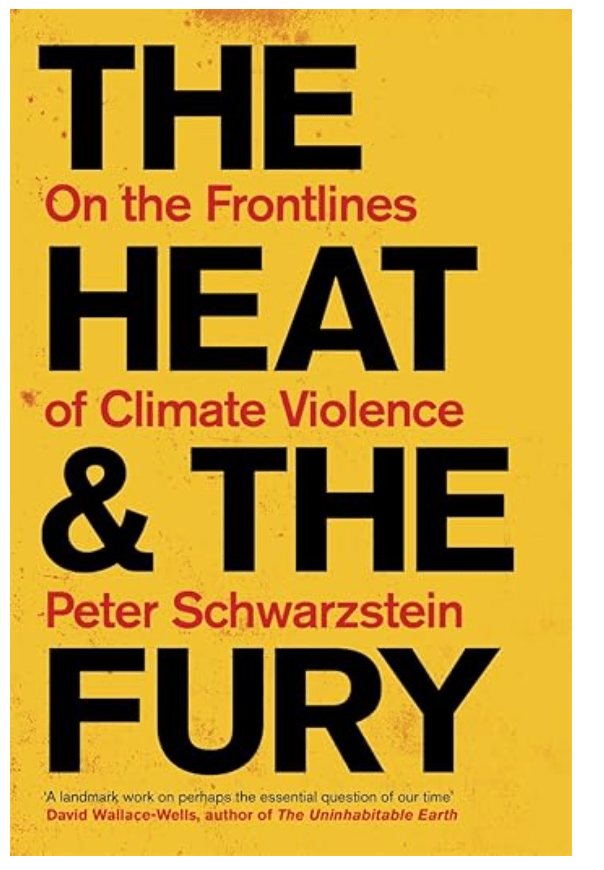
Environmental journalist Peter Schwartzsrein after travelling to more than thirty countries, offers a series of dismal examples of how drought, heat and other extremes are exacerbating conflict.
In Iraq he finds that farmers whose crop had failed amid shrinking rains, and who had lost communal land to Baghdad businessmen, were more likely to support Isis than those near rivers who could maintain good harvests. In some region that seemed to join the Jihadis at roughly three times the rate of counterparts living near rivers.
His travels in Bangladesh, Africa and other climate battered region reveal further pressures but also offer hope in the form of environmental peace-building aimed at claiming climate fuelled hostilities.
Schwarzstein sees evidence of success in the northern Sahel, where erratic rains and declining pastures had spurred murder and tit-for-tat animal killings. Tensions eased after an agricultural NGO stepped in to help manage herd numbers and compensation.
While researching this book, Schwartzstein was chased by kidnappers, detained by police and told in no uncertain terms, that he was no longer welcome in certain countries. He recounts his personal brushes with violence are simply a hint of the conflict simmering in our warming world. Schwartztein reveals that there is nothing inevitable about climate violence. The same stresses that are pitching people against one another can even help bring them back together.
Through the stories of the soldiers, farmers, spies, and others affected around the world, he makes sense of a form of conflict that remains poorly understood, even as it devastates the lives of so many millions of people.
The Heat and the Fury: On the Frontline of Climate Violence by Peter Schwartzstein, Footnote Press £22.
 The neptune Herald
This seems a timely book in the event of climae change and I am impressed that the writer went through difficulties during his research but still got his report on the bookshelves. I feel sure it is a very interesting read.
LikeLike