
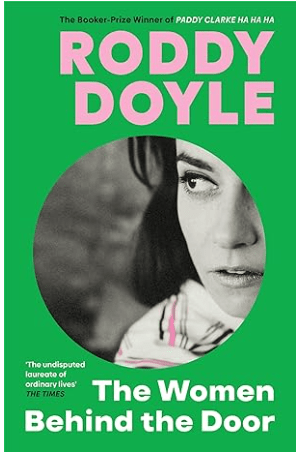
Booker Prize-winning Roddy Doyle first introduced “ The woman who walked into doors’ a mid-90s TV show whose subsequent novels featured woman’s story and the second of which is Paula Spencer. The initial response was relentless and polarised with some critics outraged by his representation of domestic abuse and sceptical that such grim phenomenon could exist in modern Ireland.
At sixty-six, Paula Spencer – mother, grandmother, widow, addict, survivor – is finally living her life. A job at the dry cleaners she enjoys, a man – Joe – with whom she shares what she wants, friends who see her for who she is, and four grown children, now with families and petty dramas the likes of which Paula could only have hoped for. Despite its ghosts, Paula has started to push her past aside.
The story begins in 2021, Paula was elated to receive her first dose of coronavirus vaccination, although the state of her skin years ago was diabolical as she was her husband’s punchbag.
Paula’s current stability, her close friendships, her part-time job, her sobriety and her chosen solitude have been hard-fought. It has been decades since her husband Charlie was “shot dead by the Guards”. When she returns from that initial vaccination appointment, though the first tentative steps towards liberty there is another woman behind the door, the last person Paula would expect to arrive unannounced, Nicola, her most capable child, Nicola who had been Paula’s mother for years, seemingly happily married and a mother herself, the safest thing in Paula’s life. Nicola says she isn’t going home or back to her job and the question then is why? Will you let me in she asks.
Paula does, but Nicola’s presence is both balm and blight : she’s teenager in menopausal body and this blend of humour and sympathy, the unlikely pairing of the two women under one roof, provides a great deal of comedy. Paula thinks “no one should have middle-aged children , Job done good or bad. Leave your ma alone. Is she supposed to mother the woman who’s been mothering her for thirty years”.
When Paula contracts covid, “breathing like the Irish Sea”, the isolation period sees the pair barricaded themselves from the world.
Paula and Nicola’s quick-fire exchanges become sparring matches that once stated can only escalate. Paula is all set for round two or three. These cycles mirror the hourglass structure of the plot from Nicola’s initial arrival in 2021 to 2023 and back again. The Covid seems the last frightening virus of all, and the pair’s discussions focus intermittently on such contagions, the dark legacy of misogyny, the guilt and self0 hatred that Paula believed, mistakenly, has skipped a generation, For Nicola, her mother’s suffering has precluded her own ability to describe the trench-like depth of its impact.
The Last Roundup, where the history of his protagonist, Henry, was charted from the 1916 Easter Rising to life in the US and back to Ireland. In the first of that series, Henry reflects on his surroundings: “ It was my world and it could be as big and as small as I wanted it to be, There was a corner and, beyond that, more corners. There were doorways, and more doors inside”.
Dublin is the urban life force outside the door, Paula observes the homelessness crisis manifested through tents erected across Henry Street “like two different cities”. The danger inherent to that life is subtly compared to Paula and Nicola’s own situation, were Chalo still alive; in Ireland, gardai reported an increase of 25 per cent in domestic-abuse calls during the pandemic. Paula realises taht despite being the site of such brutality where her husband “battered the mother out of her”, her home and her patient listening can provide the Sanctuary required.
The Women Behind the Door by Toddy Doyle, Jonathan Cape £20, 272 pages.

 The neptune Herald
Leave a comment