


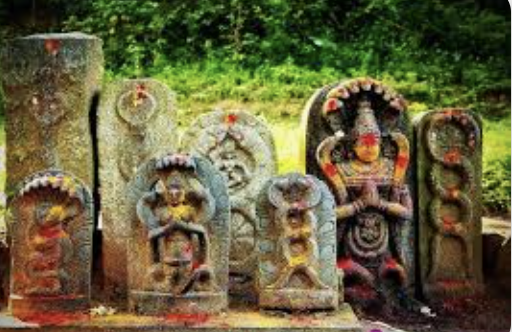
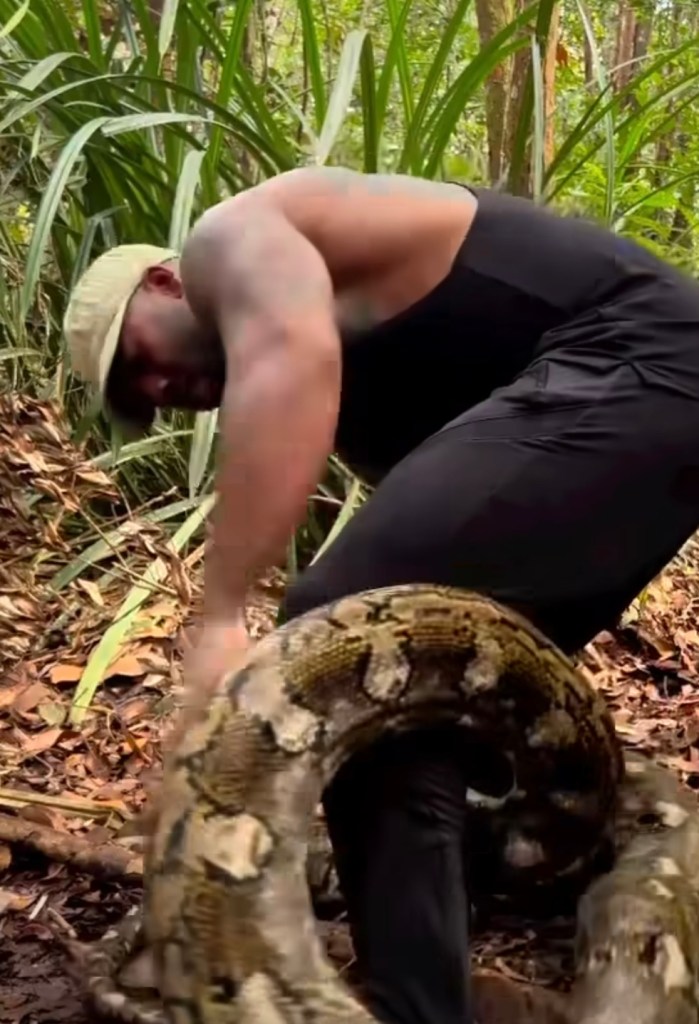
Snakes symbolise life, rebirth, resurrection, destruction and play a significant part in many mythologies and cultures.
Lord Shiva and his connection with the Spectacled Cobras in Indian mythology is famous as three snakes symbolise time frames of past, present, and the future.
The first known fossil of four legged snake, from Brazil dates back 110 million years ago, making it the oldest definitive snake, described in the Journal science, the evolutionary process by which some reptiles became serpentine during the dinosaur era. “It is generally accepted that snakes evolved from lizards at some point in the distant past” according to David Martill, discoverer of Portsmouth University. “ This fossil makes it clear that snakes evolved from burrowing lizards, not from marine lizards. The ancient snake, called Tetrapodophis amplectus, is a juvenile measuring 20cm, from head to toe, adults of the species might have been much larger. Its front legs and arms are small, about 1cm long, with little elbows, wrists and hands, the back legs and feet are slightly larger. “It is a perfect little snake, except it has these little arms and legs, and they have these strange long fingers and toes”. Says Nick Longrich from Bath University, who investigated the snake’s evolutionary relationships. “The hands and feet are very specialised for grasping. So when snakes stopped walking and started slithering the legs didn’t just become useless little vestiges they started using them for something else, they may have been used for grasping prey or perhaps mates”.The fossil snake also has the remains of its last meal in its gut probably a salamander.
The Mannarasala temple in Kerala, India, has several snakes where serpents worship takes place blessed and according to Hindu mythology and envisaged by Lord Parasurama, the creator of Kerala, the son of Jamadagini and a descendant of Bhrigu. When Parasurama decided to seek atonement from the sin of killing the Kshatriyas, he approached the holy riches who suggested he should make a gift of land of his own to the Brahmins. Parasurama propitiated Varuna Deva ( the Lord of the Seas) to get some land for himself. Varuma appeared before and advised him to throw his parasu the axe which Lord Shiva had given him, into the sea to reclaim land. He throws it and raises a piece of land from the sea and gives it as a gift to the Brahmins. This land is believed to be the present Kerala. The land was not inhabitable because of the salinity, nothing grew there. People began to abandon the place. Parasuram was paned and undertook penance to please Lord Shiva, who advised him that the objective could be realised only if the flaming poison of the serpents was spread everywhere and that the only means of doing that was the worship of Nagaraja. Parasurama decided to please Nagaraja who was inaccessible and found a suitable place near the seashore in the southern part of Kerala, for performing penance, Nagaraja was pleased with the penance, and ferocious serpents arrived at the spot at once to spread the Kalakuda poison, Kerala was desalinated to become habitable.
 The neptune Herald
Fascinating story.
LikeLike