
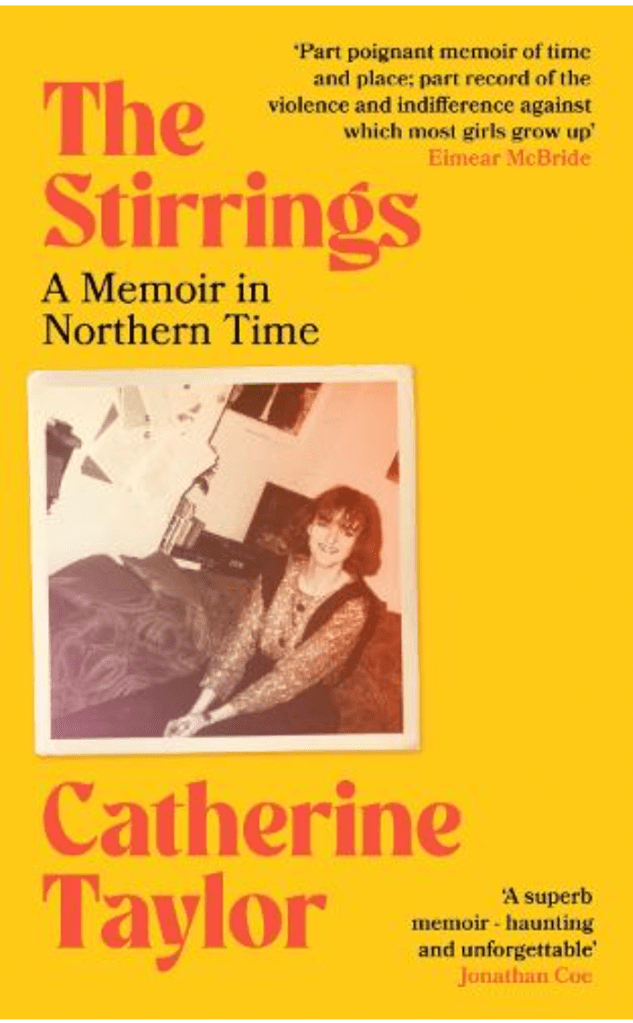
This is the story about one young woman coming of age, and about the place and time that shaped her: the North of England in the 1970s and 80s. One scorching summer of 1976, the last Catherine Taylor would spend with both her parents in their home in Sheffield and also the story of Yorkshire Ripper, the serial killer whose haunting presence in Catherine’s childhood was matched by the aching absence of her own father. It is also about a country thrown into disarray by the nuclear threat and the Miner’s strike, just as Catherine’s adolescent body was invaded by a debilitating illness. About 1989’s “Second Summer of Love”, a time of sexual awakening for Catherine, and the unforeseen consequences that followed it. It is also about a tragic accident, and how the insidious dangers facing women would become increasingly apparent as Catherine crossed into adulthood.
When George Orwell visited Sheffield in March 1936, he was horrified. He wrote in The Road to Wigan Pier, “ Could justify claim to be called the ugliest town in the Old World. At night when you cannot see the hideous shapes of the houses and the blackness of everything, a town like Sheffield assumes a kind of sinister magnificence”. For Catherine Taylor, growing up in the city 40 years later, she has a bleak first impression. “Sheffield was grey, grim and wet: Steep road, forbidding buildings”.
In the evocative memoir Taylor gives an energetic portrayal of growing up in the face of hostility to even the smallest transgressions, of coping with the challenges of womanhood, and of all too quickly coming to understand the threat posed by male violence.
Catherine Taylor, a freelance writer and critic, born in Waikato, New Zealand, to an English father and Kiwi mother, she arrived in Sheffield at the age of three. Quickly finding, herself an outsider, she describes her feelings of inadequacy relative to her peers as akin to having “failed some important test”. Taylors early emotional experiences with aching precision: the desperate yearning for anonymity, the desire not only to fit but also to blend in with the rest.
The long hot summer of 1976, is an interregnum in Taylors’s life – the beginning and the end of her parents’ relationship, another marker of difference to be borne on young
Shoulders. The absence of her father is portrayed as cruelly incomprehensible, the subsequent family upheaval is mirrored by the socio-economic ravaging of her hometown and the north more generally by the politics of Margaret Thatcher’s government. Her recollection of West Sheffield where her family lived, are striking. Summer brings lapwings and skylarks swooping over the drowsy Mayfield Valley. Taylor finds solace in music the feminist literature available through her mother’s Broomhill bookshop and the collective power of Greenham Common women during their long-running protest against nuclear weapons. In another kind of threat The Yorkshire Ripper, the serial killer Peter Sutcliffe who waged a murderous campaign against women in northern England for more than half a decade before he was arrested – close to Taylor’s school in 1981.
The Stirrings: A Memoir of Northern Time by Catherine Taylor, Weidenfeld & Nicolson £16.99, 240 pages.

 The neptune Herald
Leave a reply to pennynairprice Cancel reply