

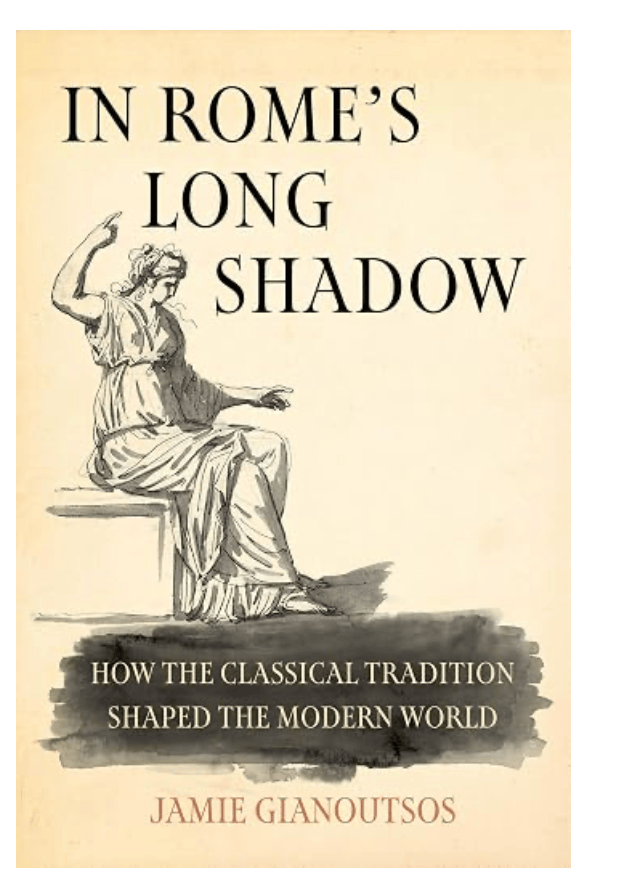
Julius Ceasar, Lucretia, Cincinnatus, Augustus, the Gracchi brothers: Roman Figures have had an extraordinary influence on modern republica from the United States to France: Historian Jamie Gianoutsos professor of History at Mount St. Mary’s University in Maryland, traces the Roman republic and its afterlives throughthe revolutionary birth of these modern republics in the seventeenth and eighteenth centuries to reveal how ancient ideas of liberty, virtue and corruption shaped the political imagination of a new age.
Moving from stories of tyranny and collapse in ancient Rome to moments of crisis in early modern Europe and the Atlantic world. Gianoutsos reveals recurring patterns in the rise and fall of republics. Through portraits of figures from Cato to the Brutuses to the revolutionaries of the United States, Britain, France and Haiti who consciously cast themselves as modern Romans, she offers a fresh and critical assessment of the strategies citizens pursued in their struggle to build lasting republican institutions.
According to Gianoutsos, Ancient Rome never fell- or at least it never vanished from the palaces and parliaments, salons and libraries, where educated men and women argues about politics and modern activists in this long republican tradition defended new freedoms- of the Press, expression, conscience, and equality before the law- as a bulwark against corruption, decline, and tyranny, With verve and deep historical insight, Gianoutsos argues that by revisiting the past, we gain a clearer view of ourselves- and of the challenges republics continue to face today.
Before Rome declined and fell, it left a model of how political society might be organised. “Elite men will defend their acts as patriotism, but such celebration will ring hollow if their private interests have become fused with their country’s injustices.” Gianoutsos writes.
The great genius of the Roman republic Guabiutsos argues, was to avoid this cycle of corruption by developing a mixed constitution. “The Roman res publica added together the three elements, retaining in its full republican constitution the consuls (a kingly element), the Senate ( an aristocratic element), and the tribunes and popular assemblies ( a democratic element).” Roman histories usually celebrate great men, but here Gianoutsos champions something else- a patriotic, republican spirit that, until Julius Caesar crossed the Rubicon on January 1049 BC, staved off the Republic’s demise. Rome ultimately ended up being run by narcissistic tyrants so mad that one of them, Nero, killed his own wife, then castrate a slave boy who looked like her and married him instead. Rather than leaders with their snouts in the trough, people need to see “a s sense of duty towards others”.
British feminist, Mary Woll-stonecraft, lauded Rome while subverting its cult of virility, felt that a strong society must develop interdependence rather than independence. Her distinction points towards later debates about negative and positive liberty articulated by Isaiah Berlin in his 1958 lecture and essay “Two Concepts of Liberty”
“Historians recorded unforgettable Roman tales, whose powerful protagonists and complex results provoked endless debates. As republicans and monarchists, revolutionaries and tyrants, advocates of slavery and apostles of feminism retold and recast these stories, they created the modern Western heritage of political thought- a debate without end, as durable as Rome itself” Anthony Grafton, author of Magus: The Art of Magic fromFaustus to Agrippa.
In Rome’s Long Shadow: How the Classical tradition Shaped the Modern World by Jamie Gianoutsos, Allen Lane £25, 384 pages.


This book looks as though it would be a very interesting and informative read. It seems it is underlining the history of Rome and Roman/Italian people as being powerful intelligent and amorous. There is always something new to discover about this empire so why not read it?
LikeLike