

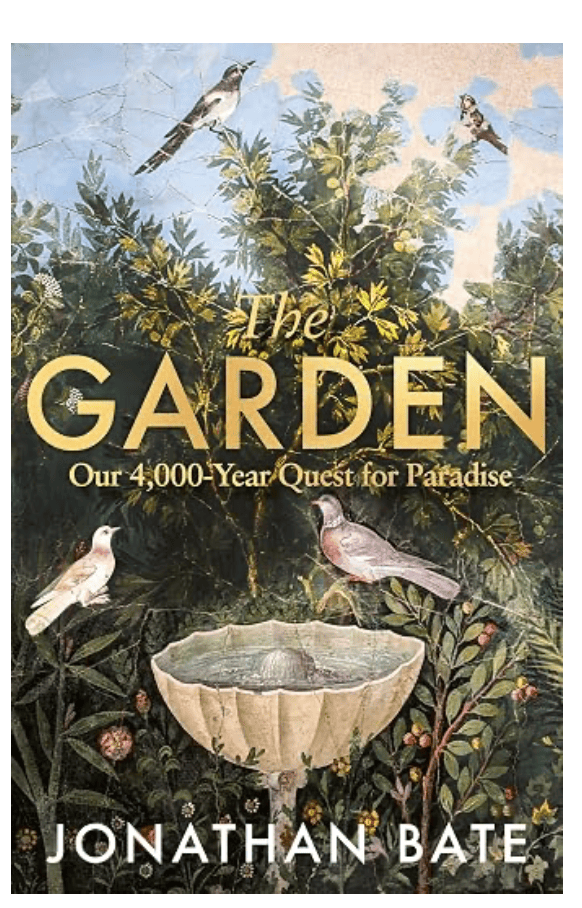
The Garden is the tour of gardens from Eden to Monet to Gethsemane, from Hanging Gardens of Babylon to the pleasure gardens of Versailles, from the Zen gardens of Kyoto to the landscapes of Capability Brown and New York’s High Line, the garden has always been far more than somewhere to grow things spanning 4, 000 years.
It is where humanity has worked out its relationship with the natural world – the place where culture, spirituality and nature converge. An inspiration for poets, painters and philosophers across four thousand years and every civilisation on earth.
In this magnificent work of scholarship, one of our greatest literary critics and cultural historians take us on an extraordinary journey through the gardens of both the world and the human imagination. Sweeping in scope and ambition, this sumptuous and richly illustrated book reveals the garden as a place where we have always worked out our deepest longings for beauty, order, innocence and belonging. Drawing on poetry, painting, philosophy, mythology and religion- from Ovid and the Song of Solomon to Shakespeare, Jane Austin and Emily Dickinson- he shows how the garden has inspired our greatest art and consoled us in our darkest hours.
Here is the space where as Andrew Marvell wrote, we may annihilate “all that’s made/ To a green thought in a green shade”- that perfect, paradoxical stillness in which the mind empties itself into nature and finds itself restored.
Gardening is the most popular leisure activity in Britain as more than 27 million of us tend a plot, a window box a rooftop or a patch of earth. Illustrated with more than 150 beautiful images, this book reminds us that it is to the garden, private and public that we turn for solace ad sustenance and sanity. It is a reminder that wherever we human beings have settled, we have reached, instinctively, towards the garden.
Napoleon once said England a nation of shopkeepers, but in fact we’re a United Kingdom of gardeners, ruled by a sovereign who’s a plant whisperer, one of The Beatkes was a “fanatical gardener” George Harrison and some of us would fill the nation’s lawns with gnomes, as there are 23 million private gardens in the country, not to mention 4.7 million bird nest boxes and 3.5millon ponds according to Jonathan Bate.
For this book Bates takes gardening leave from his role as a leading authority on Shakespeare, though there’s a nod to his day job in the preface to chapter 1: Adam was a gardener” he quotes from Henry VI part 2.
Bate’s account begins in the Garden of Eden and with other origin stories that share a paradisiacal setting. A snobbery sometimes shows towards the green-fingered can be traced back to the ancient Greeks as they tolerate a few trees in the market place for their shade, but otherwise frowned on domestic gardens.
In the story of the resurrection, Jesus was mistaken for a gardener, and St. Augustine said that nothing offered a clearer insight into God’s creation than tending to it.
Bates writes “ Designers Capability Brown and William Kent’s landscapes were, in a sense, the ornamental face of the Industrial Revolution: proof that the forcew reshaping Britain;s economy could also turned to beauty.”
We encounter a world leader wo loves spending money to glorify himself and becomes obsessed with water features close to his official residence, only for them to become an eyesore, the fountain at Versailles ended up a sorry sight after the revolution, but at least they were a pleasing spectacle during Louis XIV’s pomp.
In the final chapter Bate sounds a warning about the climate emergency and tells readers how they might adapt their smallholdings.
The Garden: Our 4,000 Year Quest for Paradise by Jonathan Bate, William Collins £25, 592 pages.


Gardening can bring a lot of relaxation and pleasure to gardeners and the people who inhabit them during the warmer times for parties, barbecues and get togethers whether it be just family or circles of friends and neighbours. Tending plants and flowers, fruit trees, herbs and vegetables all of which serve some purpose indoors especially can be a very rewarding and economical task. You can grow quite a big variety of things indoors also so there’s no excuse for not getting involved in being green fingered is there?
LikeLike