

Novelist Naomi Alderman and her newly widowed father sets up a wildlife camera in the back garden of her parent’ home, a few months after he mother dies, capturing the first image of a strange new animal. Low to the ground about the size of a badger, flat face, long, trunk-like nose. Suddenly these “mimmoths” are as common as foxes or dogs. And no one knows where they’ve come from. Alderman created something curious, messy and unexpectedly comforting. The element of solace serves as a counterpoint in the novel’s emphasis on a world in cataclysm; at its centre is an individual who is herself a study in sadness.
Alderman negotiates the territory of grief – a place with its own logic and rhythms- the mammoths spread. From the UK east and west, to the United States, to Russia, to India. They seem harmless, but oddly intelligent. They cannot be captured, they will not take food from human, they have their own purposes.
Alderman cannot shake the feeling that she has a particular connection to the creatures. Or is she just succumbing to “mammoth psychosis”? As the impact of the mimmoths increases she is pulled into the cross currents of conspiracy theories and global power struggles. Have her deeply personal forms of mourning lent recent events a surreal air, or is our reality changing drastically and irrevocably?
The Mimmoths appear in supermarket car parks, on country roads and in suburban gardens.
For the narrator, who becomes rapidly obsessed, they represent something else- a way to lean into loss, especially when one approaches her in the garden, in a scene of prelapsarian innocence: climbing into her arms, eliciting a momentary peace. Anguish over her mother’s death is far outstripped by another personal agony, akin to a derangement- the loss of multiple pregnancies. Here the mourning is so raw that in place it reaches such levels of threnody. These mimmoths, strangers , benign or not, produce a fungus that baffles scientists, and which happens to increase global life expectancy. They drift around the narrator’s patio as they weave in and out of the story, but they’re not the main event. A subplot involving a fellow mammoth obsessive, a lowly civil servant and conspiracy theorist named Ian Frinton, who- possibly- becomes a target for governmental paranoia over the new species, peters out rather unsatisfactorily.
The Strangers features survivalism, eco-crisis and technology, closely resembles Alderman’s 2023 sci-fi novel The Future.
The garden in which the mimmoths first appear was the narrator’s mother’s domain, and her final collapse occurred there.
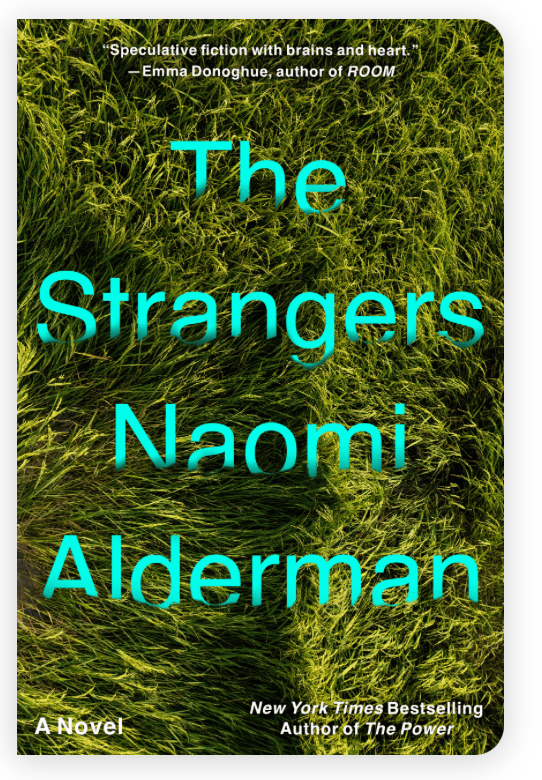
The Strangers by Naomi Alderman, Fig Tree £20/Little Brown $14.99, 288 pages.

