

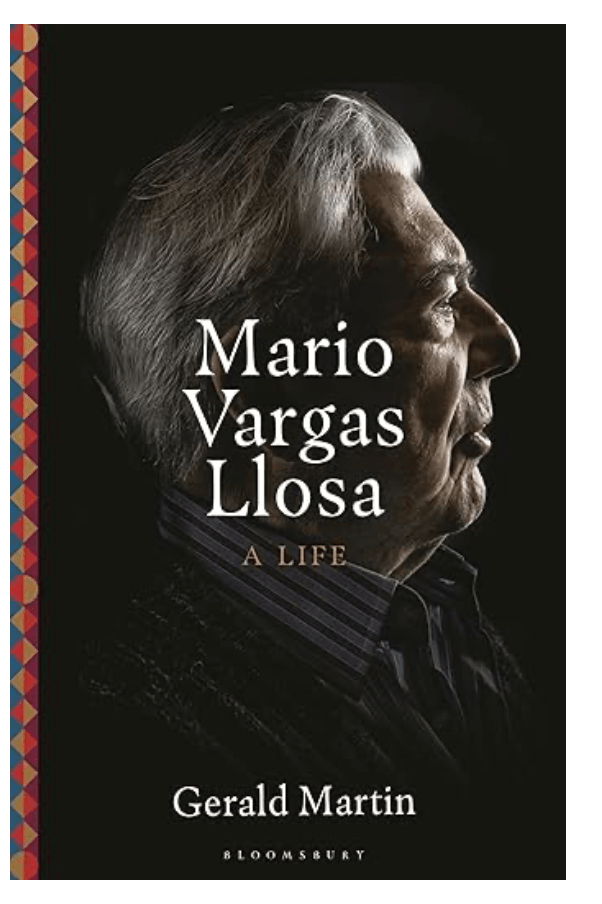
Essayist and novelist, Mario Vargas Llosa, Polemicist and politician (a Spanish citizen from 1993), born in the Peruvian city of Arequipa in 1936, the Nobel Prize-winning literary colossus and debonair provocateur whose contradictory life is considered to be perhaps the greatest contemporary writer and most influential intellectual in the Spanish-speaking world. He was also indisputably the most controversial: He was never out of the headlines in more than six decades of literary and political activity, from the moment he exploded onto the cultural scene in the early 1960s with his first novel, The Time of the Hero, until his last, I Give You My Silence, in 2023, a charming but sentimental farewell novel about Peruvian music. He left 25 works of fiction, among them a handful of epoch-defining masterpieces – from Conversation in the Cathedral in 1969 to The Feast of the Goat in 2000. He published as many volumes of cultural and political essays and 5,000 pages of journalism that Martin praises as “not only admirable but simply dazzling”.
A self-declared socialist, he changed his mind about the meaning of “freedom” made the long march through ideologies, and renounced collectivism of every kind until ending up a provocative supporter of Reaganite neoliberalism. At nineteen he kick-started a lifetime of romantic melodramas by marrying his Llosa aunt Julia in 1955, then replaced her with a teenage first cousin Patricia an uncrushable heroine. A decade later, only to abandon her in scandalous fashion after fifty years in favour of the most glamorous socialite in post-Franco Spain. He took to moonlighting as a crime reporter, a key apprenticeship in street-life as escapades (“flim Noir for real”) and quick, deft composition, Ernesto, whom his son often excoriates did much to open early doors. A rivalrous competitor, Mario soon became a winner, He stayed one. Immersed both in world (especially French) literature and in the chaotic realities of Peru divided on social and racial lines, the young writer experienced a growth spurt that lent his 1960s novels – which continued with The Green House and the multi-layered conversation in the Cathedral -astonishing scope and maturity. His classical storytelling skills and modernist technique, would he become Latin America’s supreme historical realist? Scholarhsips in Paris led to residence in London (Cricklewood first, later Knightsbridge) and the cosmopolitan lifestyle of a fast-rising celebrity. He knocked his friend and rival Gabriel García Márquez to the ground with the most famous punch in literary history in 1976, came within a whisker of the presidency of Peru in 1990, as a neo-liberal crusader and media-friendly candidate of a liberal pro-business coalition, he lost the run-off in Peru’s 1990 presidential election to an unknown populist, Alberto Fujimori, after a first-round victory. He was awarded the Nobel Prize in Literature in 2010. Handsome, debonair, and almost incomparably ambitious, Vargas Llosa’s personal life was as head-turning as his politics, rendered here in outrageous detail.
Mounted on his left-wing mule, Martin’s Sancho Panza tries and fails, to stop Don Mario Quixote from riding his high horse into talent-wrecking misadventures with sinister free-marketeers or vacuous celebrities. A partisan narrator, Martin forever grinds his axe. He regularly puts aside the hatchet to pick up the laurel crown. Vargas Llosa’s misdemeanours as an “inveterately self-blinded” individualist, and “prince of Provocateurs”, coincide with warm tributes to an author of “near-unique energy”.
Mario believed his absent father, an enterprising radio operator on merchant ships and for airlines, was dead: “his first ten years were a lie”. His maternal family, the well- connected but no longer wealthy Llosas (great-uncle José Luis became president), won his love an shaped his identity as the “hope of the tribe”. The family moved to idyllic Cochabamba in Bolivia, then back to Peru. In the capital Lima his errant father, Ernesto Vargas, made a traumatic reappearance whose aftershocks would reverberate across his son’s life and writing.
Adored by his mother Dorita and a clutch of Llosa relatives, Marito had grown up beloved, confident and precocious. If his father’s ogre-like comeback quashed his happiness, it also stiffened his spine. The golden child learned to flourish in adverse evironments- such as the Leoncio Prado military academy to which Ernesto sent him, the symbolic venue of his accomplished debut novel: The time of the Hero (1963). Martin, a dogged, sceptical sleuth finds that the academy gave Mario more than just an authoritarian nightmare.
Vargas Llosa’s reluctance to condemn US imperialism in Latin America vitiates his stance as liberal pin-up; yet the biographer has blind spots too, notably the Soviet empire. For Martin, the fall of the Berlin Wall triggered “the rise of nationalism and its associated violence”, alongside a “growing mediocrity” in culture.
Mario Vargas Llosa: A Life by Gerald Martin, Bloomsbury £35, 848 pages.

