

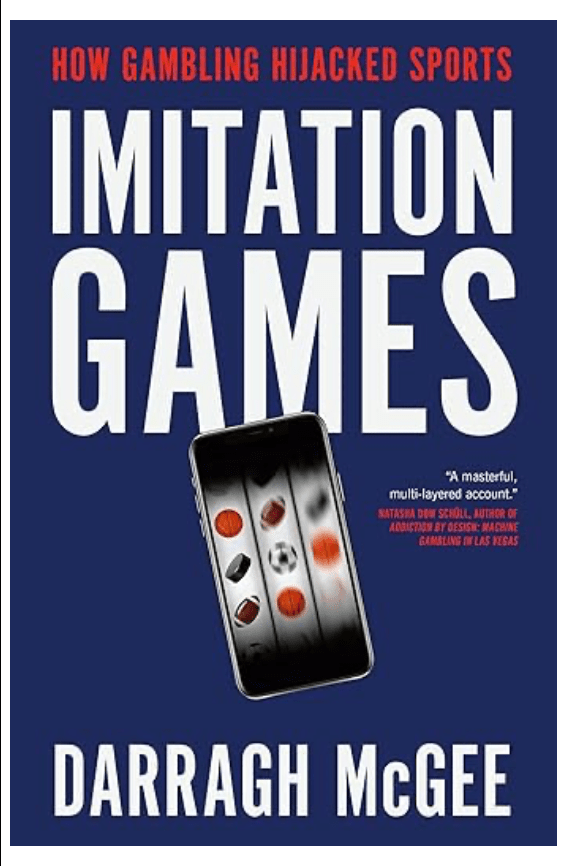
How did a new wave of gambling brands hijack sport on a global scale, Darragh McGee travels the world to tell the incredible revelatory exposé story of the digital brands that unleashed this new era of sports gambling on a new generatin of fans- and got very rich doing so.
From the tech hubs of London to betting markets in Africa and arenas across Canada, McGee uncovers why sports fans, parents, policymakers, and anyone interested in the intersection of tech and politics should take urgent action to protect against the harm and human misery that gambling leaves behind by the multibillion-dollar global behemoth. McGee offers practical solutions for creating a healthier future for sports and society.
There are few winners in the world of sports gambling when punters put their wits up against algorithms of the largest online gaming groups. Well-resourced, clever marketing encourages mostly younger men to conflate betting with football fandom.
McGee traces the arc of online betting phenomenon from Tony Blair’s Labour government as the flowering of the internet entwined itself into people’s lives. Government sought to deregulate the industry. Oversight of gambling passed from Home Office, “where it was treated as potential source of crime, to the Department for Culture, Media and Sport (DCMS) – dubbed “the Ministry of Fun”, writes McGee.
So then on gambling and sport were under the same roof as the DCMS wrote, in a 2003 report, of its “desire to see Britain become a world leader I the field of online gambling”. After the passage of Gambling Act in April 2005, the pitch to fans could properly begin.
English football, the Premier League, had begun to metamorphose into one of the fastest-growing professional sports leagues, with nearly £1.3bn in revenues in the 2004-05 season, that figure would more than quintuple 20 years later.
McGee excels in his analysis by connecting the success of the Premier League with gambling. In imitation games fans can exercise their apparent skills and football knowledge, thus gamifying gambling. Tempting £50 free bets lures have tiny maximum stakes and a payout consisting mostly of bet credits. Bettors with apparent skill will find that the system’s stake-factoring prevent them from upping their bet sizes. As the profits of online groups such as Bet365, Paddy Power and Betfair soared in the noughties, their temptation to cross-sell sport bettors into casino games grew. The industy proposes “safer gambling” while campaigners against the reach of the apps demand an end to gambling football marketing altogether. Gambling revenues vitally lubricate the machinery of Britain’s favourite sport. Two club owners, Tony Bloom ( Brighton & Hove Albion) and Matthew Benham ( Brentford), have longstanding connections to sports betting especially in Asia, via their data enterprises. Sky Bet, part of gambling giant Flutter ( which also owns Paddy Power and Betfair sponsors the lower divisions. Britain’s model of online gambling has spread throughout Asia, into the US and also Africa with similar addictive effects on young, impressionable sports fans. McGee proposes a voluntary ban on gambling brands starting in the 2026-27 Premier League season. However, McGee gives long odds to resolving the gambling conundrum for sports quickly and amicably.
Imitation Games: How Gambling Hijacked Sport by Darragh McGee, Bodley Head £22, 416 pages.
 The neptune Herald