

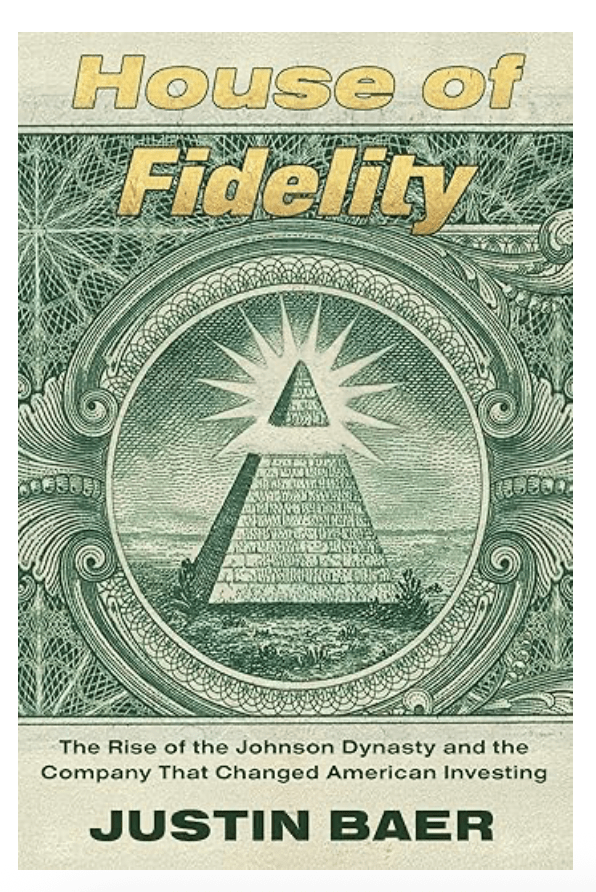

Fidelity, the Boston-based financial group which directly manages $7tn and administers a total of $18tn, serving an estimated 57million people, or one in five American adults through retirement plans, investment funds and brokerage accounts.
The private group owned and run by publicly-shy New England dynasty that don’t want to be in the limelight. Abigail Johnson, the CEO and her team have embarked on a massive growth spurt and pushed well past its money management rivals in terms of employees, revenue and profits.
Wall Street and ex-Financial Times Journalist, Justin Baer, in House of Fidelity give us an insight into Fidelity, which employs more than 80, 000 people and reported $12.7tn in operating income last year, dwarfing Black Rock, the world’s largest public asset manager. Fidelity’s international business manages more than $1tn for nearly 3million customers in more than 25 countries.
“Fidelity has been never been bigger, or more profitable, than it is right now” Baer writes. Johnson is 64 and has been running the company for a decade, she “has never appointed a president or CEO.
Edward Johnson II founded Fidelity in 1946, investing was a pursuit reserved for the elite, who took over an existing investment fund and then set up his own management company- and about the company’s early growth under his son Edward Johnson III (Ned) relied on older books and articles. Abigail Johnson’s efforts to seize control of the company in 2005, a decade before she eventually became the CEO. As at that Ned Johnson had been meeting with JP Morgan Chase, and his daughter feared that he would be persuaded to sell out.
“For years, Ned had fretted over whether Abby would ever be ready to take on this responsibility, by driving a wedge between father and daughter, Abby believed, were pushing a defeated Ned to concede. It would never happen,” Baer writes.
Ned Johnson prevailed by issuing more stock that gave him 41 per cent of the company, but the episode persuaded him to start the succession planning that set his daughter to take over.
House of Fidelity, details about luminaries of the investment pantheon, like Gerald Tsai, Peter Lynch, Will Danoff, as well as executive who ultimately lost out to members of the Johnson family, including Ron O’Hanley, now CEO of the global bank State Street, Robert Pozen, who became the chair of money manager MFS.
Fidelity helped invent modern retail investing: democratising access to mutual funds, introducing the 401k and upending the need for traditional brokers. But behind the scenes of this financial juggernaut is a family saga unlike any other.
Baer reveals Fidelity and a family locked in a delicate balance of innovation, influence, and internal power struggles, sweeping history of American investing- and the dynasty that came to define it.
House of Fidelity: The Rise of the Johnson Dynasty and the Company That Changed American Investing by Justin Baer, Grand Central Publishing £28/$32, 384 pages.

