

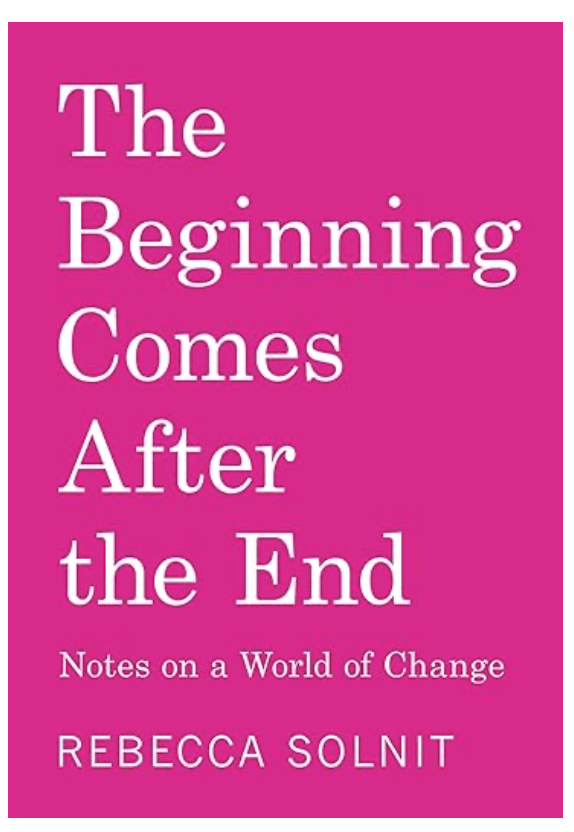
Writer-activist, Rebecca Solnit’s sequel to her enduring bestseller Hope in the Dark, offers a brilliant account of our immediate past and a thrilling account of the sheer breadth and scale of social, political, scientific, and cultural change over the past three quarters of a century. Her survey of the world that has changed dramatically since the year 1960. Despite the forces seeking to turn back the clock on history, change is not a possibility; it is an inevitability. The changes amount to backlash drives individualism and isolation, this new world embraces antiracism, feminism, a more expansive understanding of gender, environmental thinking, scientific breakthroughs, and indigenous and non-Western ideas, pointing towards a more interconnected, relational world. You may think we live in a global digital age of despair. The Middle East, Ukraine burn, the far right is on the rise, and economic insecurity, institutional dysfunction and disillusionment with liberal democracy leave many feeling impotent.
Solnit writes “The old world is dying. The new one is slow in appearing in this light and shadow, monsters arise”, and pushes back on the current political gloom, setting it against the achievements made since the 1960s in decolonisation, environmentalism, and gender equality, as well as US civil, labour, LGBT and indigenous rights.
“Change itself can be invisible without a baseline from which to measure”, Solnit highlights civil victories in her lifetime in the US(bans of interracial marriage ended in 1967, while marital rape was criminalised in every state of the US only in 1993).
The old world orders and their systems built on what she lists a white supremacy, misogyny, authoritarianism, hypercapitalism, ecocide and climate denial, Whether from Maga, Tech bros or strongmen leaders such as Narendra Modi, Viktor Orbàn and Recep Tayyip Erdğan.
According to Solnit our world is a network of interrelated systems, the isolated individual is a fiction, and the natural social spheres exist more through collaboration and co-operation than competition. She links the American conservationist Rachel Carson’s book Silent Spring (1962) which described the systemic damage done by the DDT pesticide to Martin Luther King, who observed around the same time, “It is very nice to drink milk at an unsegregated lunch counter – but not when there’s strontium-90 in it”. Solnit’s embrace of Native American and Canadian First Nations People’s world views that she describes movingly as not only reclaiming their land, language and heritage but also offering alternatives to western industrialisation where “nature is of immeasurable value is omnipresent and we are inseparable from it.”
The Beginning Comes After the End: Notes on a World of Change by Rebecca Solnit, Granta £14.99/ Haymarket Books $16.95, 160 pages.


Surely any reader would get an enjoyable and informative experience reading this and especially people studying sociology and possibly psychology. It looks like a very well put together overview of sociological racial and other issues affecting many.
LikeLike