
Elimination of an entire fiercest warriors framed as the inevitable outcome of bureaucratic expediency.
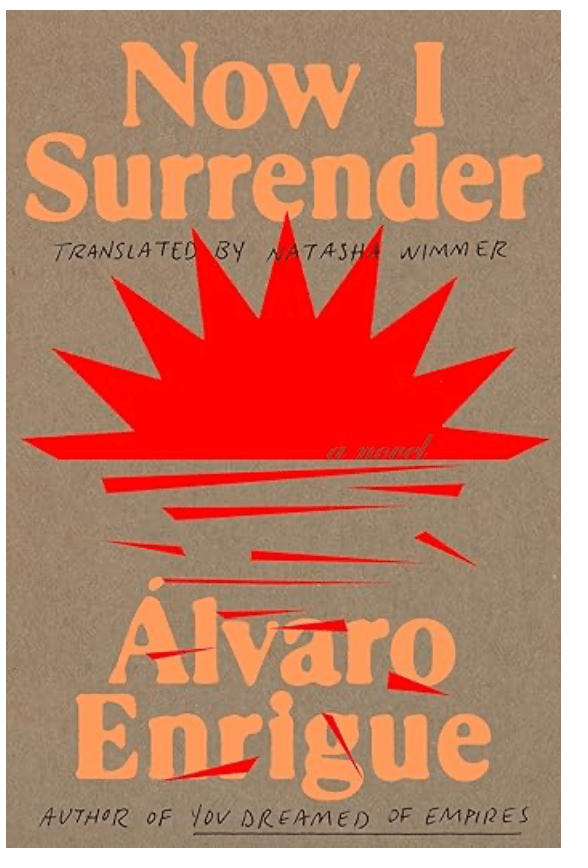
Now I Surrender is a woman’s desperate flight from an Apache raid unfolds into a sweeping tale of the Mexico-US border wars. Written with a cast of characters both historical and purely fictional, is the story of how the West was “won.” In the contested borderlands between Mexico and the United States, a woman flees into the desert after a devastating raid on her dead husband’s ranch. A lieutenant colonel in service to the fledgling Republic, sent in pursuit of cattle rustlers, discovers he’s on the trail of a more dramatic abduction. Decades later, with political ambitions on the line, the American and Mexican militaries try to maneuver Geronimo, the most legendary of Apache warriors, into surrender. In our own day, a family travels through the region in search of a truer version of the past.
Now I Surrender, part epic, part alt-Western, weaving past and present, myth and history into a searing elegy for a way of life that was an incarnation of true liberty- and an homage to the spark in us that still thrills to its memory.
US-Mexican border stretching from the Arkansas River in the north to the Sierra Madre in the south. The region that was Apacheria, named by Spanish expeditionaries at the beginning of the 17th century. Alvaro Enrigue sets out to write a book about a country that still exists but was erased from modern maps after a 300-year-old long struggle by the Apache peoples to avoid integration into either the US or Mexico.
Published in Spanish in 2018, translated by Natasha Wimmer, interweaving the 19th century pursuit of Geronimo with Enrigue’s own contemporary road trip through the same contested terrain – impenetrable ravines, scorching plains, tortured rivers, stones everywhere, undertaken with his wife and three children.
Gerobnimo reportedly uttered after his surrender to the US Army in 1886 (“Once I moved like the wind. Now I surrender to you and that is all”. The novel begins 50 years earlier, as Camila flees into the Mexican desert after a devastating Apache raid on her late husband’s ranch. Enrigue explains how a ragtag band of irregulars led by Lieutenant Colonel José Maria Zuloaga sets out to recover her from her captors, among whom is a teenage Geronimo. “The war for Apacheria was never between Whites and Indians, but was between the two mixed republics and an ancient nation with a single shared culture and language.” Enrigue uses Apache descriptors “Indad” (white eyes) for the Americans and “nakalye” (those who come and go) for the Mexicans, he casts as “other” the traditional heroes of the Hollywood Western.
Apaches refusal, from the moment of first sustained Spanish contact in the early 17th century to be absorbed into another culture. “They kept on saying no, until the most celebrated band of Chiricahua (Geronimo’s tribe) warriors fit into the single train car that carried the last twenty-seven of them out of Arizona”, he writes.
Although he never mentioned Genocide, he applied his occam’s razor, and allows this paltry number to speak for itself, what occurred was the deliberate, industrial-scale elimination of an entire people framed as the inevitable outcome of bureaucratic expediency.
In Enrigue’s telling the West was not won by the fastest gun but by men with ledgers. The tragedy of the Apache was not that they were the fiercest warriors to walk this earth, but family devoted nomads in a world that was being fenced for the counting of cows and the laying of railway tracks.
Now I Surrender by Alvaro Enrique, translated by Natasha Wimmer, Harvill £20/ Riverhead $30, 464 pages.
 The neptune Herald
Leave a comment