
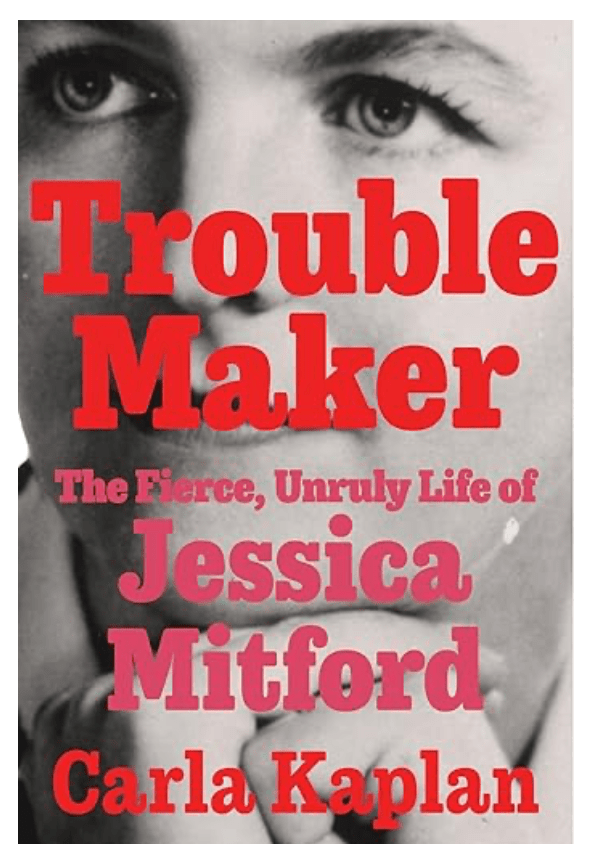
Would you predict that a British aristocrat would so energize American antifascist and civil rights struggles that Time magazine would crown her “Queen of Muckrakers”? Jessica Mitford, known as Decca, was brought up by eccentric English family to marry well and reproduce her wealth and privilege, not to advocate for the rights of others. Her beautiful sisters have been subjects of books and movies dedicated to their naughty, glamorous lives. Decca ran away to America to forge a rebel’s life. As this richly researched book details, Decca broke the Mitford mould. Instead of setting for life as a professional Beauty, she fought fascism in the Spanish Civil War, became an American Communist and pioneered witty, hugely popular journalism, including her 1963 blockbuster The American Way of Death. Decca dedicated her life to social justice and proved herself an immensely effective ally, but she also injected laughter into all her political work, annoying some activists with her relentless antics but encouraging many others to find joy in the struggle. From framed baby doctor Benjamin Spock to best friend Maya Angelou. Her anti-authoritarian irreverence had a profound impact on American culture. Mining extensive, untapped sources, and with nearly fifty new interviews, Kaplan’s passionate biography beautifully illuminates how Decca’s hard-won and self-taught social empathy offers a powerful example of female freedom, the dramatic, novelistic story of an extraordinary woman of her time who is remarkably relevant and resonant today.
Brilliant investigative journalist, Jessica as Kaplan who had a prediction of silliness and a gift for making politics fun had a partisan account in Troublemaker representing an addictive blend of high-spirited eccentricity with extremist politics which ranged from three bewitched Hitlerites (Unity Mitford, Diana Mosley and their gruffly unmaternal mother, Sydney) to an apolitical wannabe duchess-Debo, who became one – and left wing Decca, as Jessica.
She was the first of the Mitford sisters to turn her back on the conventional expectations for a peer’s daughter in the 1930s.
Decca’s transformation was brought about by tragedy. Her daughter Constancia was born in February 1941. Esmond, who had joined the Canadian Air Force, was shot down 10 months later. Summoned weeks later to the White House for Churchill’s visit, Decca shouted at Esmond’s uncle for being too lenient on Diana and her husband Oswald Mosley, who had been imprisoned as threats to national security. Decca never forgot Esmond, and she never forgave Diana for being an unrepentant fascist.
Troublemaker: The Fierce Unruly Life of Jessica Mitford by Carla Kaplan, Hurst £27.50, 616 pages.

 The neptune Herald
Leave a comment