
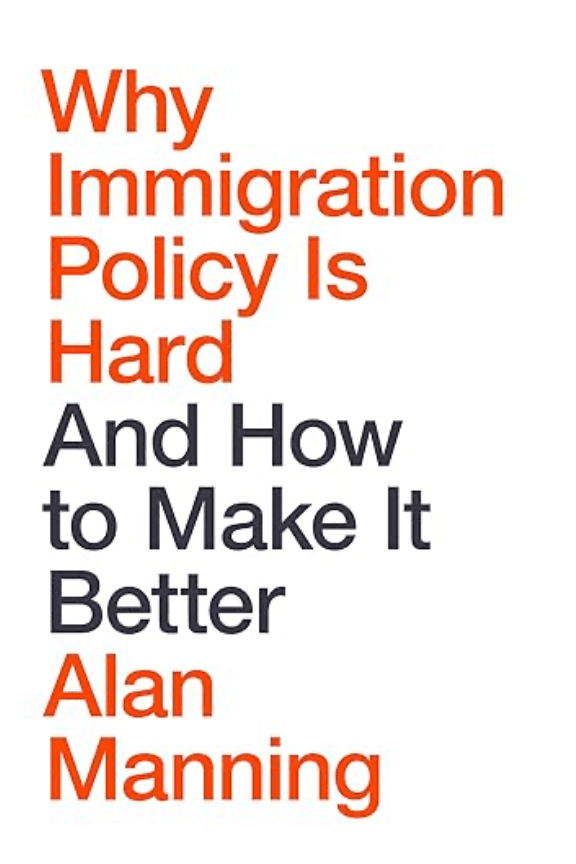
Alan Manning – former chair of the UK’s Migration Advisory Committee- makes it clear, this doesn’t mean that we can’t do much better. In Why Immigration Policy is Hard, Manning says we should start by ditching simplistic views that frame immigration as either wholly good or wholly bad. We will always have, and need, some level of immigration. But just as inevitably, we will have rules on who can and cannot immigrate as more people are likely to want to move to high-income countries than residents will want to admit. To set those rules, we need reliable evidence to adjudicate among the often-competing claims of the economy, culture, justice and democracy. Manning supplies such evidence in abundance, guiding us through cutting-edge international research on the many ways immigration affects people’s lives, including effects on their jobs and incomes, their taxes and public services and their communities.
In reality the evidence of both the costs and benefits of migration is nuanced, as rich countries cannot accommodate all those who would like to come, and policymakers have to draw a moral circle around those they are willing to help.
Manning calls it an “internal circle”. Restrictions lead to frustrated migrants to find ways around controls, voters fear their governments have lost control of borders, and the rules are tightened further.
Rich countries need higher immigration to pay for healthcare and pensions for ageing populations. This is overblown: Migration can take the edge off demographic change in the short term, but migrants too grow old, and other policies- pension reform, say – are far more powerful tools to manage the pressures.
Employers always overstate the economic benefits of migration, just as others overstate the potential for it to drive down local wages. Manning argues that migrants do not in general make economics more productive or dynamic or have big effects either way on wages and prices. He highlights the uncomfortable trade-off, the benefits of work migration, to locals may be greater when migrants and trapped in exploitative jobs that locals will not take. People who move from a poorer country to take up low paid work in a richer one are behaving rationally- they are likely to improve their living standards and their children’s prospects – but the society they are joining may become more unequal as a result.
Governments are free to set selective criteria for work visas that help them maximise the benefits. Manning believes they should focus on high-skilled jobs and design rules with one eye on… what might go wrong.
Manning also makes a strong case to abandon the current system, where countries take responsibility only for refugees who arrive in their territory, which leads to rough justice for migrants who fall foul of ever tougher enforcement. Politicians who want to fend off populism need to find a defensible immigration policy that voters will support.
Why Immigration Policy Is Hard: And How to Make It Better by Alan Manning, Polity £25, 416 pages.
 The neptune Herald
Leave a comment