
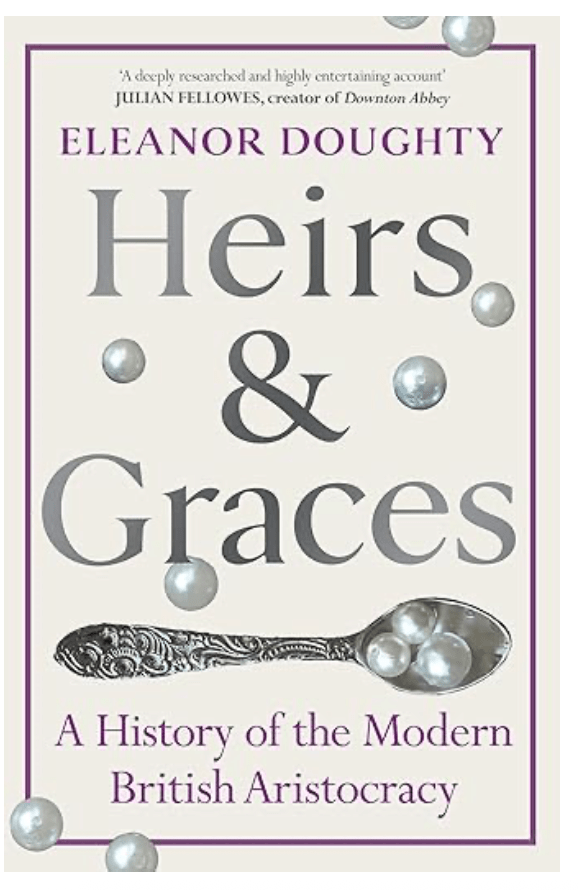
Despite a decline since 1945, we view the Aristocrats or upper class as synonymous with glamour, adventure and whose status and fortunes inspired instinctive respect, you have look at the newspaper headlines about dukes and lords, continued interest in Lord Lucan’s 1974 disappearance. The Duke of Westminster, whose wealth dates back to the 17th century, is worth £10bn, and according to Doughty some peers still live largely “Edwardian lives”.
Heirs & Graces presents evidence that we would be better off if at least some stately homes were torn down, if hereditary peers were removed from the House of Lords, and if the practice of male primogeniture were scrapped. Since the late 19th century, the aristocracy has faced collapsing economics. Grand houses were built for a time of cheap servants and large-scale hospitality. Some nobles such as Winston Churchill’s cousin “Sunny” Marlborough, resorted to marrying rich Americans. Others handed their homes to the National Trust. Many now work hard to bring in visitors.
Owners of Bowood in Wiltshire bulldozed a 100-room wing in the 1950s. The current marquess says the result is a “much softer and more liveable house”.
Eighty-six hereditary peers still sit in the Lords, because the Labour governments of 1945 and 1977 couldn’t face the hassle of getting rid of the lot. Sir Keir Starmer is in the process of removing them but some peers cling on arguing that they should only go when the government has a plan for an independent second chamber.
Peers national influence is dwindling and the days of prime minister such as Sir Alec Douglas-Home ( the Earl of Home until he ditched his title for raw power in 1963) are long past.
There have been kidnapping, military heroism and business successes and also some peers have been fascists, Lord Lucan’s parents, were socialists.
Doughty highlights the general features a lot of land, public school attachment and a conservative outlook. Oswald Mosley, the fascist leader, upset his first wife by telling her all the women he had slept with, even though he omitted “her stepmother and her sister”. Aristocrats have had divorce rates much higher than the wider public.
In the Aristocratic world parents are absent, animals are omnipresent, children are raised by other people. One baron said “if I’d been raised by two blithering idiots like my parents, I’d be a complete psychological wreck’.
Today most titles and estates are still inherited by the nearest male relative as girls’ education was often forgotten. Women who could have inherited hundreds of millions in assets got practically nothing. The fact remains Aristocrats and the gentry still own about 30 per cent of England.
Heirs & Graces informs how well privileged people do in public life. Sir Charlie Burrell, owner of the Knepp Estate, is the doyen of British rewilding. Dido Harding, eldest daughter of a baron, was the former head of NHS Test and Trace. Tim Bentinck, who plays David Archer in the BBC radio drama The Archers, is the 12th Earl of Portland.
Just 18 people have disclaimed their peerages since 1963, like Labour politician Tony Benn,
Journalist, Eleanor Doughty maps the 796 families in Britain with hereditary titles, and reveals how the past hierarchies weigh on supposedly meritocratic modern Britain.
Heirs & Graces: A History of the Modern British Aristocracy by Eleanor Doughty, Hutchinson Heinemann £30, 656 pages.

 The neptune Herald
Leave a comment