
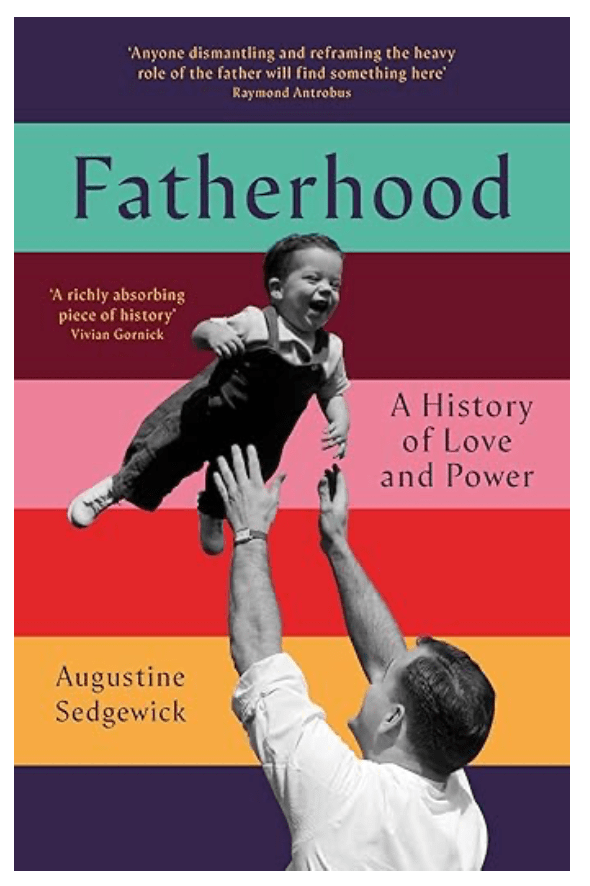
In the midst of the “masculinity crisis”, award-winning historian, Augustine Sedgewick, author of Coffee-land reveals an ambitious history of masculinity and family, from the Bronze Age to the modern day, in Fatherhood and dares to offer a more caring and affirmative vision of the roles men currently play in society. How successive generations of men have shaped our understanding of what it means to be and have a father, and in turn our ideas of who we are, where we come from and what we are capable of.
What is fatherhood, and where did it come from? How has the role of men in families and society changed across thousands of years? What does the history of fatherhood reveal about what it means to be a dad today?
From the anxious philosophers of ancient Athens and Henry VIII’s obsessive quest for an heir, to Charles Darwin’s theories of human origins, Bob Dylan’s take down of “The Man”, and beyond.
In Fatherhood through a succession of identity crises spanning thousands of years in th4e world of alpha male boot camps, and understand how these once-fringe communities are shaping our culture.
In the core of fatherhood lies a curious paradox, while our personal experiences of fathers tend to be defined by complexity, conflict and disappointment.
“Fathers have likened themselves to gods, begetting, bestowing, smiting, and saving at will. But for mortals, such expectations can only end up in failure”, writes Sedgewick.
The story of fatherhood has shape-fitted in order to maintain dominance during each major historical moment – the rise of Christianity, the Industrial Revolution, the spread of capitalism. Sedgewick examines how this has played out through eight individuals- thinkers, writers, kings and revolutionaries – who have been shaped by customs of their times, and in turn shaped out preconceptions of what fathers can and can’t do or should or shouldn’t be.
Plato wanted to disentangle fatherhood from household; Aristotle sought to re-establish. St. Augustine taught us the first thing we inherit from our fathers, before we can say ‘dad’ was the original sin, Freud then thought us how to hate them. Henry VIII, Thomas Jefferson, Emerson, and Thoreau, Charles Darwin and Bob Dylan, built on “white dad” line-up, according to Sedgewick. If we want to create new stories of fatherhood in reality not fantasy, better means worse, fewer superheroes, more dads, Sedgewick argues.
“To create loving men we must love males” Bell Hooks roots in her visionary 2004 work, The Will to Change.
Fatherhood: A History of Love and Power by Augustine Sedgewick, Picador 320, Scribner $30, 320 pages.

 The neptune Herald
Leave a comment