
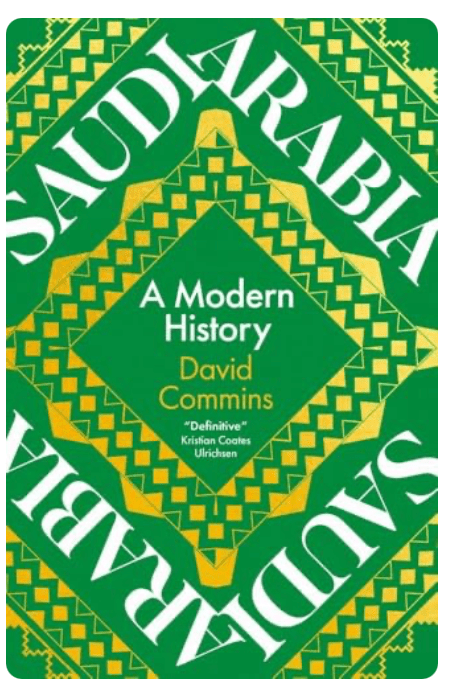
A new history of Saudi Arabia spanning its eighteenth-century origins to the present day. Saudi Arabia on the wealthiest countries in the world, a major player on the international stage and the site of Islam’s two holiest cities and also one of the world’s only absolute monarchies. David Commins narrates the full history of Saudi Arabia from oasis emirate to present-day attempts to leap to a past-petroleum economy. Moving through the ages, Commins traces how the Saud dynasty’s reliance on sectarianism, foreign expertise, and petroleum to stabilize power has unintentionally spawned secular and religious movements seeking accountability and justice. He incorporates the experiences of activists, women, religious minorities, Bedouin, and expatriate workers on the country transformed from subsistence agrarian life to urban consumer society. This is a perceptive portrait of Saudi Arabia’s complex and evolving story – and a country that is all too easily misunderstood.
Donald Trump’s recent visit to announce a $600 billion Saudi investment in the US, laud the two countries’ relationship and praise the “incredible” crown prince Mohammed bin Salman, is the result of a decades effort to transform the Gulf state’s standing on the world stage.
Since 2016, their national development plan, partly driven by the need to diversify the economy away from fossil fuels, has led to a dramatic social and economic change in the Kingdom. In future mega-projects like Neom, The Line, 2034 World Cup, and their shift towards female empowerment, are all result of the Crown Prince’s ambition to promote a globally relevant Saudi Arabia.
Commins, a professor of history and Benjamin Rush Chair in the Liberal Arts and Sciences at the Dickinson College in Pennsylvanai, reveals the 18th century alliance between tribal leader Muhmmad ibn Saud and the Wahhabi movement, a defining factor in the kingdom’s political and religious identity. He explores the consolidation of power by Abdul Aziz ibn Saud in the early 20th century, aided by tribal alliances, Islamic ideology and British political manoeuvring. He contextualises how the inter-familial politics led to a dominant bloc of princes from the 1964 ascension of King Faisal to 2015. The Salman family Kingship that has set up the present crown prince to be the next in line is now giving way to the next generation of al-Saud leadership. The discovery of oil in 1938 elevated the Kingdom’s regional integration and influence. The whole tale is an understanding of that early period and intricate nexus of tribal, geopolitical and religious-cum-ideological power dynamics that catapulted the House of Saud to reginal prominence. The rise of puritanical Wahhabism added a new isolationist impulse, an expansionist Jihad thanks to the alliance between the founder of the mission, Sheikh Muhammad ibn Abd al-Wahhab ( 1703-920, and the founder of the House of Saud, Emir Muhammad bin Saud ( 1687-1785). The country’s transformation from a tribal society to a modern petrol state, offering a critical analysis of the monarchy’s governance, Wahhabi religious influence, and the potential obstacle it faces in the 21st century. He emphasis that the success of Crown Prince’s plan, Vision 2030, will depend on “overturning patterns and structures rooted in layers of history dating to the rise of Saudi’s power in the 1740s”. The labour activity tied to the state oil company Saudi Armaco’s treatment of foreign workers. In 1943, a tension between the critiquing the state’s human rights record, repression of dissent and reliance on religious legitimacy to suppress reformists movements. The Saudi monarchy will continue to seek alignment with the US, assert its influence over regional challenges, and more active engagement with the dynamic Saudi society.
Why is the country which has been so dehumanized by westerners, aided by ignorance, animated by a prejudice of which many in the West are guilty.
Saudi Arabia: A Modern History by David Commins, Yale University Press £25/$35, 184 pages.

 The neptune Herald
Leave a comment