
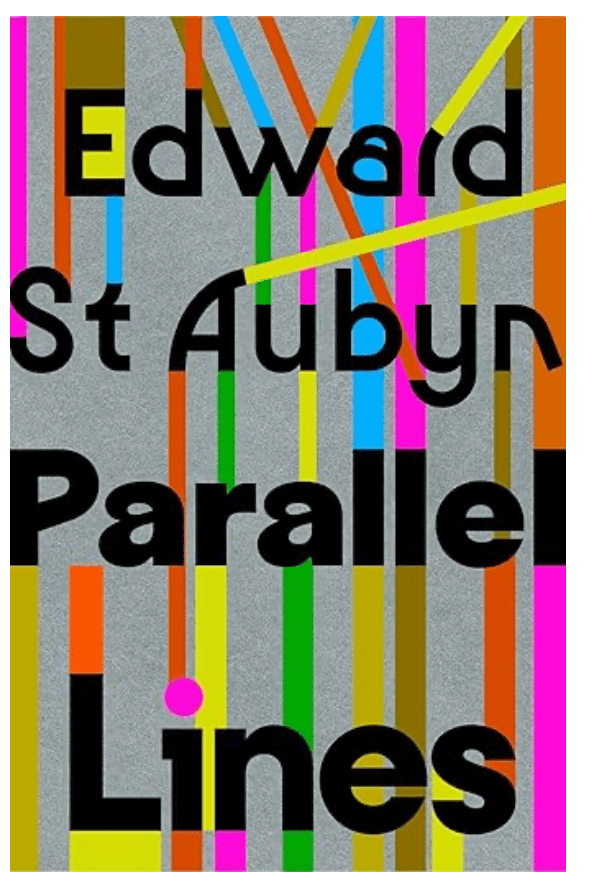
A brother and sister lost and found, in a novel from the author of the Patrick Melrose series, Edward St Aubyn’s Parallel Lines, the novel seizes your heart and enthrals your mind. “We set off in opposite directions and walked around the world until we met, and I’m very pleased we have…”. It is summer. Sebastian is in treatment following a breakdown that has left him with a fragile hold on reality and a bigger to connect with the mother who abandoned him. His therapist, Martin Carr, also faces challenges, including his adopted daughter Olivia’s tenuous relationship with her biological mother. Her husband is Francis. Carr’s professional ethics are tested further when his “most traumatised patient”, Sebstian turns out to be Olivia’s biological brother. “These things do not happen, cannot happen, and must not happen.” He tells himself. Sebastian and Oliva’s lives have run along parallel lines until, defying the laws of geometry but fulfilling the demands of fiction, they meet at the home of their biological mother Karen. Olivia is outraged by Karen’s deceit, but her adoptive mother Lizzie counters that “It was terribly irresponsible, but I can imagine that she might have got lost in a fantasy world where it was a beautiful, redemptive act- the reconciliation at the end of a Shakespeare comedy.” This hope is lent credence by Twelfth Night in the siblings names.
Parallel Line is a novel about connection, family love, and the cascading consequences of our choices.
Sebastian having been molested as an infant by his biological father, bullied as a child by his adoptive father and spent much of his adult life and spent of his adult life in hospital, he is in the fifth year of his analysis with Martin. Sebastian is mistaking “masturbating” for masticating or punning that “My strink has made me a bigger man”. His response are fresh and pertinent, on attending his first art opening, he assumes that people “were bound to be talking about Leonardo da Vinci”, and his eagerness to make meaningful connections affecting.
St Aubyn’s parallel lines include Hunter, an American billionaire who is developing “Happy Helmets”, a system of “Trans-cranial stimulation” which offers the user ‘a shortcut to the profound communion” that Italian mystic Blessed Fra Demencio devoted his life to attaining. There’s also Hunter’s wife Lucy, who suffers from an aggressive form of cancer, and Hello, a Brazilian nurse and artist. But with exception of Father Guido, an abbot whose uneasy isolation in hermitage is powerfully conveyed, the characters, including the family remain undeveloped and defined largely by their intellectual and political concerns. Thus Olivia and Francis are both professionally and personally preoccupied with the prospect of global extinction. Olivia, meanwhile, is producing a radio series about the various pathways to Armageddon, which itself seems to be running parallel to the events unfolding in her personal life. Francis is an environmental activist, involved in projects in South America. When not treating his patients, Martin focuses on the shortcomings in Lacan’s analytical methods. Hunter’s description of American light artist James Turrell’s heroic missions to rescue Buddhist monks from Chinese-occupied Tibet during the Vietnam war provide the real-life figure with a richer back-story than any of St Aubyn’s fictional ones, apart from Sebastian.
When Sebastian first encounters one of Helio’s computerised light sculptures, a version of “The Birth of Venus” renamed “ A Moment of Weakness” as a riposte to President Bolsanaro’s misogyny, he starts to think that “Helio’s work was in the joke-not-joke, play-on-words, art-about-art game”. Sebastian is not alone in suffering from Witzelsucht.
Over dinner at a restaurant, Olivia and her family discuss the failings of recent Conservative politicians, the waiter ask about their allergies and she replies “Boris Johnson and his predecessors”.
Over a year, their fates collide in outrageous and poignant ways, revealing their destinies in a new light.
Parallel Lines by Edward St Aubyn, Jonathan Cape £20/Knopt $28, 272 pages.
 The neptune Herald
Leave a comment