
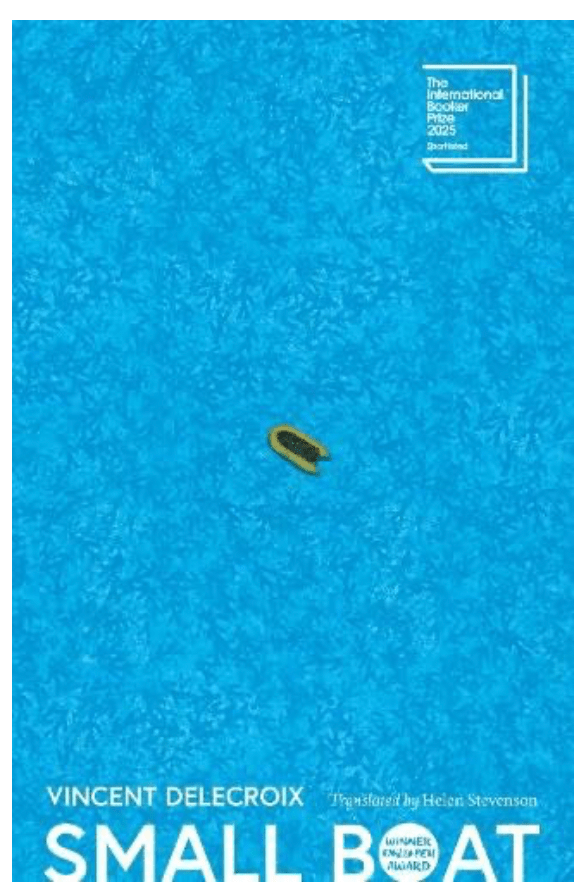
French philosopher Vincent Delecroix’s novel, translated by Helen Stevenson, Small Boat, weaves a short, sharp, shocking tragic story shortlisted for the International Booker Prize 2025. In November 2021, an inflatable dingy carrying more than 30 migrants from France to the United Kingdom capsized in the Channel killing 27 people on board. Despite receiving numerous calls for help, at 1:45 am the French authorities wrongly told the migrants they were in British waters and had to call the British authorities for help. Since the boat was about a kilometre from British waters, the same passengers kept calling Cross, shockingly, the female radio operator was recorded making denigrating remarks and, during one panicked telephone conversation, speaking off microphone to her colleagues, she said “ You will not be saved.” By the time at 5am, rescue vessels arrived on the scene, all but two of the migrants had died, 27 bodies were recovered including that of a child – the largest single loss of life in the Channel since official records began in 2018. Following the catastrophe, the French police questioned the staff on duty at Cross that night.
Small Boat is a shocking, moral tale of our times, reminding us of the power of fiction to illuminate our darkest crimes, now nominated for the Prix Goncourt, Delecroix takes as his starting point the facts published in the newspapers and the transcription audio recordings which, he says, “were the only matters from which I authorised myself to imagine and construct a corresponding character”.
In the first part Delecroix imagines the fictional perspective of the female operator during the police interview. She is resolutely matter-of-fact; we get no sense of shame, only bewilderment that she is being blamed. Delecroix gets under the skin of his protagonist; entwining her responses to the interview with her fragmented thoughts and feelings allows the reader to form their own verdict.
She ponders why they consider that “ the cause of their death was – me… not the sea, not migration policy, not the trafficking mafia, not the war in Syria or the famine in Sudan- me. My Judgement, to be precise.” The police officer concludes that she was either “negligent” or acted with “murderous intent”. The operator responds by arguing that empathy is “an idiotic luxury indulged by people who do nothing, and are moved by the spectacle of suffering”.
Delecroix highlights the passenger’s perspective recreating their final moments in chilling, unadorned prose: “ Their faces took on a blue, chalky pallor. There was a ringing in their ears and a kind of continuous stupor overcame them, an irresistible lethargy, which they mistook for calm.”
Accused of failing in her duty, she refuses to be held more responsible than others for this disaster. Why would she be more responsible than the sea, that the war, than the crises behind these tragedies?
In the final part, the operator, suspended from her job, persuades herself that her thoughts, recorded that night, do not constitute “the voice of a monster or criminal on tape – it’s the voice of all of us.” Her reasoning reminds us of the growing indifference to the plight of refugees: the despair of people fleeing war, injustice, or poverty in search of a better life. Delecroix suggests, is the belief that those attempting to reach UK by crossing the Channel somehow deserve their fate, is disturbing rhetoric is a damning indictment of apathy in the face of calamity, reminding us “ there is no shipwreck without spectators”.
Small Boat by Vincent Delecroix, translated by Helen Stevenson, HopeRoad 12.99, 160 pages.
 The neptune Herald
Leave a comment