

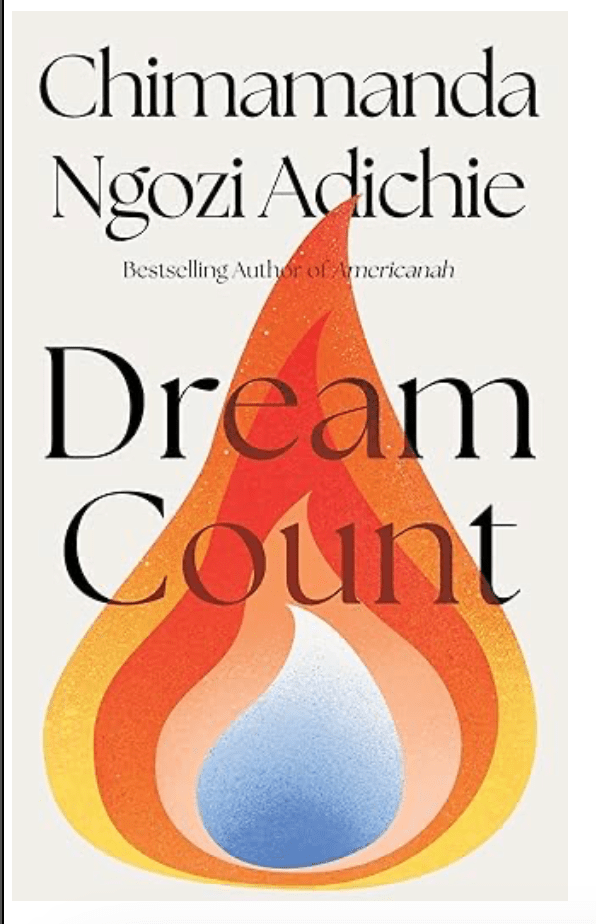
Nigerian travel writer living in America, Chiamaka, alone in the midst of the pandemic, recalls her past lovers and grapples with her choices and regrets. Zikora, her best friend, is a lawyer who has been successful at everything until – betrayed and broken hearted- she must turn to the person she thought she needed least.
Dream Count is a unremarkable story about three affluent Nigerian women, Chiamaka the writer, her best friend Zikora, a lawyer, and her cousin Omelogor, a financial executive. They navigate their mid-thirties, wrangle with romance and manage dislocations of diasporic identity in the US.
Omelogor, is a financial powerhouse in Nigeria who begins to question how well she knows herself.
Adichie trains her fierce eyes on these women in a sparkling, transcendent novel that takes up the very nature of love itself. Is true happiness ever attainable or is it just a fleeting state? And how honest must we be with ourselves in order to love, and to be loved? A trenchant reflection on the choices we make and those made for us, on daughters and mothers, on our interconnected world, Dream Count pulses with emotional urgency and poignant, unflinching observations on the human heart, in language that soars with beauty and power, which confirms Adichie’s status as one of the most exciting, and dynamic writers on the literary landscape.
When Chiamaka reflects on a series of disappointing exes, Zikora calls this her “body count”, but the idealistic Chiamaka insists that it is a ‘dream count”.
The fourth protagonist Kadiatou, a sorrowful housekeeper and a transparently fictionalised version of hotel maid Diallo. Kdiatou, is proudly raising her daughter in America – but faces an unthinkable hardship that threatens all she has worked to achieve.
Zikora’s story forms the second of the five interlocked chapters and derives from one of Adichie’s earlier short stories ( Zikora published in 2020) about a successful lawyer who falls pregnant only to be abandoned by the baby’s father. Place here, for show the betrayal of women by men, their dependence on each other and the righteousness of their age.
Zikora’s bewilderment gives way to anger. Meeting Chuka, another of Chiamaka’s boyfriends, she sees in him only the “vile scam of man’s public goodness”. Adichie plants here a blazing fury and it informs what becomes, later in the novel, a powerful f3male solidarity around Kadiatou. Adichie wants to look to the friendships forged between women and the bond between mothers and daughters.
For Chiamaka, the problem with Chuka is that he wears his shirts neatly tucked, reads books about project management and listens to the BBC World News. Gazing and his tan-coloured furniture, she realises their incompatibility, but Adichie also grants her a deeper understanding: “I broke up with Chuka because I could no longer ignore that exquisite ache of wanting to love a lovely person that you do not love.”
Adichie’s rendering of the dissatisfied Omelogor, who turns from banking to blogging and a PhD in cultural studies. When her classmates accuse her of “weaponizing” family tragedies, she is irritated by “perfect righteous American liberals”. By the end of the novel all three women are galvanised in their determination to protect Kadiatou when the news of her being assaulted in a hotel room by a powerful man exposes her and her daughter to merciless public judgement. Watching Kadiatou be interviewed by a female journalist, Omelogor observes how “Kadiatou is unknowable to her, Kaidatou is a curiosity, Kadiatoy exists outside of her imagination.”
Omelogor laments the interviewer’s inability to understand Kadiatou’s “right to dream”.
Dream Count by Chimamanda Ngozi Adichie, Fourth Estate £20/ Knop $32, 416 pages.

