
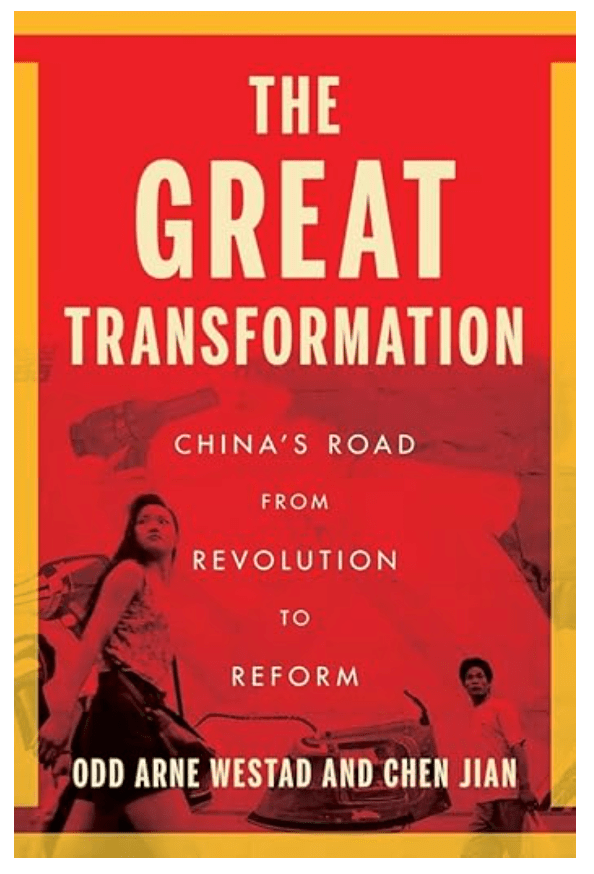
Want to know how an impoverished and terrorised China experienced radical political changes in the long 1970s and how ordinary people broke free from the beliefs that had shaped their lives during Mao’s Cultural Revolution.
When Mao Zedong died in spring 1977, the new culture commissar busied himself publishing the fifth volume of the late Chairman’s selected writings. The paper that had been waiting in storage for this moment had gone mouldy, there was not enough electricity to run the printing presses, the typographers work at a snail’s pace, terrified that any misprints would result in death.
The episode ois a metonym for China’s ills at the end of the Mao era: governance, society and the economy were stifled by ideology. In parts of east China, people were starving. Eight years later a revolution had happened. Propelled by market mechanisms, China’s economy was growing annually at 13.5 per cent. People were questioning the Communist ideology that had transfixed and terrified them for decades.
The transition out of the Mao era transformed China and the world: “ China went from being a dirt-poor, terrorised society in the late 1960s to one of hope and expectation by the mid-1980s.”
The anarchic brutality of the Cultural Revolution the public humiliation that drove even hard-boiled security supremos to suicide, Red Guard plundering of the country’s most scared sites, Mao’s steep physical and mental deterioration in his last five years; the economic crisis that his obsession with ideological purity generated.
The Great Transformation identifies a return to pragmatic entrepreneurialism in the lat Mao era, born out of exhaustion and exasperation with the Cultural Revolution. China’s remarkable rapprochement with the US in 1972 began to open the country to American imports, many of them paid for by smuggled antiques, silks, live animals and guns.
Westad and Jian traces the resurgence of Deng Xiaoping – twice purged in Mao’s last decade after 1972. Deng was a paradox, an advocate of market freedoms and authoritarian Leninist. During his time as supreme leader (1978-1997), business became an integral part of Chinese society, once more, although every company felt the long reach of the state.
Lin Miao, Mao’s second-in-command until his alleged assassination attempt on the chairman and death in a mysterious plane crash suffered from a phobia of pens they made him nervous and sweaty. We learn more of the power paralysis and courtly intrigues around Mao in his final months, when access was controlled by the triumvirate of a nephew, a former lover and an ex-dancer.
The history of China’s great transformation is key to understanding how China became the authoritarian developmental state that it is today. The fact is, china’s dazzling economic growth during the past 40-some years was due to contingency and individual entrepreneurs rather than centralised political planning.
China today critically needs accountability with the past.
The Great Transformation: China’s Road from Revolution to Reform by Odd Arne Westad and Chen Jian, Yale University Press £30/ $38, 424 pages.

 The neptune Herald
Leave a comment