
Millions of people, often in well-paid jobs and well-organised societies are disengaged and dissatisfied, as rates of mental health conditions among the young are at all-time highs.
Wellness spawned a global industry worth an estimated £1.5 trillion in 2024: spas, retreats, and yoga holidays are booming, while even the big employer has a “wellness programme” offering largely useless remedies: AI-based mental health support or lunchtime meditation. Despite criticisms, much of the wellness movement was aimed at improving the wide lot of humanity. What is wellness ? What is amorphous universe while taking part in activities that make a positive health: Ice swimming, sound baths, and very trippy breath-work Sessions.
Wellness and self-care gained traction as part of the New Age health movements that began to flourish in the wake of the 1960s. James Riley, an academic at the University of Cambridge, an expert in the counter cultures of the 20th century, author of the cult hit The Bad Trip: Dark Omens (2019), New World and the End of the Sixties, dives into this strange and hypnotic world of panoramic coastal retreats and darkened flotation tanks, blending a page-turning narrative with illuminating explorations of the era’s music, film, art, and literature.
Riley writes: “ Terms like wellness, wellbeing and self-care, have long histories … but they only really took root in the 1970s … Promising not just the absence of disease but a better, healthier, and more fulfilled life, these methods, projects, diets and even cults offered an antidote to the strains of modern world”.
Riley takes us through the global development of wellness experiments,, although predictably many take place in California. The wellness movement has its deepest roots in the postwar period and Riley highlights the work of “holistic- focused health reformers” such as Halbert L Dunn, who held senior roles in the US government, as he was the first to suggest that “social health should be more than a defensive battle against disease”. Not being ill is not enough- humans should be “alive with the glow of good health”.
Well Beings traces a line from the radical politics and social change of the 1960s into the 1970s, when we stopped trying to change the world and instead looked to change ourselves. It was controversial at the time, with Conservative commentators suggesting that taking care of the self was “ an immorality”.
Riley delves deeply into the mixed fortunes of flotation therapy- a way to escape stress and reach a state of bliss by getting into a dark water-filled tank and entering a state of sensory deprivation that can be, “total consciousness .. in tune with universal mind”.
It is easy to trick the human mind into doing things that are against its best interests, as Riley shows. Some of the most compelling sections of the book outline the damaging extremes of the 1970s, among them the Est movement, founded by Werner Erhard, who was born John Paul Rosenberg, a car salesman who invented himself as the founder of Erhard Seminars Training Est sessions took place in hotel conference rooms, and aimed to break down the barriers preventing participants from reaching their personal goals. Riley says “ this was virtually non-stop 32-hour marathon” in which coaches berated attendees” into airing their perceived problems in front of the hundred or so other sleep-deprived caffeine-starved, bathroom-needing participants”.
Well Beings finish at the start of 1980s, when Margaret Thatcher and Ronald Reagan are in power, greed is good and social conformity prevails. Riley points out “ Money could buy you anything, except happiness of course, and a secure sense of wellbeing”.
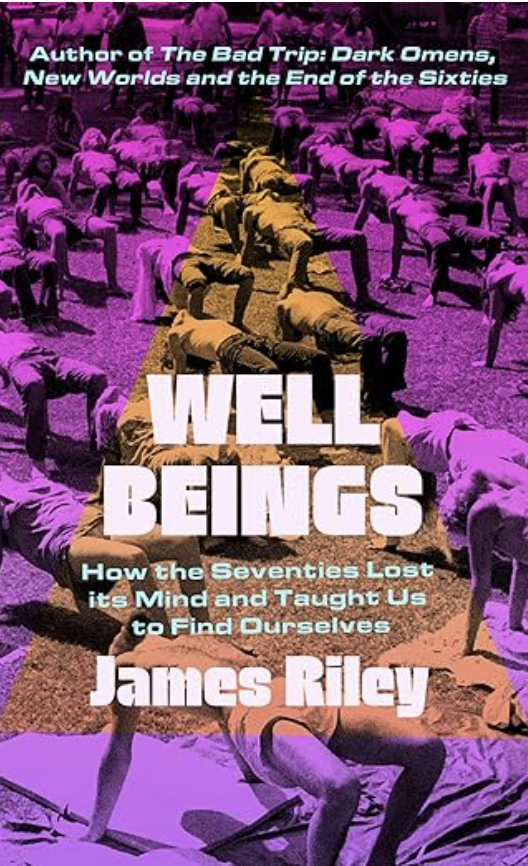
Well Beings: How the Seventies Lost its Mind and Taught us to Find Ourselves by James Riley, Icon £25, 480 pages.

 The neptune Herald
Leave a comment