
India which has two deep-sea exploration licences in the Indian Ocean, has applied for two more amid increasing competition between major global powers to secure critical minerals including cobalt, nickel, copper and manganese that lie thousands of meters below the surface of oceans which could hold key to a cleaner future. These metals are used to produce renewable energy such as solar and wind power, electric vehicle batteries. The UN-affiliated International Seabed Authority (ISA) has issued 31 exploration licences so far, of which 30 are active. Its member countries are meeting in Jamaica this week to discuss regulations around giving out mining licences. If ISA approves India’s new application it will match licences for Russia and will be on less licence than China.
India seeks to explore polymetallic sulphides – chimney-like mounds near hydrothermal vents containing copper, zinc, gold and silver in the Carlsberg Ridge of the Central Indian Ocean.
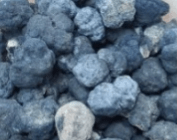
India, China, Germany and South Korea already have exploration licences for Polymetallic sulphides in the Indian Ocean Ridge area. In 2022, India’s National Institute of Ocean Technology conducted trials of tis mining machine at a depth of 5, 270m in the Central Indian Ocean basin and collected some ploymetallic nodules ( Potato-shaped rocks that lie on the seafloor and are rich in manganese, cobalt, Nickel, and copper.
Although USA is not part of the race to mine international waters as it has not ratified the UN convention on the Law of Sea, China is.
Environmental campaigners say the deep seabed is the last frontier in the planet that remains largely unstudied and untouched by humanity and mining there could cause irreparable damage, no matter how pressing the need.
Due to lack of information about the marine ecosystems in those depths, 24 countries including UK, Brazil, Germany, and Canada are also demanding either a halt or temporary pause on deep sea mining.
India will need to secure critical minerals from all possible sources including deep seabed if they were to achieve their short term target of increasing its renewables capacity to 500 gigawatts by 2230, and long term targets of net zero emissions by 2070.
China through their processing technologies and expertise over decades currently holds 100 per cent of the refined supply of natural graphite and dysprosium, 70 per cent of cobalt and almost 60 per cent of all processed lithium and manganese according to International Renewable Energy Agency.
 The neptune Herald
Leave a comment