
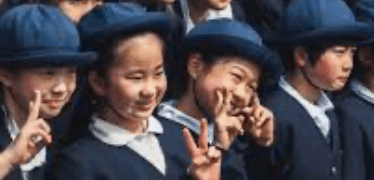
In Japanese schools students don’t take any exams until they reach grade four. Japanese believe that at this age there are far more important lessons. To impart to children than those found on tests. They teach proper behaviour and respect for all people regardless of their financial status.they aim is about fostering independence and simultaneously to work in a team. There are no janitors in schools as students take full charge of cleaning. Students learn the importuning of valuing and conserving the environment. Education is pursued truly for knowledge in the low and middle grades students aren’t given grades. Politeness and punctuality are emphasised.
In Japanese schools, you are only allowed to do what is in the rule book which amounts ago couple of dozens. Japan boasts a literacy rate of 99 per cent which ranks among the top countries in the world, as a high per centre of students attend college, but with rigid system of entrance exams.
Japanese students tend to score near the top in internationally ranked math and science tests.
You are allowed to walk designated commuting routes approved by the school principle and the director of supervision. You are free to interact with the opposite sex for academic purposes or in other appropriate circumstances which benefit your academic experience.
You are allowed to leave your registered residence during summer vacation with the official approval of the school Principal if your parents submitted an official plan for the trip.
You have required to wear a uniform and if the ties are not tight enough you could get beaten by teachers. In Japanese schools electronics are usually strictly banned and almost everything is done on paper and chalkboard. Physical scientific experiments are also not common. Japanese schools are far more likely to be gender segregated. Japanese schools have little or no consideration for students with disabilities.
The advantages of Japanese educational systems are high academic performance, Emphasis on discipline and hard work, well trained and respected teachers broad curriculum, creativity is discouraged but memorisation is encouraged. Public primary and lower secondary schools are free and government tuition support makes public upper secondary schools free for families with low annual income;.Ja
 The neptune Herald
Leave a comment