
Sir John Henry Rivett-Carnac wrote about his company house in his memoirs “ a quite magnificent house on the Ganges at Ghazipur, surrounded by a good garden and fine grounds”.
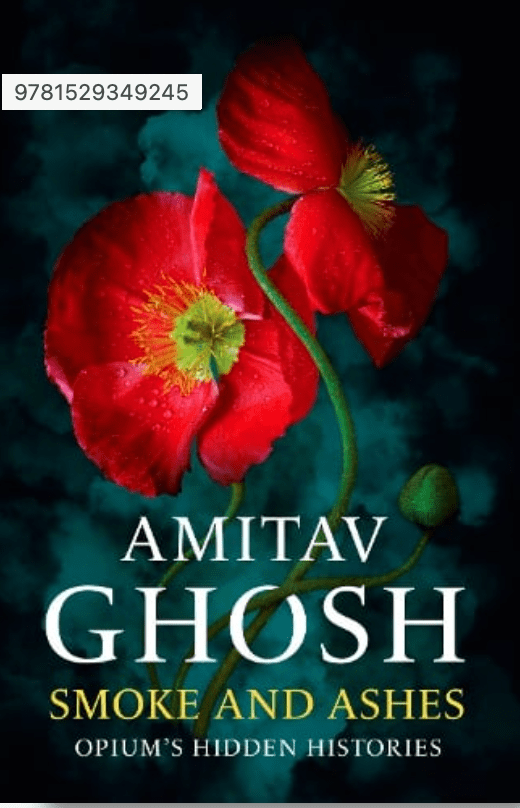
The incentives of this job was the Benares Opium Agency that Sir John headed from 1876. When the poppy growing season got under way in November, Sir John would embark on a grand regional tour, interspersing inspections of opium farms with shooting expeditions and visits to colourful bazars, despite the poor Indian farmers under his watch, who fed Gizarpur’s opium processing factory who were coerced into cultivating the crop to supply the Chinese markets and fill British coffers. The British Empire became a narco-state according to Amitav Ghosh in Smoke and Ashes, revealing the transformative effect the Opium a tool of colonial capitalism was used to pummel India, corrupt China and prop up Empire. The trade was engineered by the British Empire which exported Indian opium to sell to China and redress their great trade imbalance, and its revenues were essential to the Empire’s financial survival. He writes “ No amount of sophistry can disguise the fact that the British Empire’s opium racket was a criminal enterprise utterly indefensible by the standards of its own time as well as ours”.Successor companies linked to that inglorious period include Shell, Billiton and Barings. Gosh finds opium at the origins of some of the world’s biggest corporations, of America’s most powerful families and prestigious institutions ( from the Astors and Colleges to the Ivy League) and of contemporary globalism itself. Ghosh also revels the role that one small plant had in making our world, now teetering on the edge of catastrophe.
Smoke and Ashes looks into the history of both tea and the opium poppy and finds a stronger voice as a catalogue of colonial rapaciousness. Throughout human history opium long cultivated in modest quantities in Asia and Middle East and used medicinally as a painkiller and sedative which also became a favoured diplomatic gift as the Dutch, Portuguese and Spanish sought to cut deals and boost trade across the Indian Ocean. In the 17th and 18th centuries, the Dutch, East India Company began using it as a Currency, exchanging the drug for pepper on the Malabar Coast. From Dutch-controlled Java, addictive version of the drug flowed eastward via Chinese merchants, prompting China to ban it. In 1773 the north Indian territories including Bihar’s opium production was placed under the control of the East India Company, cutting European rivals out of the picture just as Britain was running short of silver to pay the Chinese for their tea. Ignoring China’s drug ban, Britain continues to increase opium exports there by claiming it was simply continuing an indigenous trade practised by the Mughals. By 1799, the company’s opium department for whom George Orwell’s father later worked – wielded a cruel monopoly over more than million opium production in the Maiwa region charging only transit taxes in Calcutta, who then sold to Chinese smugglers. In 1839 China’s Qing rulers finally cracked down, impounding imports and triggering the first opium war. Britain’s victory haul comprised forced legalisation. Hong Kong and more generous access to Chinese consumers. The Drug revenue accounted for up to fifth of British Raj’s revenues. British doctors complained that, although valuable medicinally, “ the habitual use of opium is productive of the most pernicious consequences”. British policies argued Indian farmers would starve if the opium trade stopped. Horrors of the British Empire’s opium trade is for all to see.
The factory at Ghazipur still manufactures opium legally today. But in Afghanistan opium and its derivatives, and synthetic versions such as fentanyl, are distributed by criminal networks beyond the reach of law enforcement.
Smoke and Ashes: Opium’s Hidden Histories by Amitav Ghosh, John Murray £22, 416 pages.
 The neptune Herald
Leave a comment