
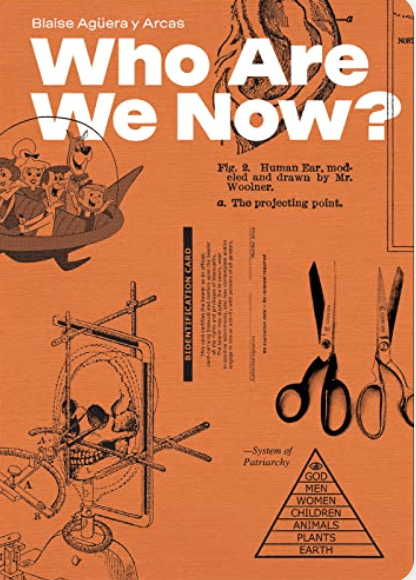
Google’s top artificial intelligence researcher Blaise Aguera y Arcas, has developed a fascination with humanity, and according to her if we are to build intelligent machines to do what humans want, we first need to understand what humans want.
In a world where identities , beliefs and genders have become so fluid with identity politics occupying the front line in today’s culture wars, pitting generations against each other, and progressive cities against the rural traditions of our past.
Aguera y Arcas armed with a geek’s obsession surveyed tens and thousands of American between 2016 and 2022 about their identity to find out who “we” really are.
Twentieth century heterosexual normalcy is on the wane, especially among young and urban people. The landscape outside has changed too After millennia of being fruitful and multiplying, we’ve strained, and exceeded, planetary limits. Domesticated animals far outweigh wildlife, and many species are in catastrophic decline. Our own population is poised to being collapsing this century too, our fertility now turned by choice rather than by premature death,. Is this the end of humanity or the beginning.
“As if in a lava flow, the cultural landscape is being shaped and reshaped before our eyes,” he writes.
Until recently, the idealised version of America appeared to be reflected to cartoon characters like Flintstones and Jetsons. The natural order of the world was thought to revive around nuclear families and harmonious communities.
What most Americans consider normal increasingly look weird according to Harvard biologist Jospeh Henrich, Western Educated, industrialised, Rich and Democratic are often minority beliefs by historical and global standards.
The extent to which society has evolved and fragmented is highlighted by three, of many arresting facts drawn from this book.
According to his survey almost 34 per cent of 19-year-oldd women describe themselves as bisexual. For the first time in centuries majority of all American adults are now single and a typical American will spend more of their adult life unmarried than married, and for much of his time they will alone.
How far the technology is bringing us together or driving us apart. It has enabled disparate groups of people to exchange ideas, express their true identities and create global communities, especially among the young. It has also been responsible for the mass surveillance, disinformation and political polarisation that has deepened social divisions and empowered authoritarian leaders. It is now easier than ever to divide society by “othering” another group, Can there ever be an “us” without them”?
Humanity is undergoing a profound transformation evolving from Humanity 1 to Humanity 2 as the computer scientist inevitably frames it. Humanity 1 largely resembles a primate society, in which everyone theoretically recognises everyone else as an individual and can form bonds accordingly. Success in such society is defined by biological reproduction and the transmission of one’s genes.
But Humanity 2 increasingly resembles an ant colony, which can form anonymous societies and have collective impulse to survive. In such colonies it is impossible for insects to identify one another individually because of sheer numbers involved, just as human s now struggle to identify each other in anonymous societies online. Ants therefore have to use pheromones to distinguish member of one colony from another. Humans too, invent generic labels to distinguish between different communities in this important respect, humans are more like social insects than like other primates” he writes.
When the Earth is seen from space, our national boundaries disappear and the need to protect this pale blue dot becomes both obvious and imperative. “All 8 billion of us humans belong to the same planetary precariat and share a common destiny” he writes.
Who Are We Now? By Blaise Aguera y Arcas, Hat & Beard Editions £37/$45, 496pages/490 pages.
 The neptune Herald
Leave a comment