

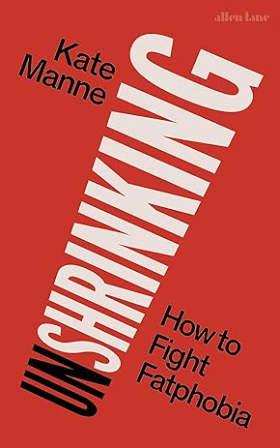
Kate Manne, Associate Professor of philosophy at Cornell University, who made Prospect magazine ‘s top ten thinkers list in 2019, and a former junior fellow at the Harvard Society of Fellows from 2011-2013, specializing in moral, social and feminist philosophy, looks into size discrimination which harms everyone. For as long as she can remember, Kate Manne has wanted to be smaller. She can tell you what she weighed on any significant occasion: her wedding day, the day she became a professor, the day her daughter was born. She’s been bullied and belittled for her size, leading to extreme dieting. She wanted to believe that she was exempt from the cultural gas lighting that compels so many of us to ignore our hunger. But she was not. “I’ve constantly felt caught between dueling motivations: the desire to shrink myself, and the desire to accept myself, give my longtime commitment to fat activist as well as feminist principles. How far was I willing to go to lose weight? How could I continue to teach moral philosophy, while feeling that my own moral practice was so lacking when it came to my relationship with my own body? I realized fatphobia is a structural, intersectional and systematic phenomenon. I became gripped as a philosopher and cultural analyst by the way the derogation of fatness enables us to rank bodies in a neat, linear hierarchy that is as irrational as it is immoral. I’ve finally managed to let go of the goal of weight loss. We must become unshrinking in our quest for social justice”.
Right now, fat people especially very fat people simply don’t fit in our society. We are systematically excluded from airplanes and classrooms and theatres and grandstands and most mainstream clothing stores. When we are represented, it’s as figures of fun or tragic figures. We are not only neglected but actively betrayed by the healthcare system and systematically discriminated against in education and employment” Kate Manne clarifies.
Manne writes about podcster, Ash Nischuk who is 40-year-old and weighs more than 42 stones and she must sit when taking shower or making dinner. More than 40 per cent of Americans are overweight but her solutions are not to rein in a rapacious food industry or tackle “ food deserts” ( low-income areas where fresh produce is unattainable and she’ suspicious of Michelle Obama’s child health programme. Of course there are unpicked psychological issues such as childhood trauma, that drove women to food addiction. Unshrinkable has no curiosity about why people might binge eat. Very fat eating adventurously, pleasurably, comfortingly or even copiously but never compulsively”.
She notes the challenges of being a fat philosopher but is rightly outraged by the dehumanization of the obese and the tendency of doctors whatever the illness- to send them away to lose weight. Fat people have every right to cool clothes and full sex lives and to be judged on their talents, not their bodies. She compares bariatric surgery and appetite-suppressant drug to skin-bleaching sold to black people or rhinoplasty to reduce a large Jewish nose. She also points out the irony of moral outrage about “gender affirming” surgeries on American children but not adolescent stomach stapling. She never tackles why do transchildren need drastic body modification to be acceptable but obese kids are fine as they are?
Blending intimate stories with trenchant analysis. Manne demonstrates why fatphobia matters, now more than ever. Over the decades bias has waned in every category except one: body size. She examines the modus-operandi of anti-fatness – how it leads us to make devastating assumptions about a person’s attractiveness, fortitude and intellect, and how it intersects with other systems of oppression. Fatphobia is responsible for wage gaps, medical neglect and poor educational outcomes. It is also a straitjacket, restricting our freedom, our movement, our potential. Fatphobia is a social justice issue.
Manne proposes a new politics of body reflexivity, a radical re-evaluation of who our bodies exist in our world for: ourselves and no one else. When it comes to fatphobia, the solution is not to love our bodies more, instead, we must dismantle the forces that control and constrain us and remake the world to accommodate people of every size.
Unshrinking: How to Fight Fatphobia by Kate Manne, Allen Lane £20, 320 pages.
 The neptune Herald
Leave a comment